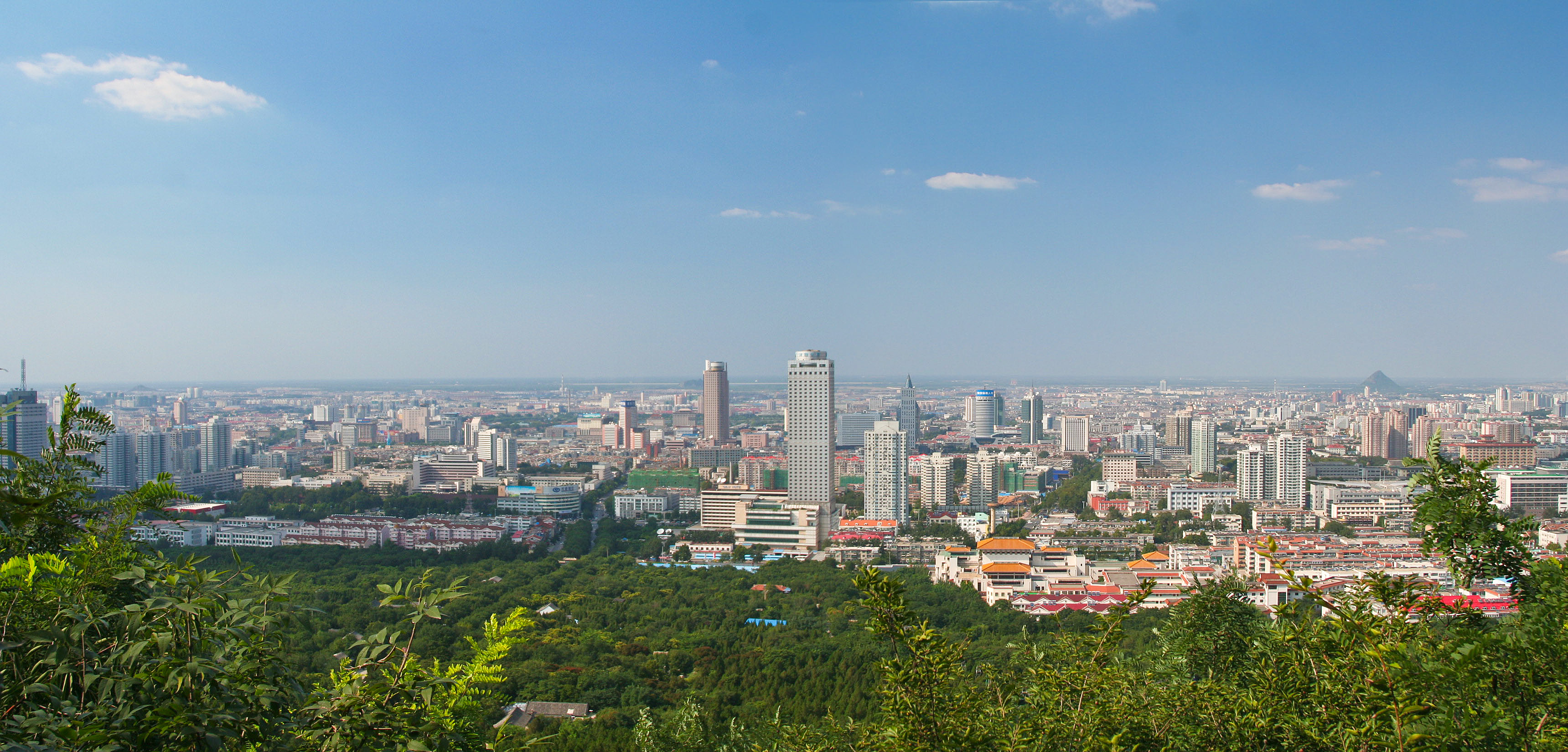
North China Plain
From the air, it looks like it goes on forever. Flat, intensely cultivated, broken by rivers but almost never by hills, the North China Plain stretches across 409,500 square kilometers of eastern China -- bordered by the Yanshan Mountains to the north, the Taihang Mountains to the west, the Dabie Mountains to the south, and the Yellow Sea and Bohai Sea to the east. Most of the land sits less than 50 meters above sea level. The Yellow River flows through its heart before emptying into the Bohai Sea, and the silt it has deposited over millennia created the plain itself. This is China's largest alluvial plain, and it is the ground from which Chinese civilization grew.
The Cradle That Fed an Empire
The portion of the plain along the middle and lower Yellow River is called the Central Plain, and it is where the Han Chinese people emerged. Beijing sits on the northeast edge. Tianjin anchors the northeast coast. Jinan and Zhengzhou lie along the Yellow River itself. The capitals of multiple imperial dynasties stood here -- Luoyang served the Han, Jin, Sui, and Tang dynasties; Kaifeng was the capital of the Northern Song. Today the plain remains one of China's most important agricultural regions, producing wheat, maize, sorghum, millet, peanuts, sesame, cotton, and vegetables. Shandong's Shengli Oil Field adds petroleum to the plain's output. Its nickname -- the Land of the Yellow Earth -- comes from the loess soil that gives the region its color and its fertility.
Flatness as Destiny
The geography of the North China Plain has shaped Chinese politics and culture in ways that are difficult to overstate. Unlike southern China, with its mountains, rivers, and resulting patchwork of languages and dialects, the plain is uninterrupted terrain where communication by horse was rapid and spoken language remained relatively uniform. This flatness made centralized government possible -- and, many historians argue, necessary. The plain's fertile soil merges gradually into the steppes and deserts of Inner Mongolia and Dzungaria, leaving it exposed to invasion by nomadic peoples from the north. That vulnerability drove the construction of the Great Wall. The "hydraulic society" theory holds that the need to manage floods, irrigation, and granaries across this vast, flat, disaster-prone landscape forced the development of the centralized state itself.
Flood, Drought, and the River Between
The Yellow River is both creator and destroyer here. Its deposits built the plain, but its floods have repeatedly devastated it. The weather compounds the risk: the plain sits at the intersection of humid Pacific winds and dry continental air masses, making it prone to both drought and deluge. The flatness that makes the land so productive also means that when river works fail, floods spread without limit. The Xiaolangdi Dam marks the Yellow River's last valley before it flows onto the plain, a threshold between containment and exposure. These extremes have defined life on the plain for thousands of years, forcing every dynasty to invest in water management or face catastrophic failure.
Confucius and the State of Lu
The North China Plain was not only the birthplace of Chinese agriculture and statecraft -- it was also the birthplace of Confucius. Born in the State of Lu in 551 BCE, Confucius lived and taught on this plain until his death in 479 BCE. His teachings, recorded in the Analects, became the philosophical foundation that shaped governance, education, and social life across China, Korea, Japan, and Vietnam for over two thousand years. Confucianism was inseparable from the Classical Chinese writing system, which itself was a product of the literate cultures that developed on this plain. The philosophy, the writing, the agriculture, the statecraft -- all of it grew from the same 409,500 square kilometers of yellow earth.
From the Air
Centered approximately at 36.58°N, 117.16°E near Jinan, but the plain extends across much of Henan, Hebei, and Shandong provinces. From altitude, the plain appears as vast, flat, intensely cultivated farmland with the Yellow River visible as a wide, sediment-laden ribbon. Major airports in the region include Jinan Yaoqiang (ZSJN), Beijing Capital (ZBAA), and Zhengzhou Xinzheng (ZHCC). The plain's most distinctive aerial feature is its unbroken flatness -- less than 50 meters elevation across hundreds of kilometers.