North Shore Scenic Railroad
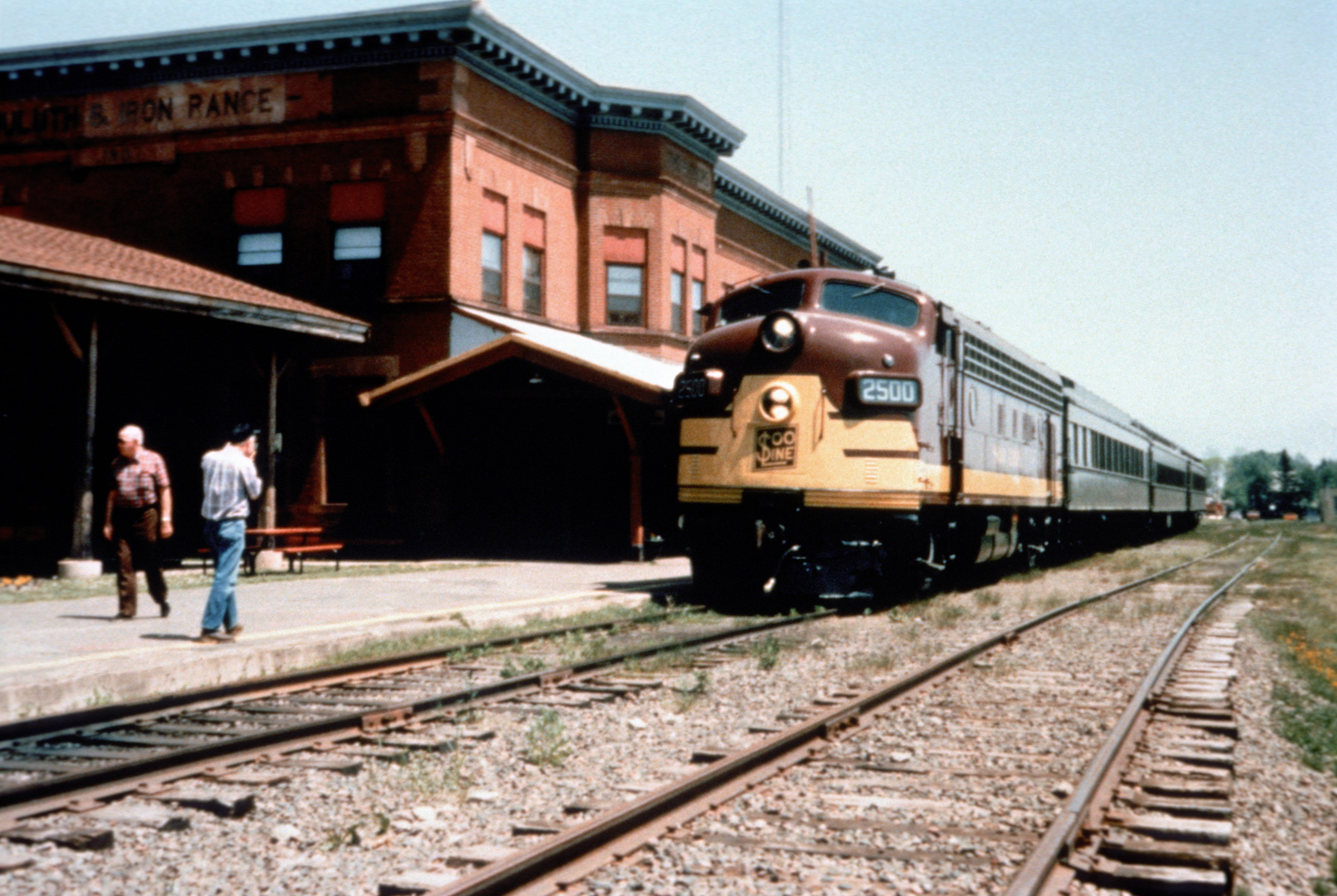
The whistle of Soo Line 2500 rolls across the water as the Duluth Zephyr pulls away from the old Union Depot, easing onto tracks that hug the North Shore of Lake Superior so closely that spray sometimes reaches the windows. This is the Lakefront Line, and for over a hundred years it carried a very different kind of cargo. Built in 1886 to connect the iron mines of the Mesabi Range to Duluth's ore docks, this corridor was an industrial artery -- heavy trains loaded with the raw material that built American cities rumbling between Two Harbors and the Head of the Lakes. Today the North Shore Scenic Railroad runs excursion trains along those same rails, and the 26-mile journey has become one of Minnesota's signature heritage experiences, a chance to ride through landscapes that shift from urban waterfront to boreal forest while historic locomotives do the work they were built for.
Iron Road to the Lakefront
The Lakefront Line was born of iron -- specifically, the vast deposits of the Mesabi Range that made Minnesota the engine room of American steelmaking. In 1886, the Duluth and Iron Range Railway needed a connection to the expanding national rail network, and the solution was a line hugging Lake Superior's shore between Two Harbors and Duluth. A short extension of the St. Paul and Duluth Railway met the new line at Fifth Avenue East in Duluth, giving the D&IR access to downtown and to other carriers at the Head of the Lakes. For over a century, this corridor moved iron ore from mine to ship, the trains so heavy and frequent that the ground along the shore seemed to vibrate continuously. When the iron trade declined, the Lakefront Line faced the same existential crisis as hundreds of branch lines across the country: find a new purpose or be torn up for scrap.
Three Owners in Six Years
The scenic railroad's early years were anything but smooth. In 1990, Donald Shank -- former General Manager and Vice President of the Duluth, Mesabi & Iron Range Railway -- launched excursion service along the Lakefront Line using county and private funding. He operated for a single season. In 1991, the Goldfines, a local family, took over, running the railroad as a for-profit venture with equipment they had purchased themselves. They lasted five seasons. It was not until 1996, when the Lake Superior Railroad Museum assumed operations, that the North Shore Scenic Railroad found its permanent footing. The museum brought a corps of dedicated volunteers, a fleet of historic rolling stock, and an institutional mission that valued preservation alongside entertainment. That combination of passion, volunteerism, and museum-quality equipment transformed the operation from a shaky startup into a nationally recognized heritage railroad.
An Iron Horse Roster
The locomotive roster reads like a who's who of Great Lakes railroading. Great Northern Railway EMD NW5 No. 192 and DM&IR EMD SD18 No. 193 represent the diesel workhorses that replaced steam across the iron ranges. Soo Line EMD GP30 No. 700 and the elegant Soo Line EMD FP7 No. 2500 handle passenger duties, with No. 2500 leading the flagship Duluth Zephyr excursion. A Budd Rail Diesel Car, No. 9169, offers a self-propelled alternative. Steam power makes regular appearances: Duluth & Northern Minnesota No. 14 was the first steam locomotive to operate on the scenic railroad, followed by Soo Line 1003 and Milwaukee Road 261. The Duluth & Northeastern No. 28, a 2-8-0 Consolidation built in 1906, has returned to service following a full restoration, connecting passengers to the age when steam was the only way to move freight along this shore.
Seventy-Five Minutes Along the Shore
From May through December, the North Shore Scenic Railroad runs daily excursions that depart from the St. Louis County Depot, a beautifully restored former Union Depot in downtown Duluth that also houses the Lake Superior Railroad Museum. The flagship Duluth Zephyr, a 75-minute round trip, features Soo Line 2500 and Erie Mining Company 4211 pulling the museum's finest passenger cars. After Labor Day, service drops to weekends only as the northern Minnesota autumn takes hold -- though fall color season along the North Shore is arguably the most spectacular time to ride. Ridership hit a record 110,000 in 2018, confirming that the old iron-ore corridor has found its second life. Milwaukee Road 261 makes occasional visits to Duluth for special dinner excursions, combining its own consist with museum equipment for evenings of fine dining and lakefront scenery.
From the Air
The railroad operates between Duluth (46.781°N, 92.104°W) and Two Harbors, Minnesota, hugging the Lake Superior shoreline for approximately 26 miles. The tracks are visible from the air as a thin line between the lakeshore and Highway 61. Duluth Sky Harbor Airport (KDYT) sits on Minnesota Point, approximately 2 nm south of the depot. Duluth International Airport (KDLH) is about 6 nm northwest. Two Harbors has no commercial airport. The Lakefront Line is best spotted from 3,000-5,000 feet AGL when paralleling the shore northeast of Duluth. Look for the distinctive Duluth Depot building at the downtown terminus, near the Aerial Lift Bridge.