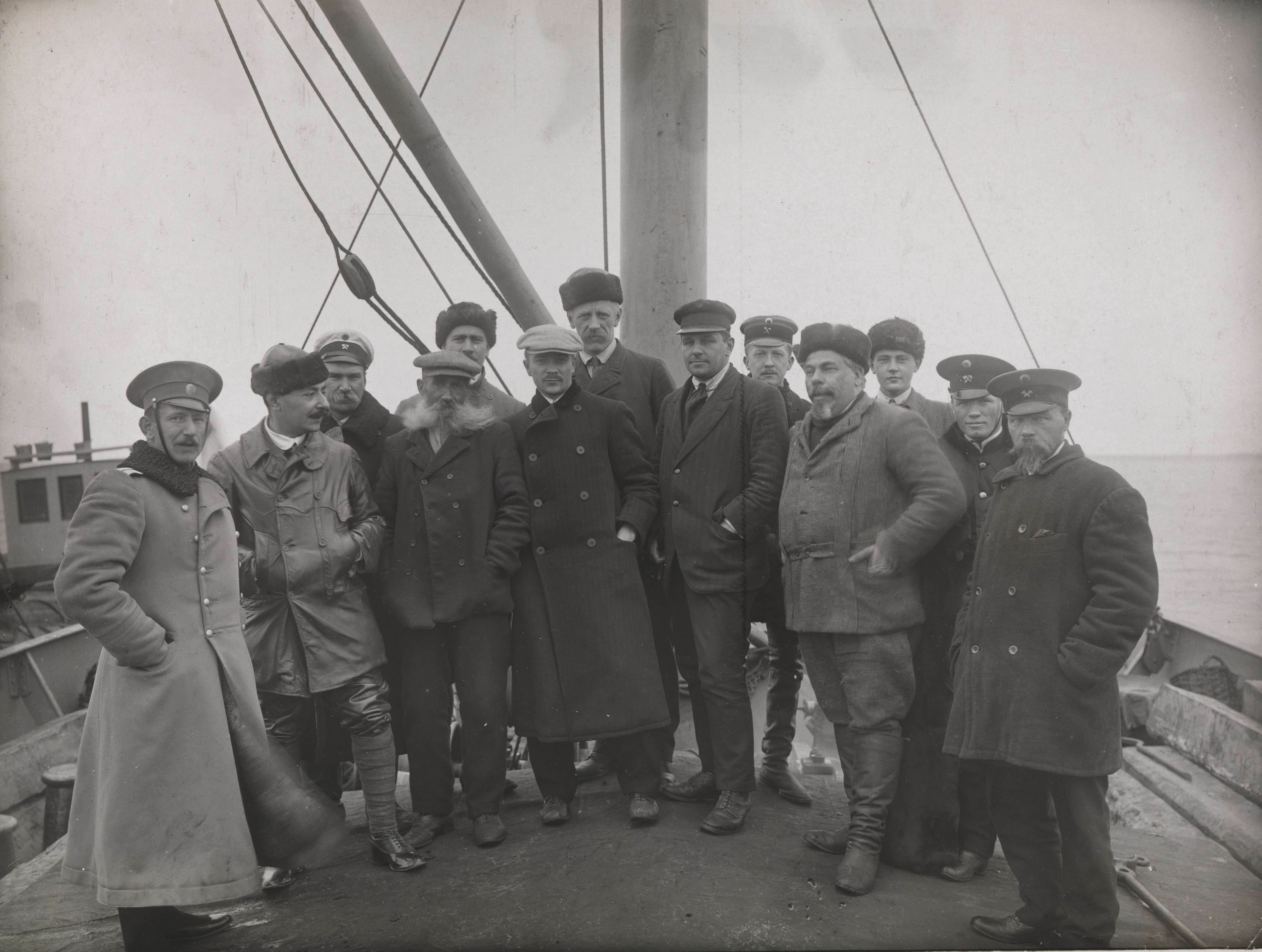
Northeast Passage
For four hundred years, the Northeast Passage was a death sentence disguised as a shortcut. In 1553, English explorer Hugh Willoughby led two ships into the Barents Sea searching for a sea route to China. He and his entire crew froze to death on the coast of the Kola Peninsula. Nearly three and a half centuries later, in 1878-1879, Finnish-Swedish explorer Adolf Erik Nordenskiold finally completed the full passage aboard the Vega, wintering in ice off the Chukchi coast before breaking free and reaching the Pacific. What had seemed impossible was merely brutal, and that distinction would define this route for every expedition that followed.
Ghosts on the Ice
The quest for the Northeast Passage consumed generations of European navigators. After Willoughby's fatal 1553 expedition, the Dutch took up the cause. Willem Barents made three voyages in the 1590s, reaching Novaya Zemlya and discovering Spitsbergen before perishing on the ice in 1597. His crew survived a winter trapped in a makeshift hut on the northern tip of Novaya Zemlya, an ordeal recorded in detail that still chills. By the seventeenth century, Russian traders had established a continuous sea route from Arkhangelsk to the Yamal Peninsula, portaging overland to reach the Gulf of Ob. This route, known as the Mangazeya seaway after the trading depot at its eastern end, proved that portions of the passage were navigable. But east of the Yamal, the waters above the Taimyr Peninsula remained locked in ice that no wooden ship could penetrate.
The Soviet Highway
The Northern Sea Route, the Soviet name for the Russian portion of the passage, became a strategic priority under Stalin. In 1932, the icebreaker Sibiryakov completed the route in a single navigation season for the first time, and the Soviets established the Chief Directorate of the Northern Sea Route to administer the corridor. Convoys of cargo ships, escorted by nuclear-powered icebreakers beginning in the 1970s, carried supplies to remote Arctic settlements and transported nickel ore from Norilsk's port at Dudinka. The route shaved thousands of nautical miles off the journey between Murmansk and the Pacific, but it demanded a price: icebreaker escorts, reinforced hulls, and the constant risk of being trapped when ice conditions shifted without warning.
A Warming Corridor
Climate change is rewriting the calculus of the Northeast Passage. As Arctic sea ice retreats, the route has become navigable for longer periods each year, and in some summers, portions open entirely without icebreaker assistance. The Barents Sea, warmed by currents from the Gulf Stream, often remains ice-free year-round. Further east, the Kara Sea and Laptev Sea are thawing earlier and freezing later. Transit voyages have increased from just four in 2010 to dozens in recent years. Russia has invested heavily in the corridor, designating Rosatom as infrastructure operator and commissioning a new generation of nuclear icebreakers, including the Arktika class, the most powerful ever built. The route cuts the distance from northern Europe to East Asia by roughly 40 percent compared to the Suez Canal, a savings measured in days of fuel, crew wages, and emissions.
Between Two Oceans
The passage stretches from the Norwegian Sea in the west to the Bering Strait in the east, threading between the Eurasian mainland and the Arctic islands of Novaya Zemlya, Severnaya Zemlya, and the New Siberian Islands. Navigation must contend with shallow straits, unpredictable ice drift, and stretches where no port or rescue station exists for hundreds of kilometers. The Vilkitsky Strait, between Severnaya Zemlya and the Taimyr Peninsula, remains one of the most difficult chokepoints. Even with satellite ice monitoring and modern hull design, vessels face conditions that would be familiar to Barents and Nordenskiold: fog, pressure ridges, and the Arctic's fundamental indifference to human schedules.
The Next Frontier
The geopolitics of the Northeast Passage are as contested as its ice. Russia asserts authority over the Northern Sea Route under Article 234 of the UN Convention on the Law of the Sea, requiring foreign vessels to obtain permits and hire Russian icebreaker escorts. Other nations dispute the extent of this control, viewing much of the passage as international waters. Meanwhile, energy companies eye the route for liquefied natural gas shipments from the Yamal Peninsula, and container shippers weigh its potential against the risks of ice damage and unpredictable transit windows. The passage that killed Hugh Willoughby is becoming a commercial thoroughfare, but the Arctic still sets the terms.
From the Air
Centered at approximately 70.5N, 58.0E in the Barents Sea region, though the passage extends from Norway to the Bering Strait. From altitude, the route traces the entire northern coast of Eurasia. Key visual landmarks include Novaya Zemlya, the Kara Sea, the Taimyr Peninsula, and the New Siberian Islands. Nearest airports include Murmansk (ULMM), Arkhangelsk (ULAA), and Vorkuta (UUYW) in the western section. Weather is extremely variable with frequent fog, storms, and limited visibility. Best observed from high altitude (FL350+) for the sweeping coastal geography.