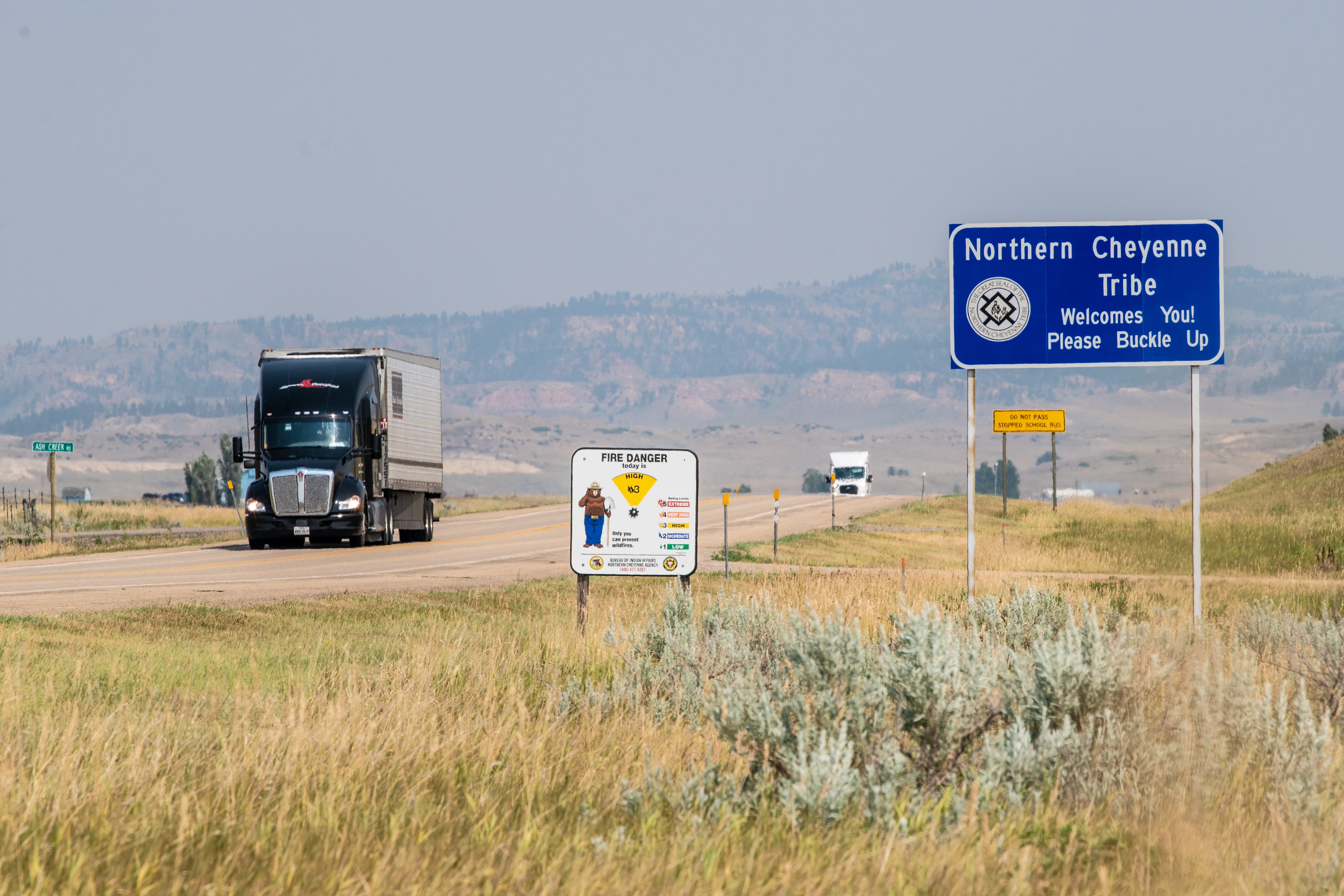
Northern Cheyenne Indian Reservation
In 1878, a desperate band of Northern Cheyenne made a decision that would echo through history. Dying slowly in the sweltering barracks of Indian Territory in Oklahoma, far from their traditional hunting grounds, they chose to walk home. That thousand-mile journey north became known as the Northern Cheyenne Exodus, and their descendants now live on the land they fought to reclaim: a 445,000-acre reservation in southeastern Montana bounded by the Tongue River to the east and the Crow Reservation to the west, just miles from where Custer fell at Little Bighorn.
The Walk That Would Not End
The Cheyenne called themselves Notameohmesehese, the Northern Eaters, because they were great hunters who kept their people well-fed in the Powder River Country. But after the Black Hills War and the horrors of Sand Creek and Washita massacres, the government forced them south to Oklahoma. The heat was unbearable, food was grown rather than hunted, and disease spread through the crowded barracks. When the exodus began in 1878, the survivors walked north through autumn and winter, pursued by the Army. Those who survived eventually settled near Fort Keogh before migrating south to the Tongue River watershed, the land they considered their natural home.
A Nation Restored
President Chester Arthur established the Tongue River Indian Reservation by executive order on November 16, 1884. The original boundaries left out many Cheyenne families who had already homesteaded east of the Tongue River, so the St. Labre Catholic Mission stepped in to help them. In 1900, President McKinley extended the reservation to include the west bank of the Tongue River. Today the Northern Cheyenne Tribe counts over 12,000 enrolled citizens, with about 6,000 living on the reservation. Lame Deer serves as the tribal capital, home to Chief Dull Knife College and roughly 4,000 residents, ninety-two percent of them American Indian.
Battlefields and Basketball
The reservation sits approximately twenty miles east of the Little Bighorn battlefield where Cheyenne warriors like Wooden Leg fought alongside the Lakota in 1876. That same fighting spirit took a different form at Tongue River Boarding School in Busby, which opened in 1904. By the 1950s, the school's basketball team had grown so formidable they defeated the Harlem Globetrotters and won a state championship. Nearby Ashland, where St. Labre Indian School was established in 1884, developed its own basketball tradition, and when Busby joined their district, the rivalry games became legendary.
Living Language, Living Culture
More than a quarter of reservation residents over age five speak a language other than English, keeping the Cheyenne tongue alive across generations. The tribe has produced Grammy-nominated flutist Joseph Fire Crow, linguist and human rights activist Marie Sanchez who served as chief judge, and writer Belle Highwalking who recorded reservation life in 1970. Ben Nighthorse Campbell rose from the reservation to represent Colorado in both the House and Senate. At the St. Labre museum, Cheyenne artifacts and cultural displays preserve traditions, while the school integrates Native culture throughout its curriculum for nearly 450 students from pre-K through twelfth grade.
From the Air
Located at 45.53N, 106.68W in southeastern Montana. The reservation spans portions of Big Horn and Rosebud Counties, with timbered ridges extending into Custer National Forest. The tribal capital of Lame Deer lies roughly 20 miles east of the Little Bighorn Battlefield National Monument. Nearest commercial airport is Billings (KBIL, approximately 100 miles northwest). The Tongue River marks the eastern boundary, visible as a tree-lined corridor through the grassland. Best viewed from 4,000-6,000 feet AGL to see the contrast between the reservation's rolling prairie and the badlands to the east.