Northern Culture Museum: A Rice Baron's 65-Room Legacy
Sixty-five rooms. That is how many it takes to house the ambitions of a family that turned rice paddies into an empire. The Ito mansion in Konan-ku, on the southern outskirts of Niigata, sprawls across nearly an acre of floor space -- a pure expression of traditional Japanese architecture that took eight years to build, starting in 1882. The family who commissioned it began as farmers in the middle of the Edo period and methodically accumulated land until they controlled 14 million square meters of the Echigo Plain, making them one of only nine families in all of Japan who owned more than 1,000 hectares. When the post-war land reforms threatened to erase everything, the Ito family chose preservation over protest. Six months after Japan's surrender in 1945, they donated the entire estate to a newly created foundation, and the Northern Culture Museum became the first private museum in post-war Japan.
From Seedlings to Sovereignty
The Ito family story begins in the middle of the Edo period, when they worked the fertile alluvial plain deposited by the Shinano and Agano rivers. Niigata Prefecture's reputation as Japan's rice capital was no accident -- the flat, well-watered Echigo Plain produced some of the country's finest grain, and families who farmed it well could accumulate considerable wealth. The Itos did exactly that, reinvesting agricultural profits into additional land purchases generation after generation. By the early twentieth century, they ranked among the greatest landowners in the nation. Five of Japan's nine families holding more than 1,000 hectares resided in Niigata Prefecture alone, a testament to the staggering productivity of this coastal plain on the Sea of Japan. The Ito fortune was not built on industry or trade but on the ancient alchemy of water, soil, and rice.
Architecture That Breathes
Construction of the main residence began in 1882 and continued for eight years. The result was a mansion of sixty-five rooms spread across roughly 4,000 square meters of floor space, all set within 30,000 square meters of grounds. The building is a masterwork of traditional Japanese residential architecture -- exposed timber framing, sliding fusuma screens, tatami flooring, and careful proportions that channel light and air through interconnected rooms. The living quarters, tea rooms, and reception halls were built for both daily life and the elaborate hospitality expected of a great landowner family. Walking through the mansion today, the scale of the rooms shifts from intimate to grand, each transition calibrated to signal the importance of the guest being received. The craftsmanship visible in the joinery, the carved transoms, and the careful grain of the wood speaks to a builder's pride that matched the owner's ambition.
A Garden by the Master of Ginkakuji
Beyond the mansion's engawa verandas lies the garden, which took five years to complete. Its designer was Tanaka Taiami, an Echigo-born garden master whose reputation extended far beyond Niigata -- he was also responsible for restoring the celebrated garden at Ginkakuji, the Silver Pavilion temple in Kyoto. Tanaka brought that same refined sensibility to the Ito estate, composing a landscape of carefully placed stones, pruned trees, and shaped water features visible from the main hall. The garden was designed to be viewed from inside the house, framed by the architecture like a living scroll painting that shifts with the seasons. In spring the cherry blossoms soften the composition; in autumn the maples set it alight. The collaboration between Tanaka's garden and the mansion's architecture creates a single continuous experience where the boundary between interior and exterior dissolves.
Six Thousand Works of Art
Successive heads of the Ito family were collectors as well as landowners, and over the generations they assembled a remarkable trove of roughly 6,000 works. Ceramics, calligraphy, and paintings fill the second floor of the main building and the exhibition hall, offering a cross-section of artistic taste spanning centuries. The collection reflects the cultural aspirations of rural wealth -- families who lived far from Kyoto and Edo but who imported the refinements of those capitals into their provincial homes. Displayed within the rooms where the family actually lived, the art feels less like a museum exhibit and more like a portrait of a household's inner life. The museum also preserves reconstructed peasant farming houses and other structures from the surrounding area, providing context for the vast economic gulf between the Ito family and the tenant farmers who worked their land.
Preservation as an Act of Grace
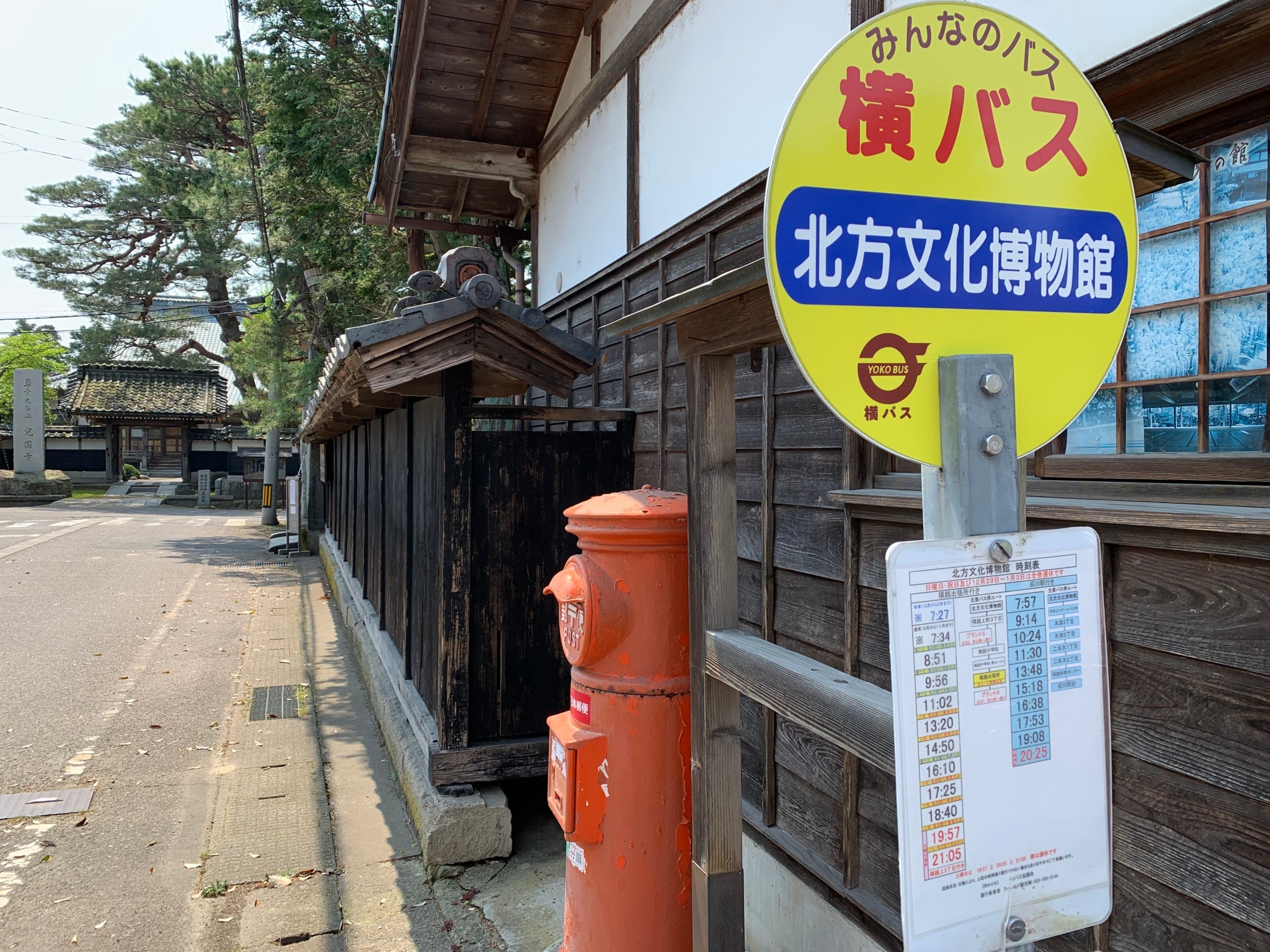
Japan's post-war land reforms, implemented during the American occupation, dismantled the great landlord estates. Families who had controlled thousands of hectares were stripped of their holdings. The Ito family saw the change coming. In 1946, just six months after the war's end, they established the Northern Culture Museum Foundation and donated the entire estate -- mansion, garden, art collection, and outbuildings -- before the reforms could claim it. The gesture transformed a private fortune into a public trust, and the Northern Culture Museum became the first privately operated museum in post-war Japan. A branch facility in Chuo-ku, Niigata supplements the main campus. Today, visitors arrive by bus from Niigata Station or from Ogikawa Station on the Shin'etsu Main Line, traveling through the rice paddies that once made the Ito family wealthy enough to build the house they now come to admire.
From the Air
Located at 37.83°N, 139.15°E in the Konan-ku ward of Niigata, south of the city center. The museum grounds sit in a rural area of the former Somi district surrounded by rice paddies, making the estate's large roofline and garden visible as a distinctive compound amid flat agricultural land. Best viewed from 2,000-3,000 feet AGL. Niigata Airport (RJSN) lies approximately 8 nautical miles to the north-northwest. The Shinano River and the Sea of Japan coastline provide orientation to the north and west.