Northern Lights Cathedral
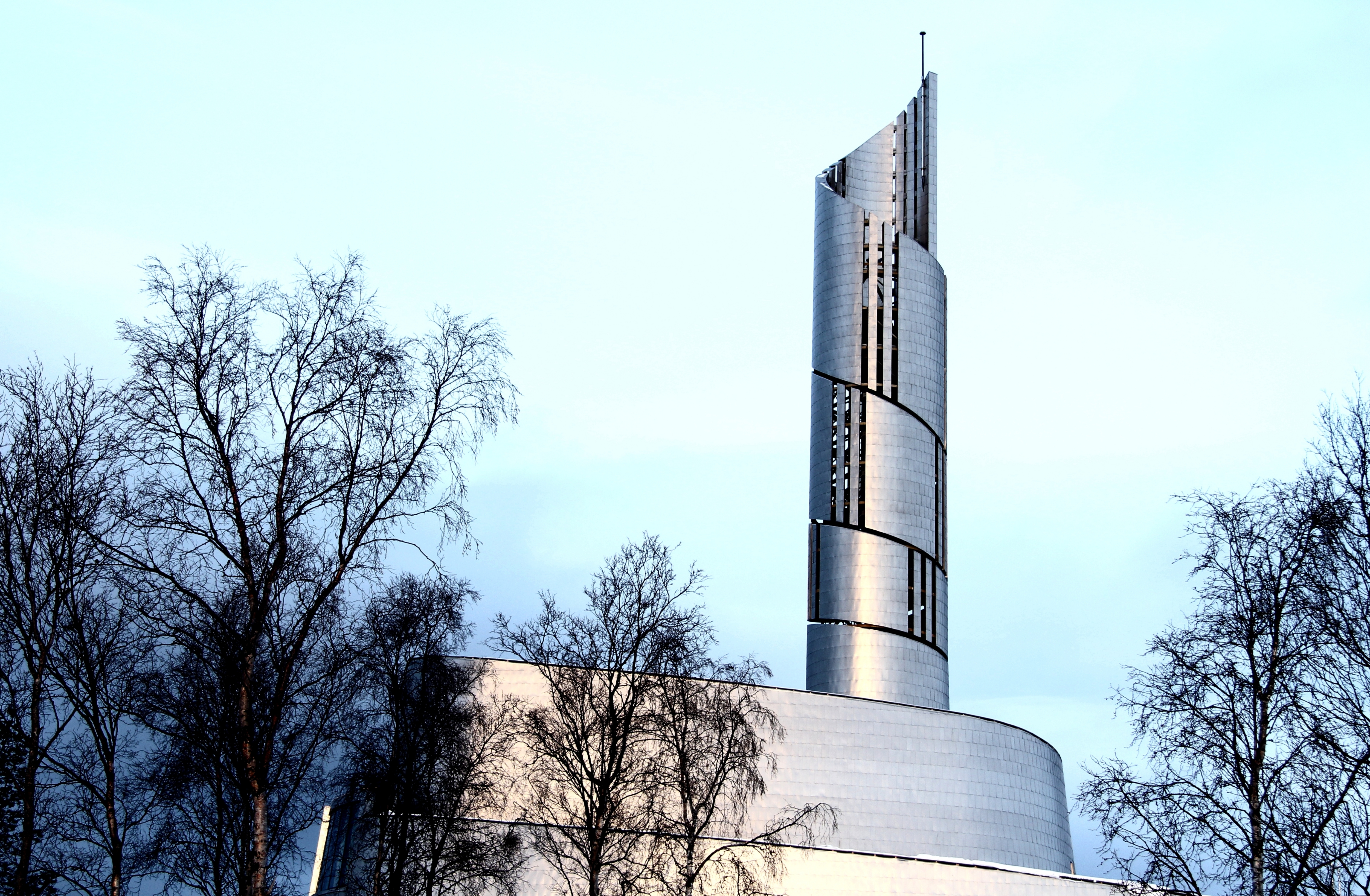
Technically, it is not a cathedral at all. When Bishop Per Oskar Kjolaas consecrated the Northern Lights Cathedral on February 10, 2013, with Crown Princess Mette-Marit in attendance, he acknowledged the controversy directly: the Norwegian word katedrale implies a bishop's seat, a domkirke, which this building is not. It is a parish church. But standing before it in the Arctic twilight, watching its titanium-clad spiral reach toward the sky like a frozen column of light, the grander name feels earned. The Nordlyskatedralen, as Norwegians call it, is the main church of Alta Municipality in Finnmark county, and it looks like nothing else in the Arctic.
A Spiral Wrung from Light
The building emerged from an architectural competition launched in 2001. Schmidt Hammer Lassen Architects, the Danish firm, collaborated with local architect Kolbjorn Jenssen of Link Arkitektur to create a design that evokes the aurora borealis in built form. Construction stretched from 2009 to 2013, producing a structure of concrete and wood wrapped in sheets of titanium that catch and scatter the available light. The central feature is a large spiral that rises to a belfry, a form that suggests the twisting curtains of the northern lights as they pulse across the polar sky. At 350 seats, the church is intimate rather than monumental, but the spiral gives it a vertical drama that belies its modest capacity.
Art Within the Arctic Shell
Inside, Danish artist Peter Brandes created the artwork that fills the church's interior spaces. The combination of Brandes's art with the building's curving walls and filtered Arctic light produces an atmosphere that is simultaneously contemplative and dynamic. Light behaves differently this far north: in winter, the sun barely clears the horizon, casting long amber rays through the titanium cladding; in summer, the midnight sun floods the interior with hours of unbroken illumination. The architects designed for both extremes, understanding that a church at nearly 70 degrees north latitude must serve a congregation that lives half the year in near-darkness and the other half under a sun that never sets.
The Name That Isn't Quite Right
Bishop Kjolaas defended his choice of name at the opening service by citing precedent. Norway already had the Lofotkatedralen in Lofoten and the Ishavskatedralen, the Arctic Cathedral, in Tromso, neither of which is a true cathedral in the ecclesiastical sense. His argument was practical: a bishop is at home in all churches of the diocese, so the distinction matters less than tradition suggests. The name stuck, and it serves the building well. The Northern Lights Cathedral announces itself as something more than an ordinary parish church, which it plainly is. At the edge of the habitable Arctic, where the aurora borealis is not metaphor but regular spectacle, naming a church after the phenomenon feels less like pretension than simple description.
Faith at Seventy Degrees North
Alta sits at 69.97 degrees north latitude, deep within the zone where the aurora borealis is most frequently visible. The town was almost entirely destroyed during World War II when retreating German forces burned it to the ground, and rebuilding took decades. The old Alta Church served the parish through that long recovery, but by the early 2000s the congregation needed a new main church. What they built was not just functional but aspirational: a statement that faith in this corner of the world deserves architecture that engages with the landscape rather than merely enduring it. The titanium spiral catches snow and starlight and the green shimmer of the aurora with equal grace, marking the town's skyline with a form as distinctive as the phenomenon it honors.
From the Air
Located at 69.97N, 23.27E in the center of Alta, Finnmark county, Arctic Norway. The titanium-clad spiral is a distinctive feature visible from the air, catching light against the surrounding townscape. Nearest airport is Alta Airport (ENAT), approximately 3 km to the east. The church sits near the Altafjord shore. Best viewed at low altitude (1,500-2,500 feet) approaching from the fjord side, where the spiral contrasts with the flat coastal terrain.