Northern Transylvania Holocaust Memorial Museum
The synagogue in Simleu Silvaniei stood empty for four decades. Built in 1876, it had served Jewish families from the town and surrounding villages of Giurtelecu Simleului and Nusfalau for nearly seventy years. Then, in May and June of 1944, the community it served was erased. Hungarian authorities, controlling Northern Transylvania under the Second Vienna Award, forced the area's Jewish population into the Cehei ghetto, packed them into cattle cars, and sent them to Auschwitz-Birkenau. Over 160,000 Jews from the region perished. The few survivors who remained eventually emigrated, the last Jewish family leaving in the mid-1960s. Without its congregation, the synagogue decayed in silence. Today it stands restored, not as a place of worship, but as the Northern Transylvania Holocaust Memorial Museum -- a place that insists on remembering what happened here.
From Ruin to Remembrance
In 2003, New York architect Adam Aaron Wapniak visited the abandoned synagogue at the urging of Mihaela Gross and saw something worth saving. His interest drew in Alex Hecht, a New York dentist whose parents, Zoltan and Stefania Hecht, had survived the Holocaust as residents of nearby Nusfalau. Together, Wapniak and Hecht launched a campaign that raised the funds to restore the building and establish it as a museum. The Jewish Architectural Heritage Foundation of New York partnered with a Romanian NGO, Asociatia Memoriala Hebraica Nusfalau, to operate the site. When the museum opened on September 11, 2005, it returned the synagogue to its community -- not the community that had built it, which was gone, but a new one committed to ensuring the loss was never forgotten. The restored 1876 building, with its original architecture preserved as the museum's centerpiece, became an educational hub in a region that had long avoided confronting this chapter of its history.
A Country's Reckoning
For decades, Romania deflected responsibility for the Holocaust onto Germany alone. Under communism, official history erased the Romanian government's role in deporting hundreds of thousands of Jews and tens of thousands of Romani from Bessarabia, northern Bukovina, and Transnistria during World War II. After the revolution of 1989, the distortion continued in a different form: wartime dictator Ion Antonescu was semi-rehabilitated, with monuments erected in his honor across the country. It took until November 2004, after the Wiesel International Commission presented its findings to the Romanian president, for the country to officially acknowledge the full dimensions of its complicity. The following year, President Traian Basescu and Prime Minister Calin Popescu-Tariceanu committed to implementing the commission's recommendations on education and combating racism. Romania banned pro-Nazi propaganda and the cult of war criminals. These shifts were hard-won, arriving after fifteen years of political setbacks.
Teaching What Textbooks Avoided
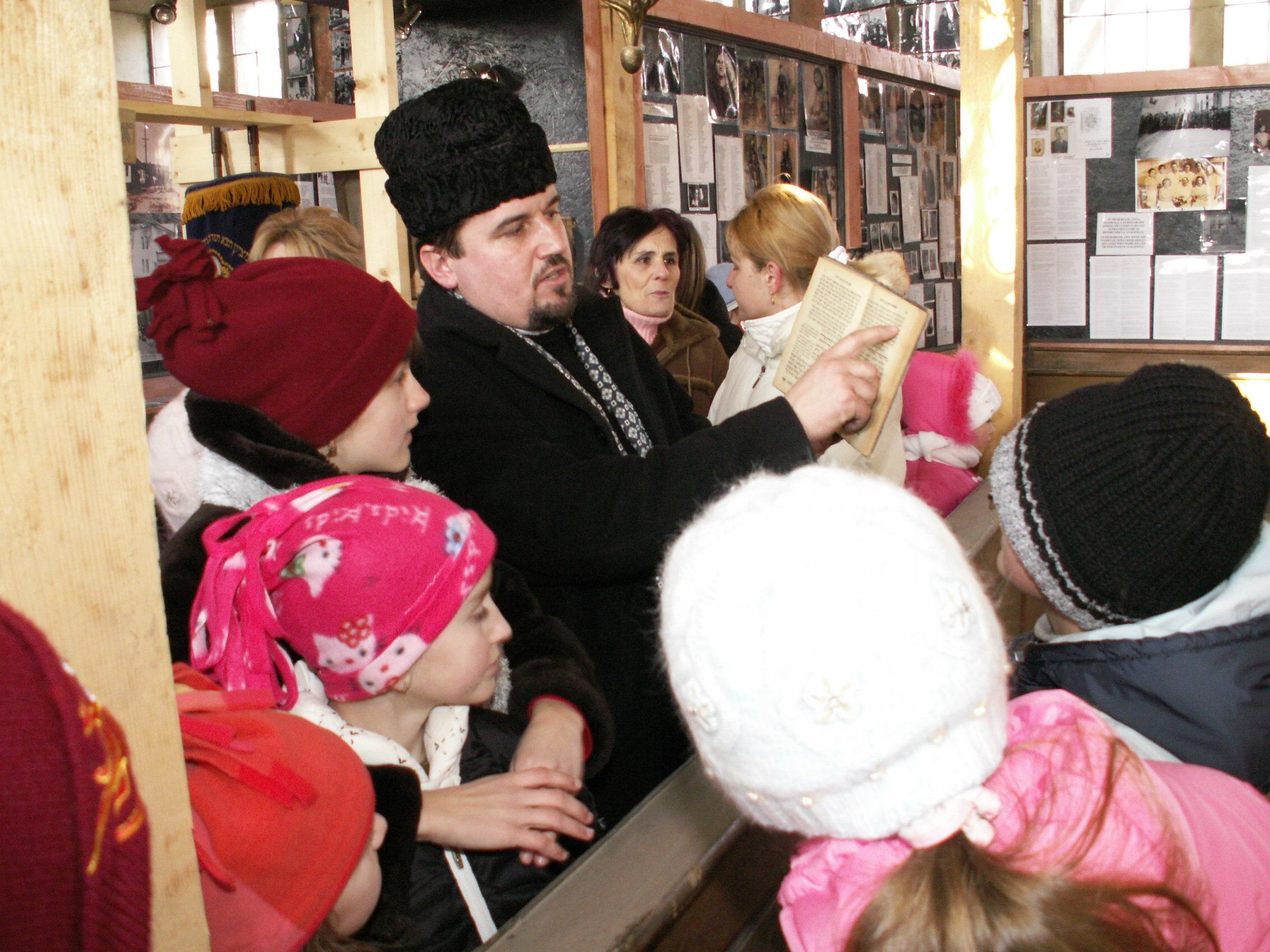
Holocaust education became mandatory in Romanian schools in 1998, but for years the textbooks contained little accurate information on the subject -- when they addressed it at all. A study by the International Task Force identified three persistent obstacles: lack of information, lack of diversity of sources, and too few trained teachers. The Northern Transylvania Holocaust Memorial Museum stepped into this gap. In cooperation with Romania's Ministry of Education, the museum hosted the country's first Holocaust Education Olympiad, bringing students from across the region to engage with the history on its own ground. In the spring of 2008, the museum inaugurated the Simleu Silvaniei Multicultural Holocaust Education and Research Center, designed for lectures, seminars, and academic programs. The teacher training component proved especially vital, helping educators learn how to incorporate the Holocaust into their curricula with sensitivity and accuracy. Student-led guided tours, a program started by Natalia Gross when she was still a high school student herself, give young Romanians a direct role in carrying the work of remembrance forward.
What the Walls Hold
The museum sits in Simleu Silvaniei, a quiet town in Salaj County in northwestern Romania. The building itself tells two stories at once. Its architecture speaks of the community that raised it in 1876 -- the Jewish families of this Transylvanian town who gathered here for worship, for weddings, for the rhythms of religious life that sustained them through generations. The exhibits inside tell what happened to those families. Between the walls that once held prayer, visitors encounter the documented history of deportation and murder that emptied this synagogue of its purpose. The museum operates with the support of the Claims Conference, the Elie Wiesel National Institute for Studying the Holocaust in Romania, and other philanthropic partners. It stands as one of only a handful of Holocaust memorial sites in Romania, in a country where the infrastructure of remembrance is still being built.
From the Air
The museum is located in Simleu Silvaniei at 47.230N, 22.802E, in Salaj County, northwestern Romania. From 3,000-5,000 feet AGL, the town is visible in the rolling hills of the Silvania region. The nearest significant airport is Oradea International Airport (LROD), approximately 70 km to the west. Cluj-Napoca International Airport (LRCL) lies about 100 km to the southeast. The terrain is hilly with agricultural fields and scattered villages. Weather is continental with potential low clouds in autumn and winter.