Norton Priory
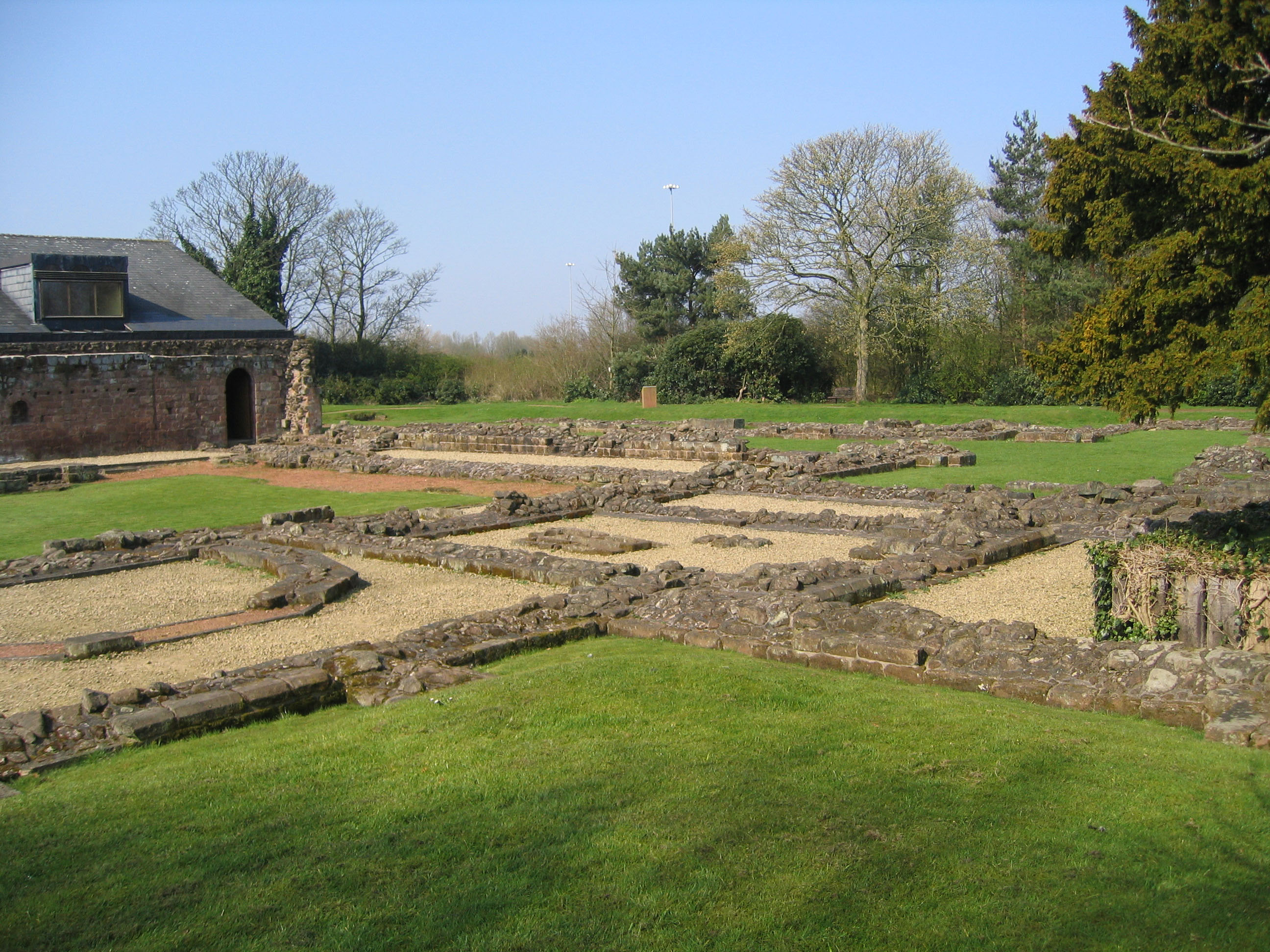
Beneath a quiet stretch of Runcorn in northern Cheshire, eight centuries of English life lie stacked like geological strata. Norton Priory is not one building but many: an Augustinian foundation from the twelfth century, elevated to an abbey in 1391, dissolved by Henry VIII in 1536, converted into a Tudor house, replaced by a Georgian mansion, and finally abandoned in the twentieth century before archaeologists peeled back the layers. The remains are considered the most important monastic ruins in Cheshire, and the excavations that uncovered them revealed not just architecture but the intimate details of how people lived, prayed, and were buried across half a millennium.
Canons and Centuries
The priory was established in the twelfth century as an Augustinian house, a community of canons regular who followed the Rule of St Augustine rather than the stricter Benedictine observance. For nearly four hundred years, the canons lived, worshipped, and managed their estates from this site beside the River Mersey. In 1391, the priory was elevated to the status of an abbey, a mark of its growing wealth and prestige. The Dutton family, local lords with close ties to the house, used it as their burial chapel, establishing a connection between secular power and monastic life that would shape Norton's history. Excavations revealed burials in stone coffins and wooden coffins with stone lids, dating from the late twelfth century through to the dissolution, giving archaeologists an unusually complete picture of medieval funerary practices across the social spectrum of a monastic community.
From Monastery to Manor
When Henry VIII dissolved the smaller monasteries in 1536, Norton Abbey was among them. Nine years later, Sir Richard Brooke purchased the surviving structures and the manor of Norton, building a Tudor house that incorporated parts of the medieval abbey. This was a common pattern across England: the monasteries' loss became the gentry's gain, as ambitious families converted religious houses into fashionable residences. The Brooke family would hold Norton for centuries, and in the eighteenth century they replaced the Tudor house with a Georgian mansion more suited to contemporary taste. The medieval undercroft survived beneath the later buildings, its vaulted ceiling intact, a twelfth-century room still functioning beneath an eighteenth-century house. The Brookes finally left in the early twentieth century, and the Georgian house was demolished.
Excavation and Discovery
What makes Norton Priory exceptional is the scale and quality of its archaeological investigation. Major excavations in the 1970s and 1980s uncovered the full layout of the medieval priory, including the church, cloister, chapter house, and domestic ranges. The undercroft, with its Norman arches and ribbed vaulting, emerged as the best-preserved element, now the centrepiece of the museum that occupies the site. Among the most significant finds was the fourteenth-century statue of St Christopher, carved in local sandstone, which had been built into a later wall and survived the dissolution intact. The excavations also revealed the successive phases of building on the site, from the earliest Augustinian structures through to the Georgian alterations, each generation building on or adapting what came before.
A Living Site
Today Norton Priory operates as a museum and garden, its Grade I listed remains set within a walled garden that itself dates from the Brooke family's tenure. The site holds the distinction of being both a scheduled ancient monument and a designated listed building, a recognition of its layered significance. The museum displays finds from the excavations alongside interpretive exhibits that trace the site's evolution from religious house to private estate. Walking the grounds, visitors move through a landscape where medieval fishponds, Tudor garden walls, and Georgian landscaping coexist, each era visible if you know where to look. Norton Priory's quiet persistence, through dissolution, demolition, and neglect, offers a compact lesson in how English places absorb their own histories, burying one chapter beneath the next.
From the Air
Located at 53.342N, 2.680W in Norton, Runcorn, Cheshire. The site sits near the south bank of the River Mersey. Nearest airports: Liverpool John Lennon (EGGP, 10nm west), Manchester (EGCC, 20nm east), Hawarden (EGNR, 15nm southwest). The museum and walled garden are visible from low altitude amid suburban development.