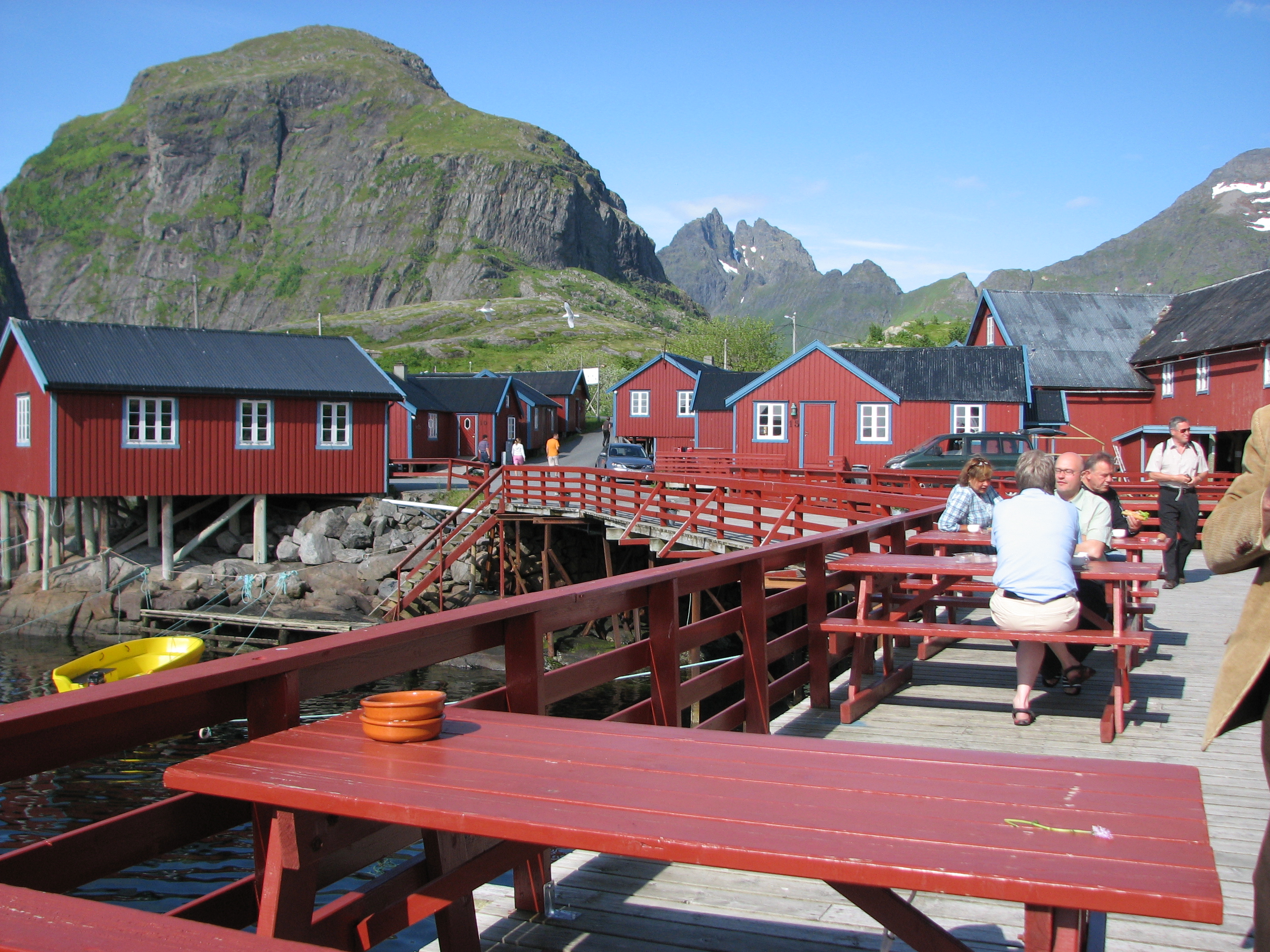
Norwegian Fishing Village Museum
Every winter for centuries, thousands of fishermen from across northern Norway sailed to Lofoten for the cod. They came in open boats, slept in rorbuer -- cramped wooden cabins built on stilts over the water -- and worked through the dark Arctic months hauling fish from some of the richest cod spawning grounds on Earth. The Norwegian Fishing Village Museum, or Norsk Fiskeværsmuseum, preserves the place where that life happened. Set in the village of Å at the very end of the Lofoten road, the museum is not a reconstruction or a replica. It is the real thing: the actual buildings, boats, and equipment of a working fishing village, frozen in time.
Building a Memory
The museum was founded on July 3, 1987, by the Moskenes History and Museum Society in collaboration with the municipal council and local figure Sigurd Harald Ellingsen. It opened to visitors in June 1988 and has received public grants since 1990. The timing was deliberate. By the late 1980s, the old fishing economy that had defined Å for generations was fading, replaced by modern trawling operations and shifting demographics. The founders recognized that the buildings themselves -- the boathouses, the cod liver oil facility, the drying racks, the fishermen's quarters -- were artifacts as valuable as anything inside them. Rather than let them decay or be converted, they preserved the entire village fabric as a museum. Several buildings host varied exhibitions, but the coherence of the whole is what makes the place remarkable. You are not visiting a museum that happens to be in a fishing village; you are visiting a fishing village that happens to be a museum.
Life Between the Tides
The museum's focus spans roughly 120 years, from about 1840 to 1960, the period when the Lofoten fishery operated at its most intense and its most traditional. During the annual winter season, Å swelled with transient fishermen who rented rorbuer from local landlords. The exhibitions show what their days looked like: rising before dawn, rowing or motoring to the fishing grounds, hauling cod by hand, returning to sort and gut the catch. Women processed the fish on shore, splitting and salting or hanging it on racks to become stockfish. The cod liver oil facility -- one of the oldest surviving in Europe, established in 1850 -- rendered livers into the vitamin-rich oil that became a staple of Norwegian and international medicine. Life was governed by weather, tides, and the arrival and departure of the cod. When the fish moved on, so did the fishermen, and Å returned to its quiet permanent population until the next season.
The Village as Artifact
What distinguishes the Norwegian Fishing Village Museum from conventional museums is its scale. The entire settlement of Å functions as the exhibit. Red-painted rorbuer line the harbor. A traditional boathouse shelters wooden fishing boats of the type that once filled these waters. The bakery, operational since 1844 with its 1878 wood-fired oven, still produces bread. Walking the gravel paths between buildings, you move through the spatial logic of a community organized entirely around fish: harbor at the center, processing buildings nearby, living quarters above, drying racks stretching along the shoreline. The museum is part of the Museum Nord consortium, which manages cultural institutions across the Lofoten and Vesterålen region. Together with the neighboring Lofoten Stockfish Museum, it forms a pair of institutions that explain both the commodity and the community it created -- two halves of the same story told within a few hundred meters of each other at the end of the road.
From the Air
Located at 67.88°N, 12.98°E in the village of Å at the southern terminus of the E10 highway on Moskenesøya in the Lofoten archipelago. The village is visible from the air as a tight cluster of traditional red wooden buildings at the island's tip. Nearest airport: Leknes Airport (ENLK), approximately 65 km northeast. Bodø Airport (ENBO) provides the main mainland connection. Recommended viewing altitude: 2,000-4,000 ft. The fish-drying racks along the shoreline are a distinctive visual feature during the February-June season.