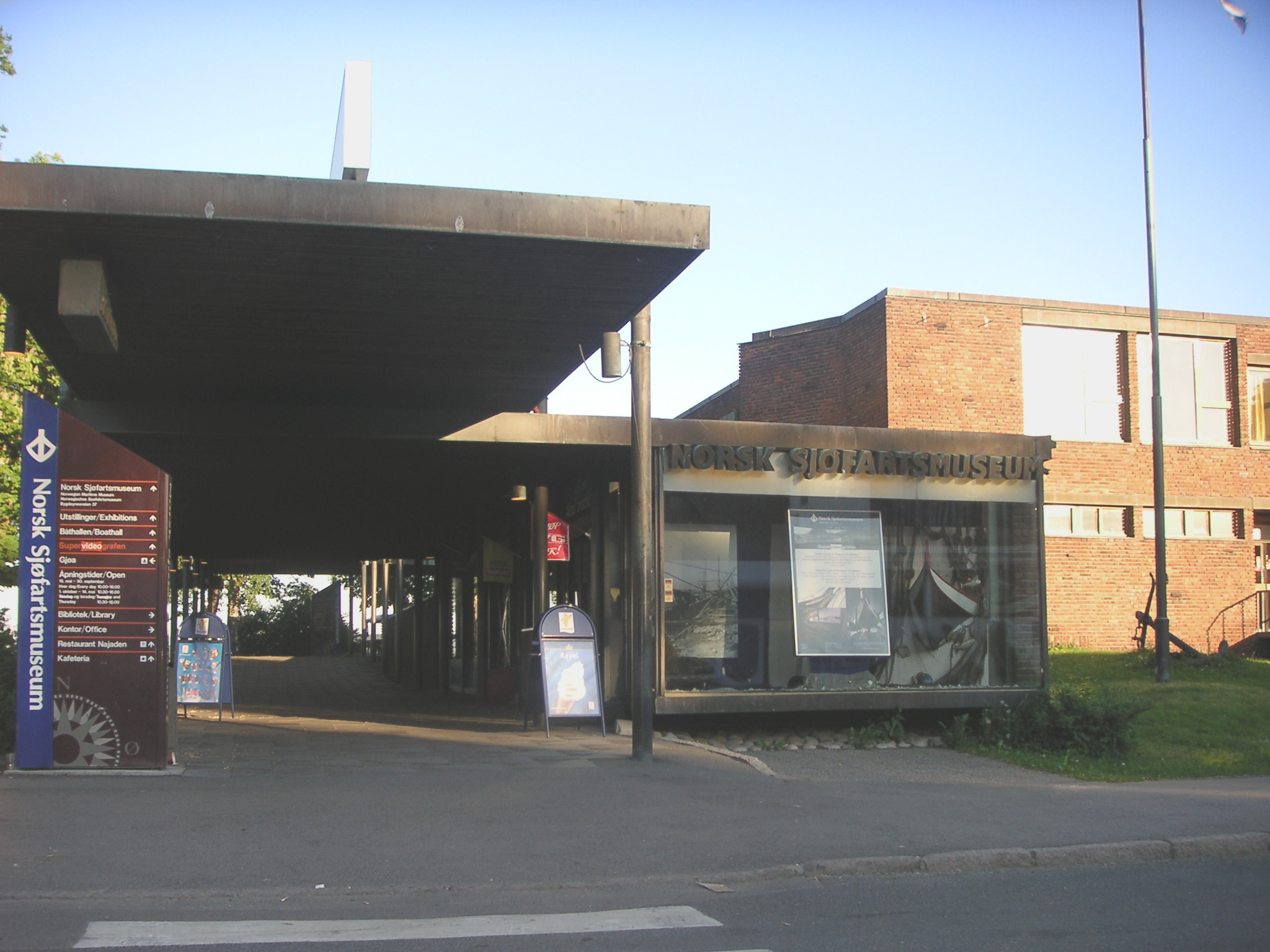
Norwegian Maritime Museum
The ship that proved the Northwest Passage was navigable spent decades parked outside a museum on Oslo's Bygdoy peninsula. Roald Amundsen's Gjoa -- the small sloop that threaded through Arctic ice from 1903 to 1906, completing a voyage that had defeated explorers for centuries -- was displayed at the Norwegian Maritime Museum from 1972 until 2009, when it moved next door to the Fram Museum. That the Gjoa was just one exhibit among many says something about the depth of Norway's maritime heritage and the institution dedicated to preserving it.
A Century on the Water's Edge
The Norwegian Maritime Museum was founded in 1914, when Norway was barely a decade into its independence from Sweden and still defining the institutions that would represent its national character. That a maritime museum ranked among the early priorities surprised no one. Norway's coastline stretches over 25,000 kilometers when fjords and islands are included, and for centuries the sea had been the country's primary highway, workplace, and connection to the outside world. The museum -- originally known as the Norsk Sjofartsmuseum -- was established to document this relationship in all its dimensions: fishing, trade, naval warfare, exploration, and the everyday reality of life in a country where the nearest neighbor was often reached by boat rather than road. Its location on the Bygdoy peninsula placed it at the heart of what would become Oslo's densest concentration of museums.
Ships That Tell Stories
Two vessels remain on permanent display at the museum. The Stavanger, designed by the legendary boat builder Colin Archer for the Norwegian Society for Sea Rescue (Redningsselskapet), represents the tradition of rescue craft that patrolled Norway's treacherous coast -- vessels built to survive conditions that would destroy ordinary boats. Archer, a Norwegian of Scottish descent, developed a hull form so seaworthy that his designs influenced rescue vessels across Scandinavia. The three-masted schooner Svanen, built during the winter of 1915-1916, served with the Norwegian merchant fleet and embodies the commercial sailing tradition that made Norway one of the world's largest shipping nations. Together, these two ships frame the museum's central argument: that Norway's relationship with the sea is not merely historical but structural, woven into the economy, the landscape, and the national temperament.
The Bygdoy Museum Quarter
The Norwegian Maritime Museum sits within walking distance of some of the most remarkable museum collections in Scandinavia. The Fram Museum houses the polar vessel Fram, which carried both Fridtjof Nansen and Roald Amundsen on their legendary expeditions, along with the Gjoa that the Maritime Museum once displayed. The Kon-Tiki Museum preserves Thor Heyerdahl's famous balsa raft and his reed boat Ra II. The Norwegian Museum of Cultural History, with its open-air collection of 150 relocated buildings including the Gol Stave Church, sprawls across the peninsula's interior. The Viking Ship Museum -- housing the Oseberg and Gokstad ships, among the best-preserved Viking vessels ever found -- completes the constellation. The Maritime Museum operates in conjunction with the Norwegian Folk Museum, sharing resources and administration. Taken together, these institutions make Bygdoy one of the most concentrated museum districts in Europe, a place where a thousand years of Norwegian maritime and cultural history can be experienced in a single afternoon.
Canvas and Compass
Beyond its ships and artifacts, the museum holds a significant collection of maritime art. Paintings by artists like Eilert Adelsteen Normann, whose images of steamships arriving in Lofoten captured the transformation of Norway's northern coast, hang alongside works by Carl Wilhelm Barth and John William Edy, whose views of Christiania documented the city before it became Oslo. Lars Lauritz Larsen Haaland's depictions of fishermen at Kvitsoy record a way of life that has largely vanished. These paintings serve a documentary function as much as an aesthetic one -- they show what Norwegian waters looked like, how ships were rigged, where harbors stood, and how coastal communities organized themselves around the rhythms of tide and season. For a country whose identity was forged at sea, these canvases are as much historical records as the logbooks and charts preserved in the museum's archives.
From the Air
Located at 59.903N, 10.699E on the tip of the Bygdoy peninsula in western Oslo. The museum sits at Bygdoynesveien, near the cluster of museum buildings visible from the air along the peninsula's southern shore. The Fram Museum's distinctive A-frame structure is a useful landmark nearby. Nearest airport is Oslo Gardermoen (ENGM), approximately 50 km northeast. Approach from the south over the Oslofjord to see the full Bygdoy museum peninsula in context. Recommended viewing altitude: 1,500-2,500 feet AGL.