Norwegian Olympic Museum
Bjorn Dahlie won eight Olympic gold medals and four silvers across three Winter Games, making him one of the most decorated Winter Olympians in history. When asked about the Norwegian Olympic Museum, he said the stories inside could inspire young people to stay in sports. Coming from a man who knows something about perseverance -- cross-country skiing at the Olympic level is among the most physically punishing pursuits in competitive athletics -- that endorsement carries weight. The museum he was praising sits in Lillehammer, the town where Dahlie won two of those golds in 1994, and it holds more than 7,000 objects that trace the Olympic movement from its ancient Greek origins to the present day.
A Royal Opening, a New Home
King Harald V and Queen Sonja officially opened the Norwegian Olympic Museum on November 27, 1997, inside Hakons Hall, the ice hockey arena built for the 1994 Winter Games. For nearly two decades the museum operated there, surrounded by the very infrastructure that had brought the Olympics to this town of 28,000 people in Norway's interior. In 2016, the museum moved to Maihaugen, one of Northern Europe's largest open-air museums, where it reopened with a thoroughly modern design. The new location placed Olympic history alongside Maihaugen's broader collection of Norwegian cultural heritage, creating a context that the sports arena could not: the Olympics as part of a longer national story, not an isolated spectacle.
From Olympia to Oslo to Lillehammer
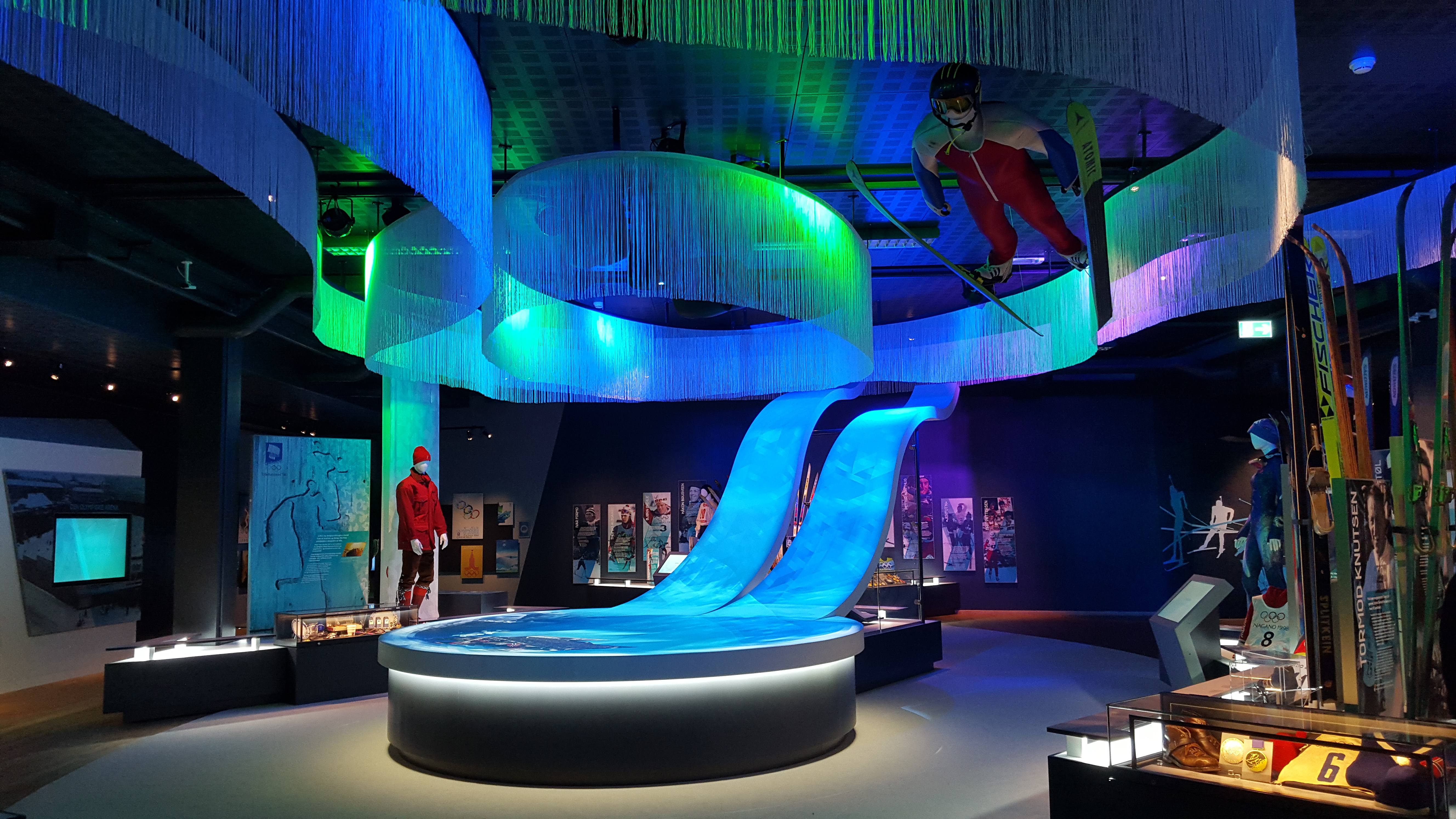
The permanent exhibition spans the full arc of Olympic history, beginning with the ancient games in Greece and moving through the modern revival launched by Pierre de Coubertin in 1896. But the museum's center of gravity is Norwegian. The 1952 Winter Olympics in Oslo -- the first Winter Games held in Scandinavia -- and the 1994 Lillehammer Games receive the deepest treatment. Interactive installations and multimedia presentations bring key moments to life, while the authentic objects anchor the stories in physical reality: skis, medals, uniforms, and equipment that athletes actually used. The museum is the only institution in northern Europe to present the complete Olympic narrative under one roof, a distinction that reflects Norway's outsized role in winter sports history.
Beyond the Podium
The museum does not limit itself to gold-medal moments. The Paralympics and Youth Olympics each have dedicated sections, acknowledging that the Olympic movement extends well beyond the main games. Temporary exhibitions rotate through themes related to sports history and athletic achievement, keeping the museum relevant between Olympic cycles. The collection of more than 7,000 items provides material for these rotating displays, ensuring that repeat visitors encounter new stories. What the museum captures, ultimately, is not just athletic competition but the human impulse behind it -- the drive to test physical limits, the communal experience of watching others do so, and the way a small town in Norway's interior became, for a few weeks in February 1994, the center of the sporting world.
From the Air
Located at 61.11N, 10.48E in Lillehammer, Innlandet county, at the Maihaugen open-air museum complex on the eastern side of town. The Lysgardsbakken ski jump tower and other Olympic venues are visible on the hillside to the north. Lake Mjosa stretches to the west. Nearest major airport is Oslo Gardermoen (ENGM), approximately 140 km south. Best viewed at 2,000-3,000 feet AGL in conjunction with the broader Lillehammer Olympic venue complex.