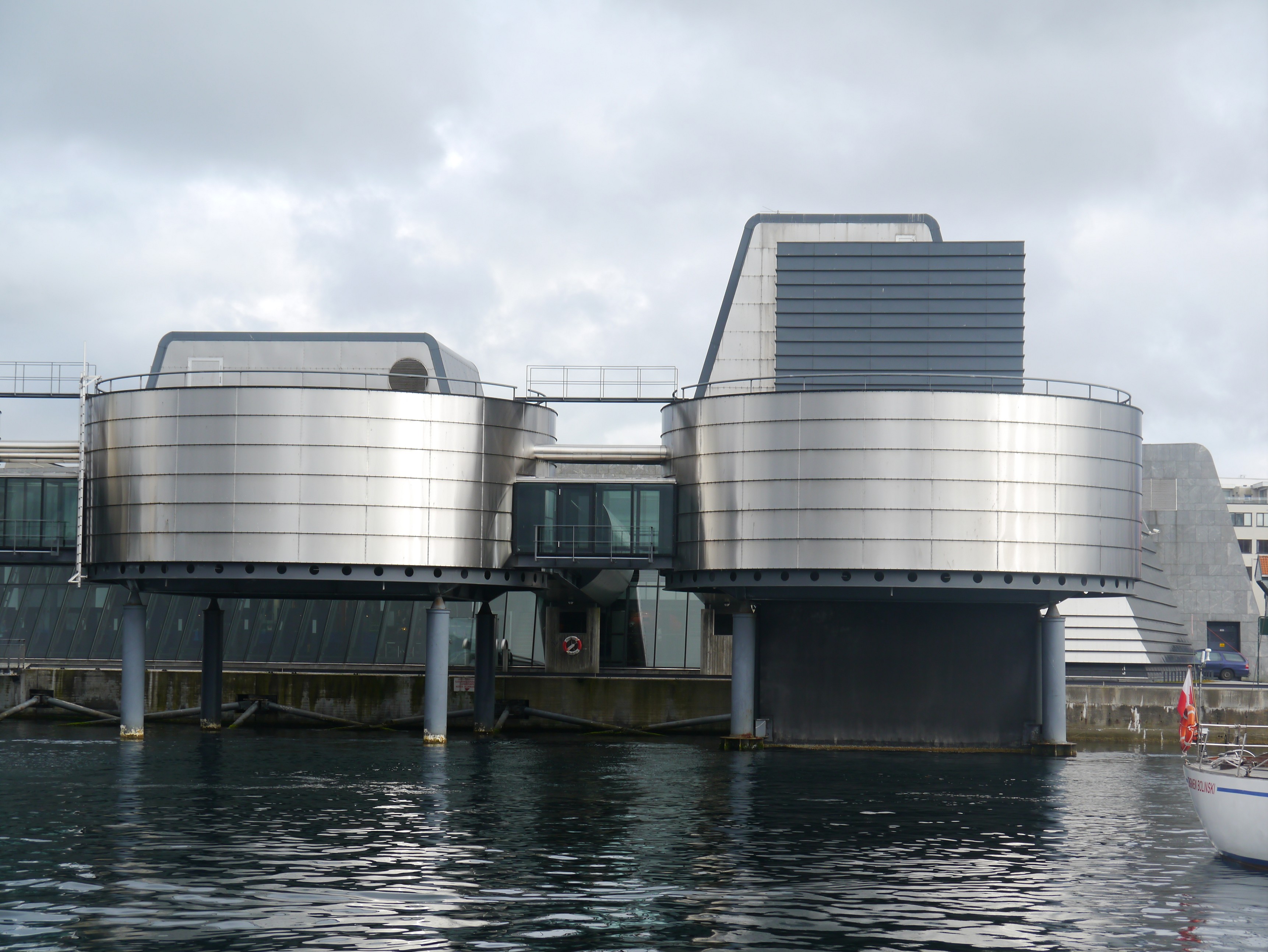
Norwegian Petroleum Museum
Seen from the water, the Norwegian Petroleum Museum looks like a small oil platform that has wandered ashore and settled into the harbor at Stavanger. That is exactly the point. Designed by Lunde and Lovseth Arkitekter and opened on 20 May 1999, the building was conceived as a piece of architecture that would make its subject visible before a visitor even walks through the door. Built from stone, glass, and concrete, it covers roughly 5,000 square meters on Stavanger's waterfront and has become a landmark in a city that owes its modern prosperity almost entirely to what lies beneath the North Sea.
The Discovery That Changed Everything
Norway's petroleum story begins in the mid-1960s, when exploration drilling in the North Sea first hinted at what lay beneath the seabed. The museum traces the full arc of that story, from the earliest wildcat wells through the development of massive steel and concrete platforms to the flexible production ships and subsea systems that define modern offshore operations. The displays include objects, films, photographs, and technical equipment that document not just the engineering but the human experience of working hundreds of kilometers offshore in some of the most hostile waters on Earth. For a country that was, within living memory, primarily a nation of fishermen, farmers, and sailors, the discovery of North Sea oil was a transformation so rapid and so complete that it requires a museum to make sense of it.
Platforms Built Like Cathedrals
The museum gives particular attention to the platforms themselves -- the enormous structures that Norwegians designed, built, and towed out to the North Sea. The concrete gravity-based platforms developed in Norway were engineering achievements on a scale that is difficult to appreciate without seeing the models and cross-sections on display. Some stood in water depths exceeding 300 meters, anchored to the seabed by their own weight, housing hundreds of workers in conditions that ranged from functional to genuinely dangerous. The Gullfaks platform, represented in the museum's displays, is one example of the Norwegian approach to deep-water production: massive, purpose-built, and designed to withstand waves, currents, and weather that would flatten most structures on land.
A Wealth Carefully Managed
What makes Norway's petroleum story unusual is not the oil itself but what the country chose to do with the revenue. Rather than spending the windfall immediately, Norway established a sovereign wealth fund -- now one of the largest in the world -- to preserve petroleum wealth for future generations. The museum does not shy away from this broader context. Stavanger was the city that most directly felt the boom: its harbor filled with supply vessels, its population swelled with engineers and roughnecks, and its economy pivoted from fish to hydrocarbons in less than a generation. The museum sits in the same harbor that once served fishing boats and now serves offshore logistics, a physical reminder that the city's relationship with the sea changed its character entirely but never actually ended.
A Landmark on the Waterfront
The architecture of the museum rewards a second look. Its angular, industrial forms reference the offshore structures it documents, but the use of glass and open space creates something that feels more like a contemporary art gallery than a heavy-industry showcase. The building's position on the waterfront means that the North Sea -- the actual subject of the museum -- is visible from many of its galleries. Objects on display include everything from drill bits and wellhead equipment to scale models of platforms and production systems. An oil well Christmas tree, the assembly of valves that controls flow from a wellhead, sits among the exhibits as a reminder that the technology on display is not abstract but intensely practical. Every piece in the collection was designed to extract fuel from rock beneath freezing, storm-tossed water -- and the museum makes the audacity of that enterprise tangible.
From the Air
Located at 58.97N, 5.73E on the waterfront in Stavanger, Norway. The museum's angular, platform-like architecture is visible from the harbor. Nearest airport: Stavanger Airport, Sola (ENZV), approximately 14 km southwest. Fly over Stavanger harbor at 1,500-2,000 ft for views of the museum building at the water's edge, with the North Sea visible beyond the city.