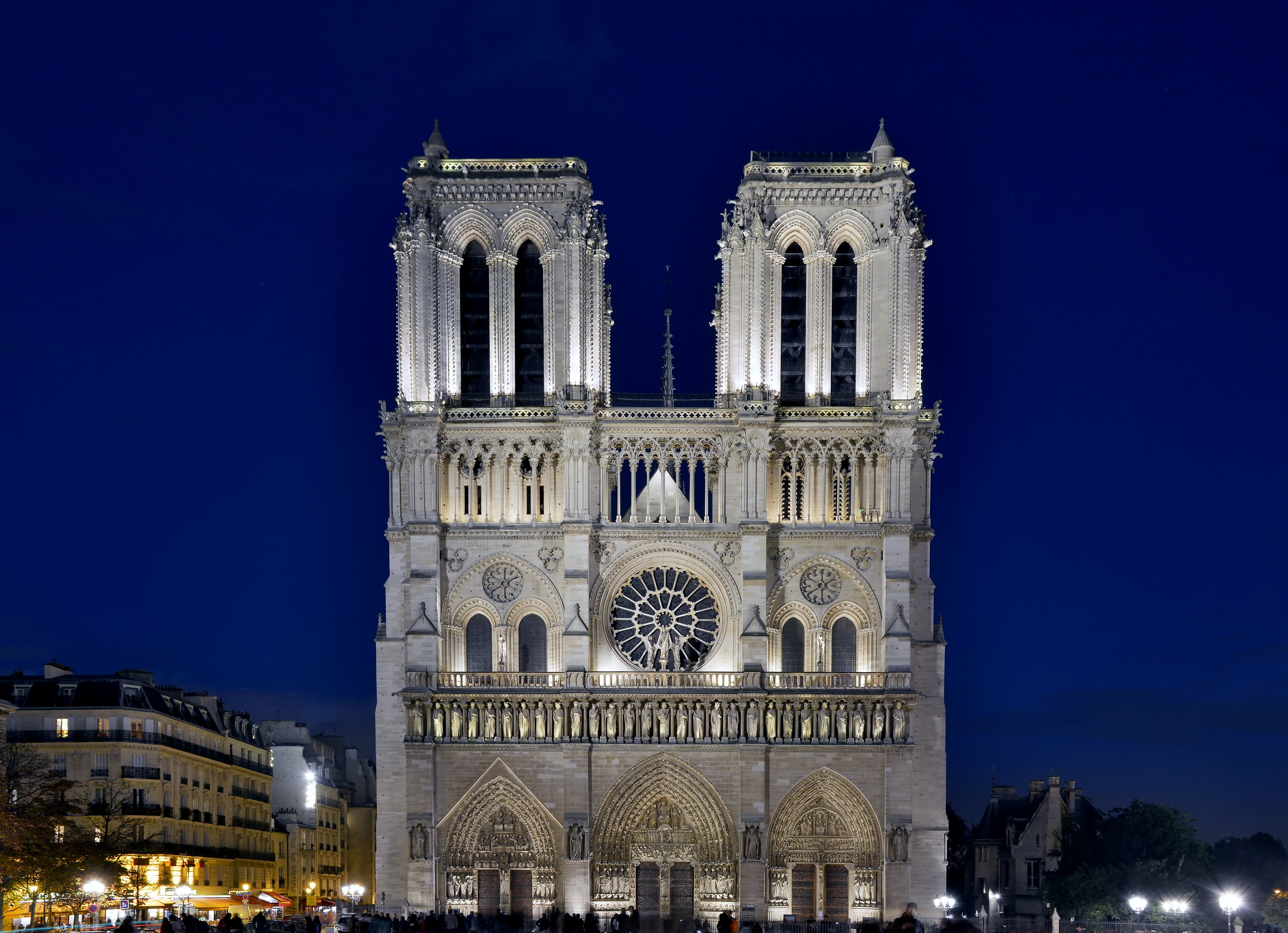
Notre-Dame: The Cathedral That Burned and Rose Again
On April 15, 2019, Notre-Dame de Paris burned. The world watched live as flames engulfed the 850-year-old cathedral, collapsing the spire that had defined the Paris skyline. In the smoke and ash, many assumed the worst. But the stone vaults held. The rose windows survived. The relics were rescued. And France, united in grief, rebuilt the cathedral in five years - reopening in December 2024. Notre-Dame, which had survived the French Revolution, two world wars, and eight centuries of wear, added another chapter to its story: the cathedral that died and was reborn.
The Construction
Bishop Maurice de Sully began construction in 1163 on the Île de la Cité, the island in the Seine that was medieval Paris's heart. The cathedral wasn't completed until 1345 - 182 years of continuous construction. Generations of masons lived and died building Notre-Dame.
The builders pioneered Gothic architecture: flying buttresses that transferred the weight of the vaults outward, allowing walls to be opened for windows. The rose windows - three massive circles of stained glass - flood the interior with colored light. The spire, added in the 19th century, rose 315 feet above the crossing.
The History
Notre-Dame witnessed French history. Mary Queen of Scots married Francis II here. Napoleon crowned himself emperor in the nave. Victor Hugo's novel 'The Hunchback of Notre-Dame' (1831) sparked a restoration movement that saved the decaying building.
The cathedral survived the French Revolution, when revolutionaries decapitated statues of biblical kings, mistaking them for French monarchs. It survived the Paris Commune. It survived both world wars. By 2019, it needed major restoration - scaffolding already covered the spire when the fire started.
The Fire
The fire began around 6:50 PM on April 15, 2019, probably from an electrical short-circuit in the scaffolding or roof. The medieval timber roof - the 'forest' of 1,300 oak beams, some dating to the original construction - ignited rapidly.
The world watched live as the spire collapsed in flames. Firefighters battled to save the structure, pumping water from the Seine. They formed chains to rescue relics. At midnight, the fire was contained but not extinguished. Dawn revealed the damage: the roof gone, the spire gone, the interior charred - but the walls standing, the rose windows intact, the structure saved.
The Rebuilding
President Macron promised to rebuild Notre-Dame in five years - for the 2024 Paris Olympics. Skeptics scoffed. French oak forests donated trees. Traditional craftsmen were recruited. Modern technology mapped every stone.
The debate over reconstruction was fierce: should the spire be rebuilt as it was, or reimagined in contemporary style? Tradition won. The new spire reproduces Viollet-le-Duc's 19th-century design. The roof uses traditional techniques - though the new 'forest' is fire-resistant. The work that took medieval masons 200 years was completed in five.
The Resurrection
Notre-Dame reopened on December 8, 2024, exactly five years and seven months after the fire. Dignitaries from around the world attended. The cathedral gleamed - cleaned of centuries of soot, its stonework revealed in original pale gold.
The fire became part of Notre-Dame's story. Future generations will know it as the cathedral that burned and rose. The stone that witnessed medieval kings and revolutionary mobs and Nazi occupation now bears another layer of history. Notre-Dame has proven what the builders always knew: cathedrals are built for eternity.
From the Air
Notre-Dame de Paris (48.85N, 2.35E) stands on the Île de la Cité in central Paris, France. Paris Charles de Gaulle Airport (LFPG) is 25km northeast. Paris Orly (LFPO) is 14km south. The cathedral is visible from the air on the island in the Seine, the new spire now restored. The Eiffel Tower is 4km west. The Louvre is 1km north. Weather is maritime temperate - mild year-round with frequent rain.