Notre-Dame de Paris
On a spring evening in April 2019, Parisians stopped in the streets and wept as flames consumed the roof of Notre-Dame. The medieval oak timberframe -- called "the forest" because it took 1,300 trees to build -- burned in hours. The 19th-century spire collapsed. Yet the stone vaults held. The rose windows survived. And five years later, the cathedral reopened, its interior scrubbed to a luminous white that no living person had ever seen. Notre-Dame de Paris, begun in 1163, has been rebuilt, desecrated, neglected, restored, and nearly destroyed. Each crisis has only deepened the city's attachment to this building on the Île de la Cité, the small island in the Seine where Paris itself began.
An Island's Foundation
Before the first stone of Notre-Dame was laid, this site was already sacred. A Gallo-Roman temple to Jupiter once stood here, evidenced by the Pillar of the Boatmen discovered beneath the cathedral in 1710. By the 4th century, the Cathedral of Saint-Étienne occupied the ground, a marble-columned church decorated with mosaics. Bishop Maurice de Sully began the current cathedral in 1163, and for nearly a century Paris lived alongside a construction site. The choir was completed by 1182, the nave by the 1190s, the western facade with its twin towers by the 1240s. The flying buttresses -- among the earliest ever built -- transferred the roof's weight outward to freestanding supports, allowing walls to become windows. Laser scans have shown the upper structure has not shifted measurably in 800 years.
Revolution and Resurrection
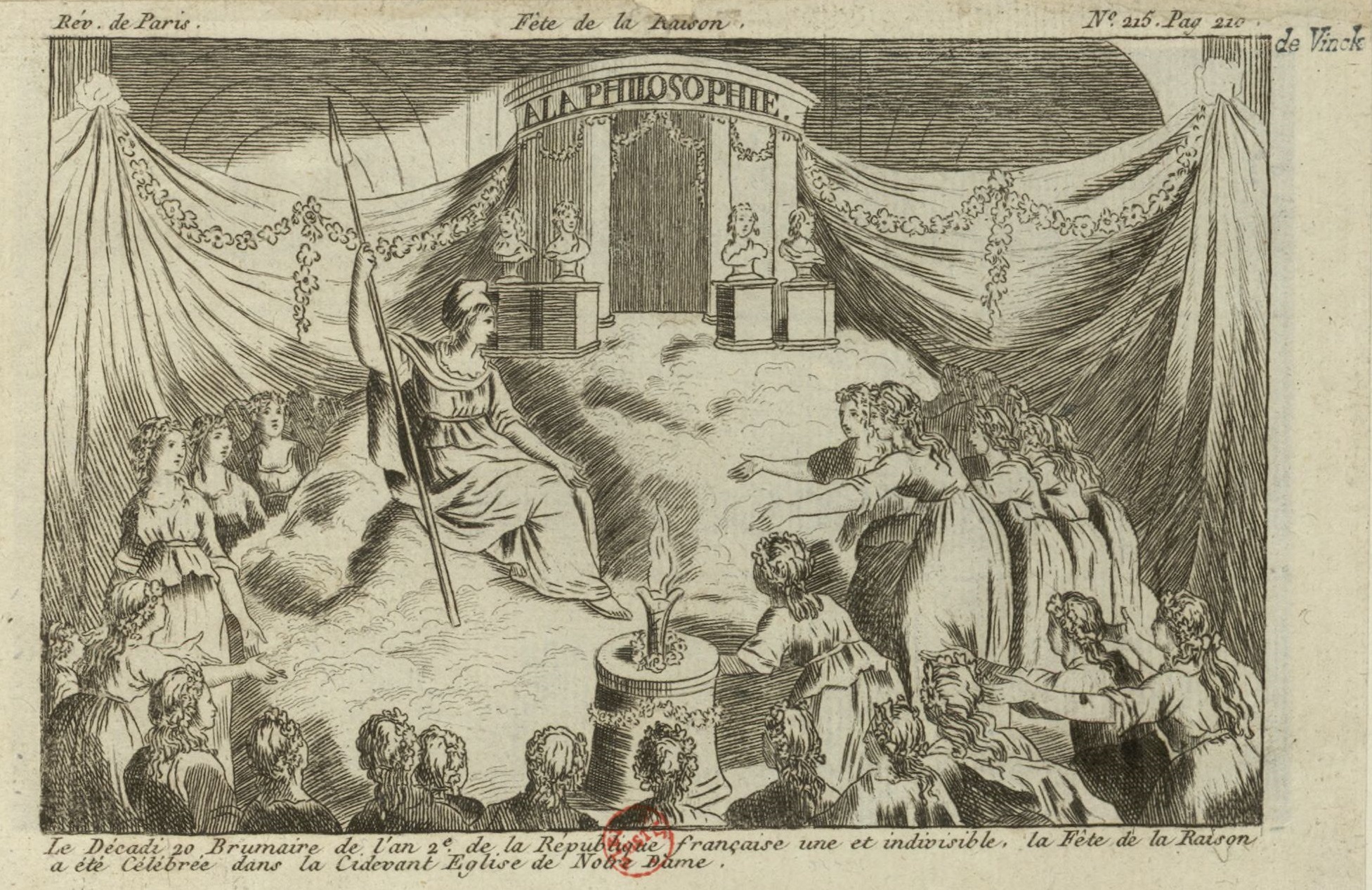
The French Revolution nearly ended Notre-Dame. In 1793, the Revolutionary Commune stripped its bronze, lead, and precious metals for the war effort. Crowds toppled the 28 statues of the Kings of Judah from the western facade, mistaking them for French monarchs. The Goddess of Liberty replaced the Virgin Mary on altars. For a period, the building served as a Temple of Reason and later as a wine warehouse. By the early 19th century, Notre-Dame was in such disrepair that Paris officials considered demolishing it. What saved the cathedral was a novel. Victor Hugo published Notre-Dame de Paris in 1831, and the book's vivid evocation of the medieval building sparked a public outcry for its preservation. King Louis Philippe ordered a restoration in 1844, and architect Eugène Viollet-le-Duc spent two decades rebuilding, adding the distinctive spire and the gargoyles that became the cathedral's most photographed features.
Stone, Light, and Sound
Three rose windows define Notre-Dame's interior. The western rose, completed around 1220, spans nearly 10 meters in diameter. The north rose, built by Jean de Chelles in the 1250s, retains most of its original 13th-century glass -- a remarkable survival given the centuries of upheaval. The cathedral's three pipe organs include the great organ, one of the most famous instruments in France, with five manuals and nearly 8,000 pipes. The great bells are equally celebrated: Emmanuel, the largest, cast in 1686 and weighing 13 tons, has tolled for coronations, liberations, and national mourning. On August 26, 1944, with German snipers still firing from rooftops, General de Gaulle walked into Notre-Dame for a Mass celebrating the liberation of Paris -- bullets struck the vaulting during the service.
Through the Fire
The fire of April 15, 2019, began in the attic during a renovation project. The medieval timber roof, tinder-dry after 800 years, burned with terrifying speed. Viollet-le-Duc's spire, a 750-ton lead-and-oak structure, fell through the vault. Firefighters focused on saving the towers and the north belfry, which held the great bells; had the belfry collapsed, the entire cathedral might have followed. Inside, first responders formed a human chain to evacuate relics including the Crown of Thorns, a relic venerated since the 13th century. The stone ribbed vaults, though punctured in places, prevented the burning roof from destroying the interior entirely. An estimated $739 million funded the restoration, which employed over 2,000 workers and specialists in stone, glass, and timber. The cathedral formally reopened with a ceremony on December 7-8, 2024, and the Crown of Thorns was returned on December 13.
The Heart of Paris
Before the fire, roughly 12 million people visited Notre-Dame each year, making it the most visited monument in Paris -- ahead of the Eiffel Tower and the Louvre. The bronze star embedded in the pavement of the parvis, the square in front of the cathedral, marks Point Zéro, the reference point from which all distances in France are measured. Owned by the French state since 1905, with exclusive use granted to the Catholic Church, the cathedral sits at the geographic and symbolic center of the nation. From the air, the Île de la Cité appears as a stone vessel moored in the Seine, and Notre-Dame is its prow, pointing east toward the sunrise that still fills those rose windows with color each morning.
From the Air
Located at 48.8530°N, 2.3498°E on the Île de la Cité in the center of Paris. Best viewed from 2,000-3,000 feet AGL approaching from the west along the Seine, where the cathedral's cruciform shape and restored spire are clearly visible. The island setting makes it unmistakable from the air. Nearest airports: Paris-Orly (LFPO) 14 km south, Paris-Le Bourget (LFPB) 12 km northeast, Paris-Charles de Gaulle (LFPG) 25 km northeast.