Nottoway Plantation
The double curved granite staircases had separate sides for ladies and gentlemen -- the left for women, the right for men -- so that no gentleman would catch a glimpse of a lady's ankles beneath her skirts as she climbed. A boot scraper at the bottom marked the men's side. This was the kind of house Nottoway was: a place where social etiquette was literally built into the architecture. Completed in 1859 near White Castle, Louisiana, the Greek Revival and Italianate mansion held 64 rooms, 165 doors, 200 windows, and over an acre of floor space spread across three stories. It was the largest surviving antebellum plantation house in the Southern United States. On May 15, 2025, fire consumed it. The concrete foundations and remnants of the southeast wall are all that remain of the main house, though several dependencies and historic structures survived on site.
A Rivalry Written in Cypress and Marble
John Hampden Randolph, born in Virginia in 1813 to the prominent Randolph family, moved to southern Louisiana in 1842 and made his fortune converting a cotton plantation to sugar cane, constructing Iberville Parish's first steam-powered sugar mill. By the mid-1850s, he owned 176 enslaved people and thousands of acres. In 1855, he purchased riverfront land and commissioned Henry Howard, a renowned New Orleans architect, to build a home called Nottoway, after the Virginia county of his birth. Randolph had a rivalry with his neighbor John Andrews, owner of the even larger Belle Grove plantation, and the competition extended to their houses. Cypress logs were cut and cured underwater for six years before being milled into virgin cypress planks. Enslaved workers baked handmade bricks in kilns, and 40 hired carpenters, masons, and plumbers lived in tents on site during construction. When the mansion was finished in 1859 at a cost of $80,000, Randolph destroyed the architect's plans to ensure no duplicate could ever be built.
The White Ballroom and Dresden Doorknobs
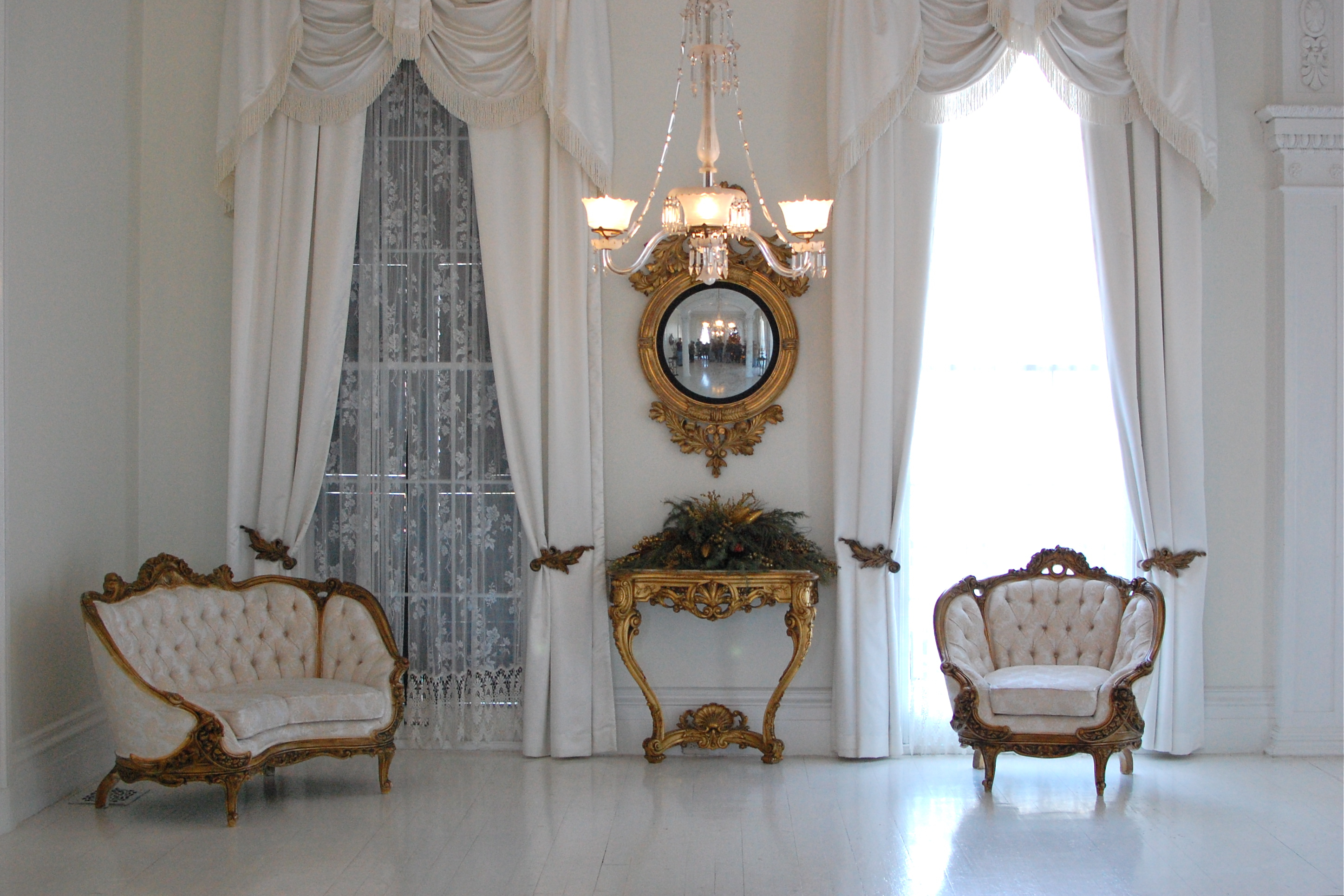
The interiors of Nottoway were designed to astonish. Baccarat crystal and brass chandeliers hung from the ceilings of the second-floor entrance hall, which ran the full length of the house. Every door featured hand-painted German Dresden porcelain doorknobs with matching keyhole covers. Plaster frieze moldings were crafted from mud, clay, horse hair, and Spanish moss. Randolph's favorite room was the White Ballroom, painted entirely white -- floors included -- to showcase the natural beauty of his seven daughters, six of whom were married there. Its Composite columns, hand-cast archways, and rococo white marble fireplace mantels created a space unlike any other in the antebellum South. A mirror was positioned so women could check whether their ankles or hoops were showing beneath their skirts. Above one fireplace hung a portrait of Mary Henshaw, unrelated to the family, whose painted eyes were said to follow viewers around the room. The house boasted flushing toilets on every floor, hot and cold running water, and gas lighting -- extraordinary novelties for 1859.
Surviving the War, One Grapeshot at a Time
When the Civil War erupted shortly after Nottoway's completion, Randolph backed the Confederacy financially and sent his three sons to fight. He lost his eldest, Algernon Sidney, at the Battle of Vicksburg. As Union forces advanced through Louisiana, Randolph took 200 enslaved workers to Texas to grow cotton, leaving his wife Emily at Nottoway with the youngest children, gambling that a woman's presence might protect the house from destruction. Both Union and Confederate troops occupied the plantation. The grounds were damaged and the livestock taken, but the mansion itself survived the war with just a single grapeshot lodged in the far left column -- a piece of iron that did not fall out until 1971. After the war, despite the Thirteenth Amendment, 53 formerly enslaved people continued working for Randolph as low-paid laborers, having few other options. The sugar business declined, and by 1875 the estate had shrunk dramatically. Randolph died at Nottoway on September 8, 1883. Emily sold the plantation in 1889 for $50,000, dividing it equally among her nine surviving children and herself.
Keepers of a Crumbling Crown
Nottoway passed through a succession of owners who each struggled with its enormous scale. Sugar planter Alfonse Hanlon lost it to foreclosure in 1913 after consecutive crop failures. Dr. Whyte G. Owen, a former Surgeon General of Louisiana, bought it out of foreclosure for $10,000 but could not make the sugar operation work. After his death in 1949, his son Stanford and wife Odessa lived in the house until Stanford died in 1974. Odessa then lived alone in the 64-room mansion, trying to maintain it with limited resources. In 1980, she sold to Arlin K. Dease, who had restored three other antebellum homes including the Myrtles Plantation in St. Francisville, on the condition that she could live there until her death. Dease put crews of 40 to 60 men to work 12 hours a day and opened the house to the public within three months. In 1985, Australian health care billionaire Paul Ramsay purchased Nottoway for $4.5 million and invested more than $15 million over two decades. Then on May 15, 2025, fire broke out in the southern bedroom wing. Embers reignited by 6:00 PM, spreading to the main block. By the time it was over, only the concrete ground-floor foundations and fragments of the southeast wall remained.
From the Air
Located at 30.186N, 91.167W along the west bank of the Mississippi River near White Castle, Louisiana. The plantation site sits approximately 200 feet behind the river levee. Nearest airport is Baton Rouge Metropolitan Airport (KBTR), about 20 nm to the north. At 1,500-2,500 feet AGL, the Mississippi River provides an unmistakable navigation reference; the plantation grounds are visible along the western bank between White Castle and the bend south of Plaquemine. Following the river corridor, look for the remaining outbuildings and foundations amid the surrounding sugar cane fields.