NOVI University of Applied Sciences
In the spring of 1958, an American management consultant named John Diebold convened a meeting at Amsterdam's Grand Hotel Krasnapolsky with a title that now reads like a relic: 'Course on Management for Automatic Data Processing.' Computers were spreading through Dutch industry, and almost no Dutch professionals understood them. Three economists in the room - Hendrik Reinoud, Remmer Willem Starreveld, and University of Amsterdam economics dean Henri Johan van der Schroeff - decided over the course of that meeting that the Netherlands needed its own center for the study of automation. Within ten days they had founded one. That foundation is the seed that, sixty-six years and several near-bankruptcies later, became NOVI University of Applied Sciences in Utrecht.
A Stichting for the Machine Age
On July 5, 1958, the economics faculty of the University of Amsterdam voted to create the new center. Ten days later, on July 15, the Stichting Studiecentrum Administratieve Automatisering - the SSAA, a Dutch nonprofit foundation - was formally established. Its mission was twofold: build the best library on automation in Europe, and run research projects inside the few Dutch companies that already had computers. The new institution leaned on benefactors from industry, and the executive board gave seats to the corporate giants whose money was paying the bills. By 1959 the SSAA was publishing its own journal, Informatie, and had built up what would become one of the deepest collections of automation literature on the continent.
The Chess Grandmaster on the Board
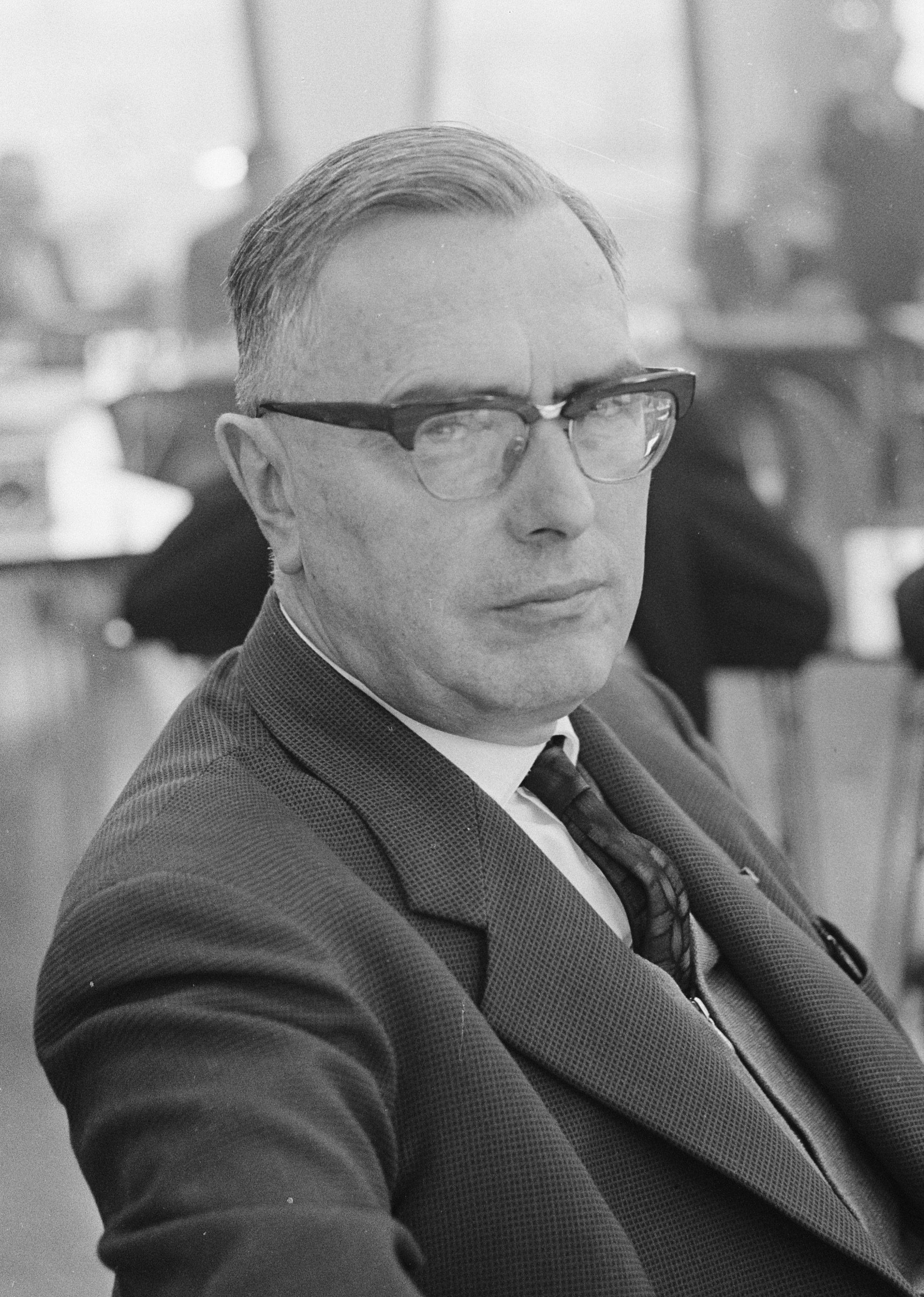
The directorate that ran day-to-day operations had three members. Two were academics - Starreveld and Abraham Barend Frielink. The third, who joined in 1959, was Max Euwe, the only Dutch player ever to hold the world chess championship and one of the country's most respected mathematicians. Euwe had spent the 1930s analyzing positions against Alexander Alekhine; in retirement from the board, he turned to analyzing how machines might compute their way through problems no human could. He was an unusually credible advocate. When Euwe told Dutch executives that computers mattered, they listened in a way they would not have listened to a younger academic. The SSAA had landed a celebrity who happened to be a serious computer scientist.
AMBI and the Birth of Dutch IT Training
In 1963 the Ministry of Economic Affairs granted the SSAA the authority to certify its own exams, making it the only private institute in the Netherlands with that power. One year later, in 1964, the SSAA launched the course that would define it: AMBI, short for Automatisering en Mechanisering van de Bestuurlijke Informatievoorziening - Automation and Mechanization of Management Information Processing. AMBI was aimed at middle and senior managers. It was, at the time, the highest qualification in computing available in the Netherlands and the only one delivered at HBO level - the Dutch vocational higher-education tier that sits alongside the universities. For two decades, if a Dutch company needed somebody who could actually run an IT department, they wanted somebody with an AMBI certificate.
Near-Bankruptcy, Twice
The story is not a clean ascent. By 1968 the SSAA was hemorrhaging money. A government investigation in 1971 revealed that international expansion had run up costs with no matching income. Director Sybrandus Dirk Duyverman was eased out, the research department was shuttered, and the foundation - now renamed the Stichting het Nederlands Studiecentrum voor Informatica, with its education arm trading as NOVI - was kept alive by government subsidy. The reorganization worked. Between 1975 and 1980, around 4,000 students were enrolled in NOVI's programs at any given time. Then, in 1982, the foundation went bankrupt anyway. The education department and the journal Informatie were sold to publishing giant Kluwer; the AMBI exam was handed off to a new body called EXIN; NOVI continued as a private school.
Hogeschool and Beyond
In 1997 Markus Verbeek Groep bought NOVI, and that same year the Dutch Ministry of Education granted it the status of hogeschool - a university of applied sciences, the formal HBO tier. NOVI Hogeschool was born. Today, headquartered in Utrecht with a branch in Maastricht, it offers HBO bachelor's degrees in business informatics, software development, and cybersecurity - the same three pillars that John Diebold's American consultants were sketching out for Dutch executives in a hotel ballroom in 1958. The world has changed; the problem has not. Companies still need people who can manage the machines, and NOVI is still in the business of training them.
From the Air
Located in Utrecht at approximately 52.09 N, 5.15 E, in the eastern part of the city. The campus sits in a mixed commercial and residential district. Utrecht's compact urban core and the Dom Tower are visible to the west. Amsterdam Schiphol Airport (EHAM) is about 40 km northwest; Rotterdam The Hague (EHRD) about 55 km southwest. Utrecht itself has no commercial airport. The flat Dutch terrain provides good visibility in clear conditions.