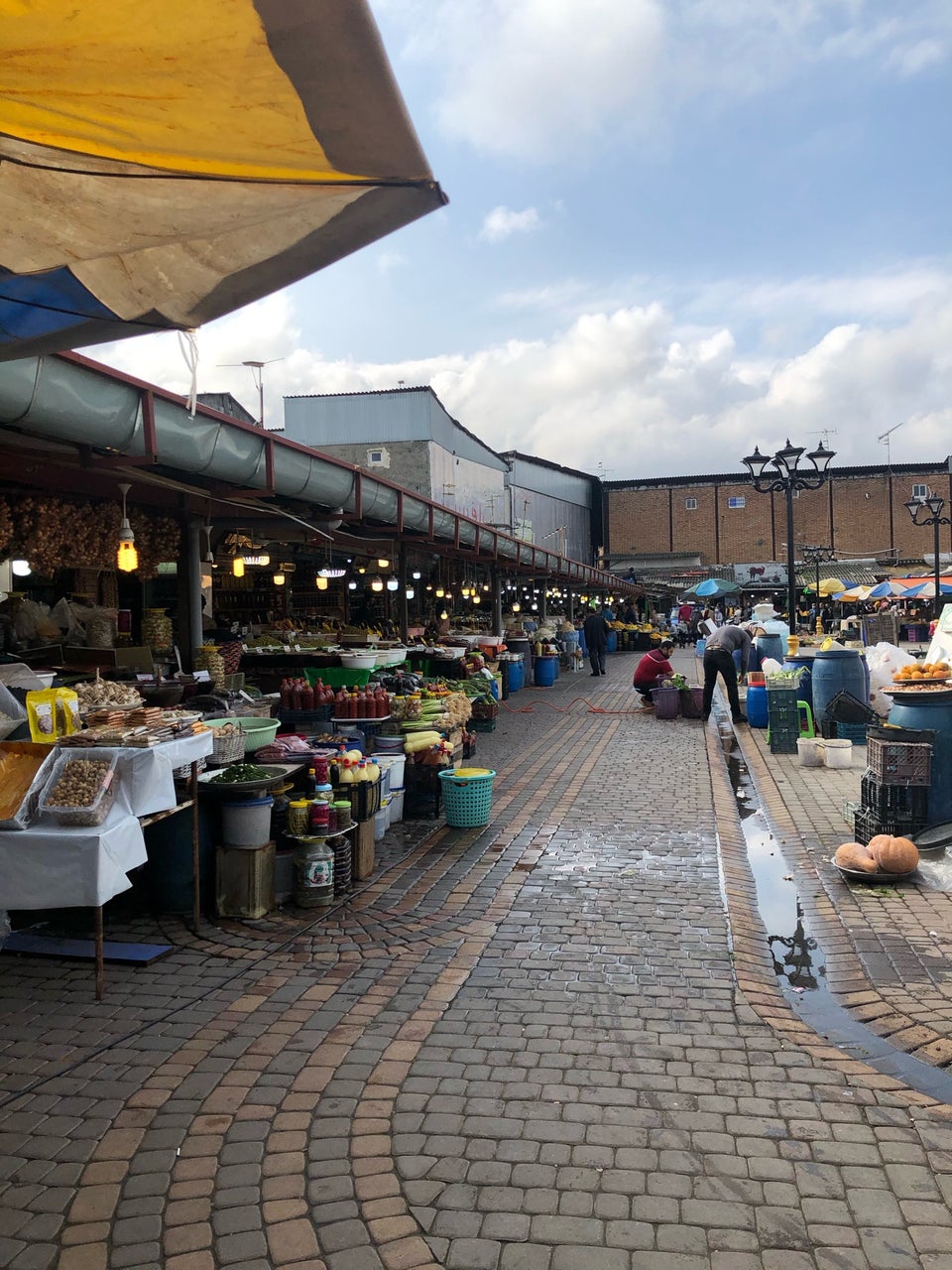
Nowshahr
Every summer, the last Shah of Iran left Tehran behind. Mohammad Reza Shah Pahlavi and his senior officials would relocate to a humid port city on the southern shore of the Caspian Sea, where the Alborz Mountains trap moisture from the water and turn the coastline into something closer to the Black Sea coast of Georgia than to the arid plateaus most outsiders associate with Iran. Nowshahr earned the title of Iran's "summer capital" not through any official decree, but through the simple preference of the powerful. The city they chose sits at the intersection of mountain, forest, and sea -- a Mazandarani port where the air smells of salt and timber, and where the pace of life has always run on a different clock than the rest of the country.
A Harbor Built by Dutch Hands
Nowshahr's port exists because a Dutch contracting firm arrived in the late 1920s and built it. The dual-use harbor became one of Iran's most active Caspian ports, connecting the country to Soviet and later post-Soviet trade routes across the world's largest inland body of water. The Caspian Sea stretches more than 1,000 kilometers from north to south, and Nowshahr occupies a strategic position along its southern shoreline, roughly 375 kilometers north of Tehran. The port handles both commercial shipping and naval operations, and the city is home to Imam Khomeini University for Naval Sciences, Iran's primary institution for training naval officers. What began as a colonial-era infrastructure project became the engine of a city's identity.
The Land of the Ruyans
Long before the Shah's summer retreats, this stretch of coast belonged to the Ruyans. The region, historically part of Tabaristan -- the old name for what is now Mazandaran province -- was centered on the city of Kojur and encompassed the lands of Kalarestaq and Tonekabon. The Ruyans gave the territory several names over the centuries: Rostamdar, Ostandar, Rostamdele. Each name carried echoes of Persian heroic tradition, linking the coastal forests to the legendary warriors of the Shahnameh. Until 1996, the neighboring city of Chalus and its surrounding villages fell under Nowshahr's administrative umbrella, a reminder of how recently the political geography of this coastline has been redrawn.
Subtropical Shores
Iran's interior is defined by aridity, but Nowshahr breaks that expectation entirely. The city has a humid subtropical climate, with warm, sticky summers and cool, damp winters. The Alborz Mountains act as a wall, forcing moisture-laden air from the Caspian upward, where it condenses and falls as rain. The result is dense forest on the mountain slopes and a green, humid coastal strip that feels transplanted from another country. Hundreds of thousands of Iranian tourists arrive each year to swim in the Caspian, hike through the forest parks, and escape the dry heat of the central plateau. Sisangan Beach draws summer crowds. The National Botanical Garden of Iran is located here, taking advantage of the rare combination of subtropical moisture and mountain elevation that allows an extraordinary diversity of plant species to thrive.
Voices of the Coast
The largest ethnic group in Nowshahr is the Mazandarani people, who speak the Kojuri dialect of the Mazandarani language alongside Persian. The distinction matters. Mazandarani is not a dialect of Persian but a separate Northwestern Iranian language, and the Kojuri variant spoken in Nowshahr carries its own regional inflections and vocabulary. The city has deliberately resisted heavy industrialization, favoring its tourism-driven economy and the agriculture and ship transport that have sustained it for generations. Food processing, timber treatment, and steel make up the local industrial base, but these remain secondary to the hotels, villas, and beachfront businesses that define the city's economic character. A recent partnership with Belarus's Minsk Automobile Plant brought a trailer assembly facility, a modest nod toward manufacturing in a city that has otherwise bet its future on visitors and the sea.
Where the Mountains Meet the Water
From the air, Nowshahr appears as a narrow band of civilization pressed between two immensities. To the north, the Caspian Sea extends toward the horizon, gray-green and deceptively calm. To the south, the Alborz range rises sharply, its lower slopes thick with Hyrcanian forest -- one of the oldest continuous forest ecosystems on Earth, recognized by UNESCO as a World Heritage Site. Noshahr Airport sits on the western edge of the city, a former military airbase now serving civilian flights. The population has grown steadily, from roughly 40,500 in 2006 to over 49,400 by 2016, as Iranians from other provinces have been drawn to the coast. The poet Pooran Farrokhzad was born here in 1933, and the city has produced a notable number of Iranian athletes, particularly wrestlers and football players. Nowshahr remains what it has always been: a place Iranians go when they want to remember that their country has a shoreline.
From the Air
Located at 36.649N, 51.496E on the southern coast of the Caspian Sea in Mazandaran province, Iran. The city is visible as a coastal urban area wedged between the Caspian shoreline to the north and the forested Alborz Mountains to the south. The Dutch-built port and harbor facilities are prominent features along the waterfront. Noshahr Airport (OINN) sits on the western side of the city, a former military airbase now civilian. Nearest major airport: Ramsar Airport (OINR) approximately 65 km west along the coast. The Hyrcanian forest belt on the mountain slopes provides a striking green contrast to the coastal development. The narrow Caspian coastal plain and the dramatic mountain backdrop make this area easily identifiable from altitude.