NTT Docomo Yoyogi Building: Tokyo's Art Deco Giant
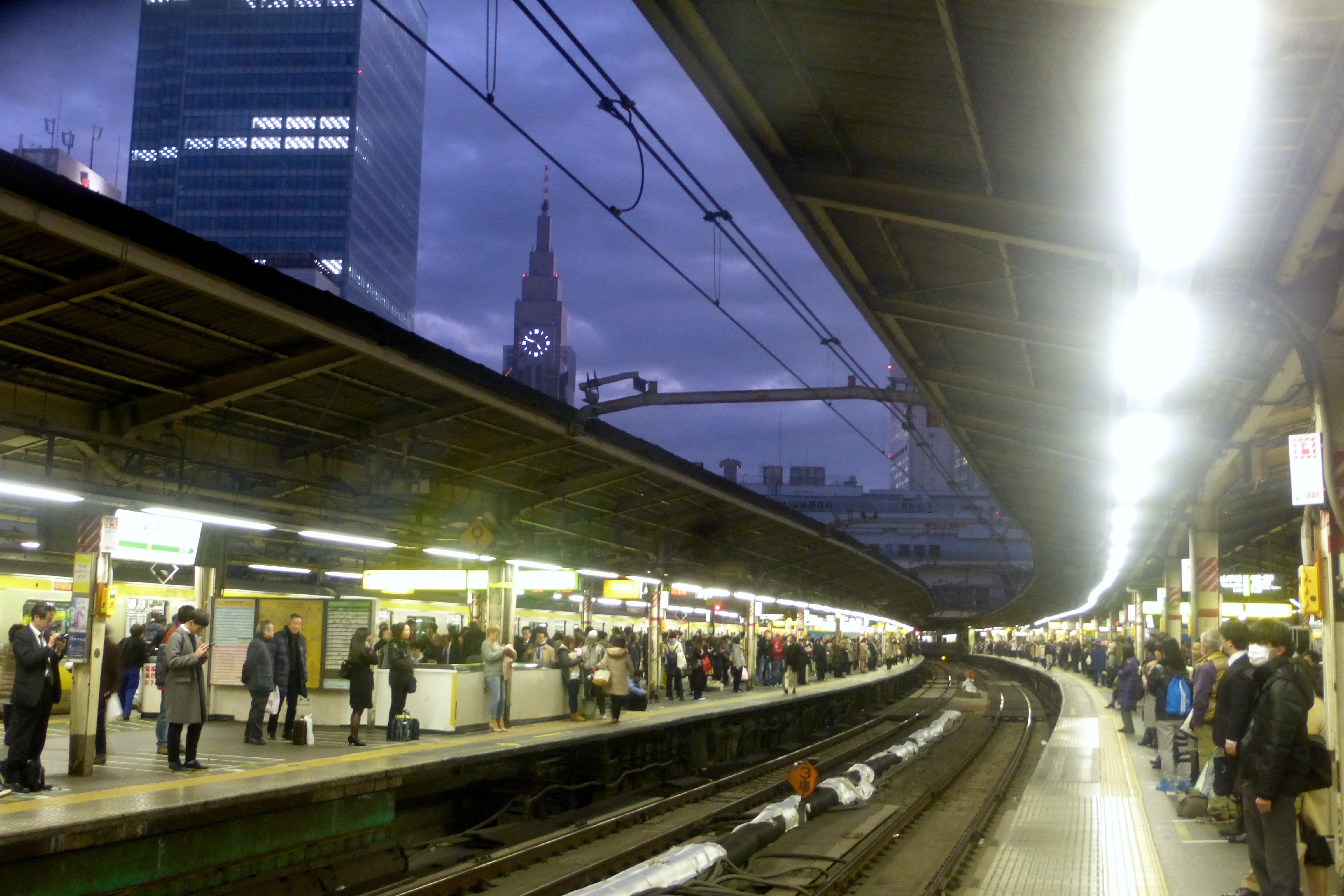
The clock face is fifteen meters wide. From the platforms of Shinjuku Station, it floats above the skyline like a luminous moon, ticking away atop a stepped tower that looks as if it wandered out of 1930s Manhattan and settled into twenty-first-century Tokyo. The NTT Docomo Yoyogi Building rises 240 meters above the Sendagaya district of Shibuya, and nearly everything about it is a surprise. Its Art Deco setbacks and geometric massing evoke the Empire State Building, yet it was completed in the year 2000. Its name suggests a corporate headquarters, yet NTT Docomo's actual head office sits across town in the Sanno Park Tower. And its twenty-seven floors of interior space -- the kind of premium real estate that could house thousands of workers in central Tokyo -- are given over almost entirely to switching equipment, servers, and telecommunications hardware. This is a skyscraper built to serve machines.
A Tower That Answers No Calls
NTT Docomo, Japan's dominant mobile carrier, needed vast climate-controlled space for the infrastructure behind its cellular network. The Yoyogi Building, designed by Kajima Design and completed in September 2000 after three years of construction, became that vessel. Some offices occupy the structure, but its primary purpose is housing the racks of switching equipment, routers, and transmission systems that route millions of calls and data packets daily. The building is, in essence, a vertical machine room dressed in an architectural tuxedo. Its steel frame rises in clean setbacks, each tier stepping inward to a crowned summit that catches sunlight during the day and glows with illumination at night. From nearly every elevated vantage point in western Tokyo -- Shinjuku Gyoen, the train platforms, the observation decks of neighboring towers -- the Docomo Building commands attention. It is the ninth tallest building in Tokyo, and among the most instantly recognizable.
The Clock That Marks the City
In November 2002, to celebrate NTT Docomo's tenth anniversary, a massive clock was installed on the building's north facade, manufactured by Citizen Watch. With a dial diameter of fifteen meters, it was, at the time, the world's tallest clock tower -- a record it held until the Mecca Royal Clock Tower surpassed it in 2011. The timepiece glows at night, visible for kilometers, and has become an unofficial landmark for commuters passing through Shinjuku Station. There is something almost poetic about a telecommunications company -- one that made wristwatches obsolete by putting the time on every phone screen -- mounting the largest clock face in the city on the side of its building. The clock anchors the tower to a human sense of time even as the equipment inside processes data at speeds no human can perceive.
Green Engineering, Hidden Away
Behind its retro silhouette, the Docomo Building quietly incorporates environmental technology that was forward-thinking for its era. Solar panels contribute to the building's energy supply. A waste separation system reduces landfill output and improves recycling rates. Wastewater is treated and recycled for internal reuse, and a rainwater collection system captures precipitation from the tower's considerable roof area and channels it into the building's plumbing, flushing toilets with water that fell from the sky above Shibuya. None of these features are visible from the street. The building presents its Art Deco ambition to the world and keeps its sustainability engineering private -- a very Tokyo approach to innovation, where function hides behind form.
Seen From Every Angle
The Docomo Building is one of those rare structures that belongs to the entire city rather than a single neighborhood. From the cherry trees of Shinjuku Gyoen National Garden, the tower rises above the blossoms in spring like a sentinel. From Yoyogi Park, it anchors the eastern horizon. From the platforms and overpasses of Shinjuku and Yoyogi stations, the clock face serves as a compass point for anyone trying to orient themselves in the maze of western Tokyo. Photographers frame it against sunsets, between tree branches, through the geometry of railway overhead wires. At night, the illuminated crown and clock dial become a beacon. It is Tokyo's most visible building that almost nobody ever enters -- a monument not to human ambition but to the invisible networks that connect twenty-first-century life.
From the Air
Located at 35.684°N, 139.703°E in the Sendagaya district of Shibuya, Tokyo. The building's 240-meter height and stepped Art Deco crown make it one of the most identifiable structures in western Tokyo from the air. Best viewed at 2,000-4,000 feet AGL approaching from the west or south. The building is situated between Shinjuku Gyoen to the north and Yoyogi Park to the southwest. The illuminated clock face on the north facade is a distinctive nighttime landmark. Tokyo Haneda Airport (RJTT) lies approximately 10 nautical miles to the south. Tokyo Narita (RJAA) is approximately 35 nautical miles to the east-northeast.