Nueva Germania
The philosopher's sister had a plan for paradise. In 1887, Elisabeth Forster-Nietzsche and her husband Bernhard Forster led a group of impoverished Saxon families into the Paraguayan rainforest to build Nueva Germania -- a colony intended to prove the supremacy of the so-called Aryan race, far from the Jewish people Forster despised. Within three years, the jungle had beaten the ideology. Forster killed himself in 1889. Elisabeth returned to Germany to spend the rest of her life twisting her brother Friedrich's philosophy into something he never intended. And the colonists they left behind? They stayed, adapted, intermarried, and built a town that eventually defined itself against the very ideas that created it.
A Colony Born of Hatred
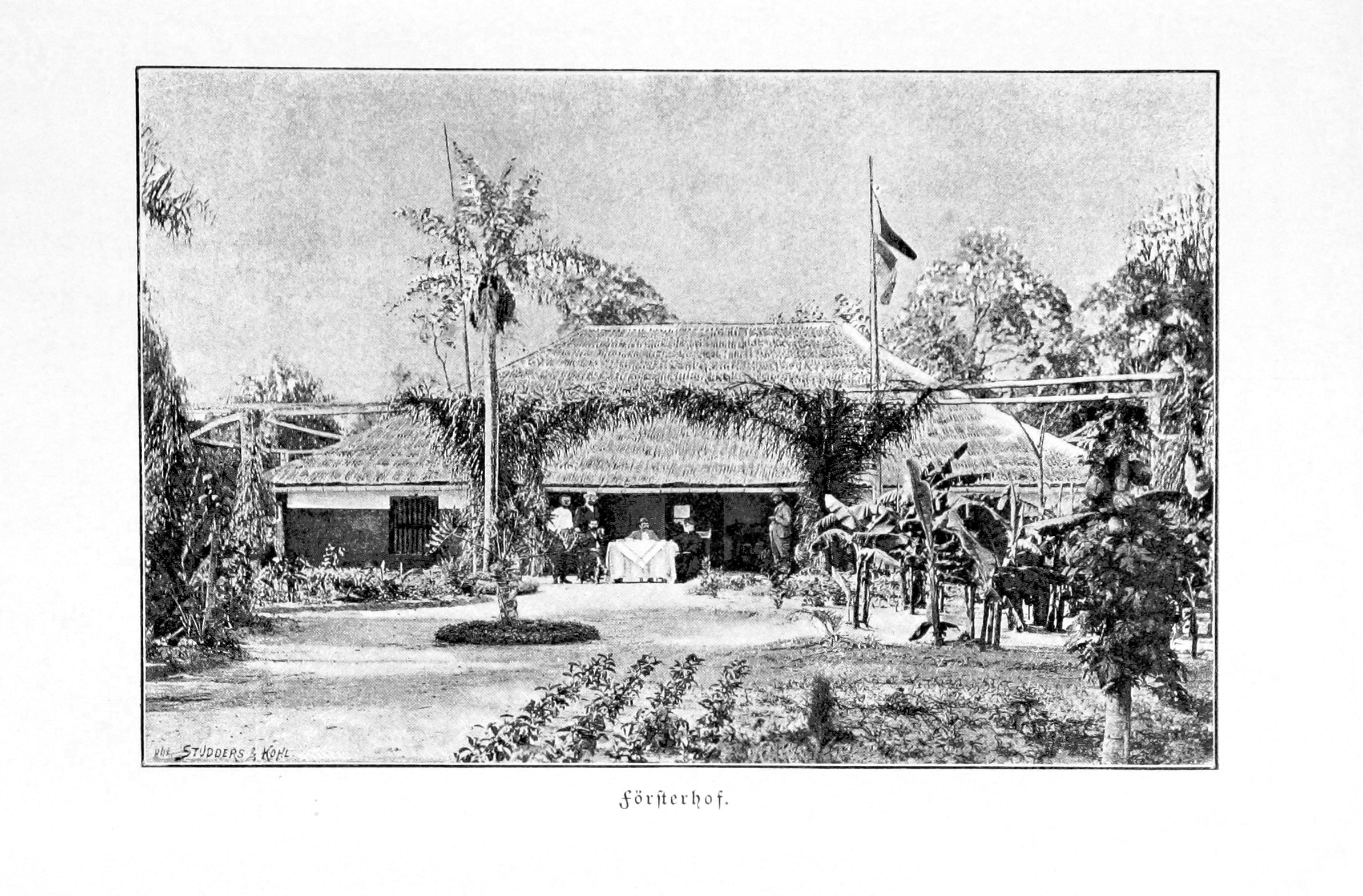
Bernhard Forster was a prominent antisemite in late nineteenth-century Germany, a man who collected signatures on anti-Jewish petitions and dreamed of a racially pure Germanic homeland. His wife Elisabeth was Friedrich Nietzsche's sister -- a connection that would later give her outsized influence over her brother's literary legacy. Together, they negotiated land titles with Paraguayan President Bernardino Caballero and recruited families from Saxony to settle along the banks of the Aguaray-Guazu River, roughly 250 kilometers from Asuncion. The first settlers arrived in 1886 -- five families, later joined by nine more. They were largely poor, lured by promises of a new beginning. What they found was dense subtropical forest, inadequate supplies, and a climate that cared nothing for theories of racial superiority.
The Jungle Does Not Negotiate
The colony failed almost immediately. The settlers lacked agricultural knowledge suited to the tropics, their supplies were insufficient, and the overconfidence born from their ideology left them unprepared for the physical reality of frontier life. Forster, who had staked his reputation on the venture, abandoned the settlement. On June 3, 1889, he took his own life in San Bernardino, a lakeside town far from the colony he had founded. Elisabeth lingered in Paraguay for a time before returning to Germany, where she seized control of her brother's unpublished writings and spent decades reframing his work to align with nationalist and eventually Nazi ideology. The colonists, meanwhile, were left to manage on their own. They did what survival demanded: they learned from their Paraguayan neighbors, adopted local farming practices, and gradually let go of the founders' racial delusions.
Germanino: A New Identity
Today, Nueva Germania is a quiet agricultural district in San Pedro Department. Its roughly 4,300 inhabitants cultivate yerba mate and soybeans, raise cattle, and produce bricks. About 10 percent of the population claims primarily German ancestry, but the cultural reality is far more blended. Three languages circulate through daily life -- Guarani, spoken by approximately 80 percent of residents, plus Spanish and German. Catholicism and Lutheranism coexist, the latter practiced mostly by families of German descent. The town's inhabitants have coined a word for their hybrid identity: Germanino. It captures something the founders never imagined -- a community that honors both its German and Paraguayan heritage without privileging either. Depending on context, residents identify as German, Paraguayan, or Germanino, moving fluidly between identities that the colony's creators would have considered incompatible.
Shadows and Sensationalism
Nueva Germania's founding story has attracted persistent speculation, some of it unfounded. Author Gerard Posner claimed that Josef Mengele, the Nazi war criminal and fugitive, spent time in the town after World War II. While Mengele did briefly live in Hohenau, Paraguay, from 1959 to 1960, there is little credible evidence that he ever resided in Nueva Germania. The town's residents push back against sensationalized portrayals that reduce their community to its darkest chapter. Contemporary Nueva Germania is not a relic of racial ideology. It is a working town where people farm, attend church, send their children to school, and navigate the ordinary challenges of rural Paraguayan life. The hateful ideas that inspired its founding did not survive the encounter with reality -- but the town itself endured, reshaped by the people who chose to stay.
From the Air
Located at 23.91S, 56.70W in San Pedro Department, Paraguay, approximately 297 km from Asuncion. The town sits along the Aguaray-Guazu River in a region of subtropical forest and agricultural land. From the air, look for cleared farmland and the river corridor amid surrounding forest. Nearest major airport is Silvio Pettirossi International (SGAS) in Asuncion, roughly 300 km to the southwest. The terrain is low-elevation and flat, typical of eastern Paraguay.