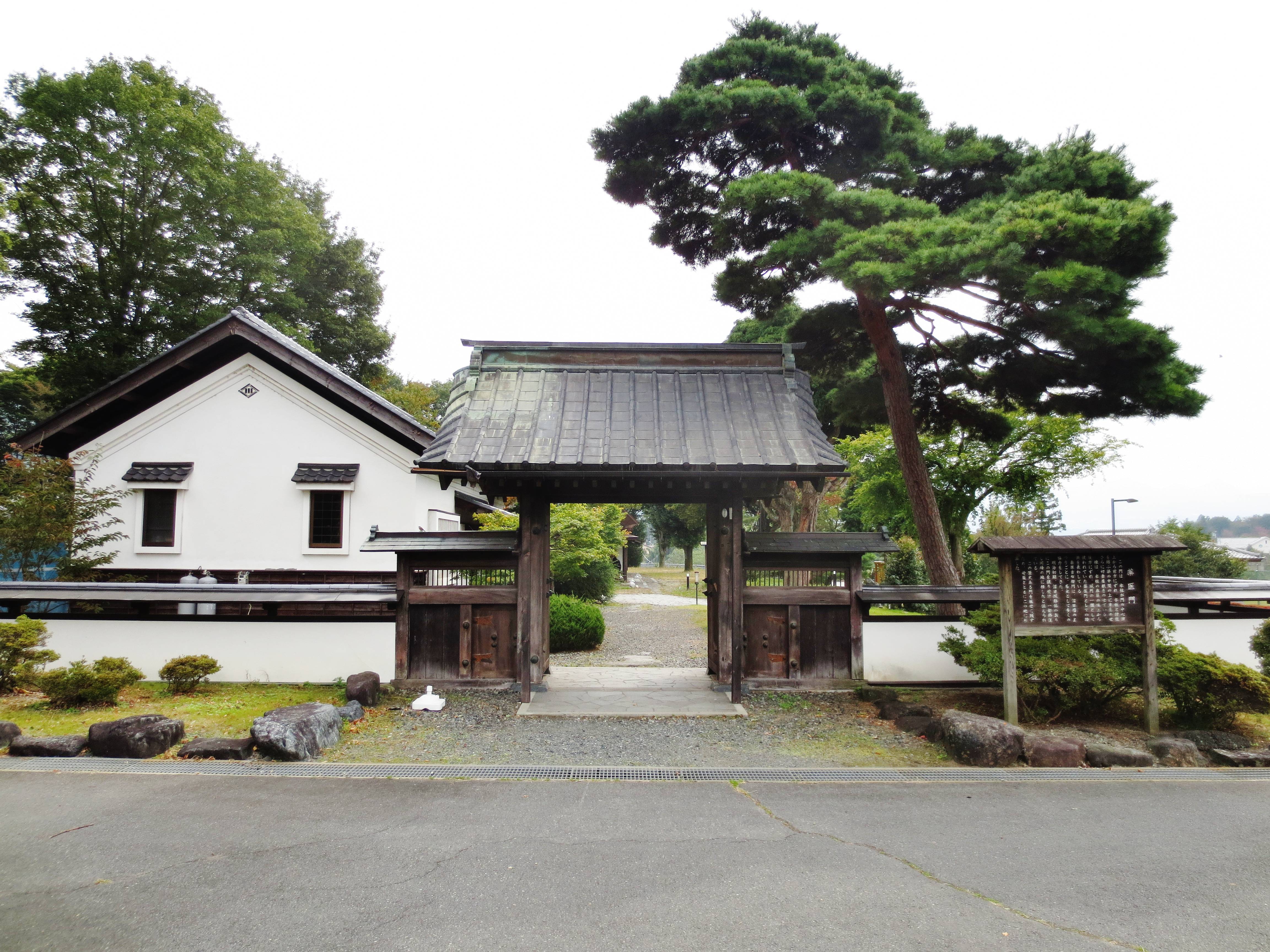
Numata Castle: The Fortress in the Sky That Five Clans Fought to Hold
Numata is the only castle town in Japan built on a river terrace. The downtown sits seventy meters above the valley floor, perched on a natural plateau between the Tone and Katashina rivers -- so high above the surrounding landscape that the city earned the nickname 'Castletown in the Sky.' The castle that gave the town its purpose was built here in 1532, and for the next century and a half it was fought over, rebuilt, expanded, destroyed, rebuilt again on a smaller scale, and finally abandoned. Five different clans held Numata Castle during its turbulent life. The fortress is gone, but the terrace remains, and from the park that now occupies the castle grounds, you can still see why every warlord in the Kanto region wanted this piece of sky.
A Fortress Worth Dying For
Numata Akiyasu built the original fortification on this terrace in 1532, during the Muromachi period. The Numata clan controlled the surrounding area, and the location was a natural stronghold -- steep cliffs on multiple sides, two rivers serving as moats, and commanding views of the valleys below. In 1580, Sanada Masayuki, a vassal of Takeda Katsuyori, captured the castle. The Numata clan attempted to retake their ancestral home the following year. They failed, and most of the clan perished in the assault. Control of Numata then became a bitter contest between the Sanada clan and the Odawara Hojo clan, a dispute so entrenched that Toyotomi Hideyoshi himself intervened in 1589, awarding Numata to the Hojo and giving the nearby Nagurumi Castle to the Sanada. But the Hojo castellan Inomata Kuninori, unsatisfied with the arrangement, attacked the Sanada anyway -- a provocation that contributed to the Battle of Odawara in 1590 and the Hojo clan's ultimate defeat.
The Sanada's Grand Ambition
With the Hojo crushed, Numata returned firmly to the Sanada. In 1597, Sanada Nobuyuki rebuilt the castle on a grand scale: stone walls replaced earthen ramparts, a five-story donjon rose above the terrace, and several three-story yagura towers reinforced the perimeter. For the Sanada, Numata was not just a frontier garrison but a statement of power. The castle became the seat of a separate domain from the main Sanada holding at Ueda Castle in 1656. But the Sanada's tenure at Numata ended abruptly in 1681, when Sanada Nobutoshi was dispossessed by the Tokugawa shogunate for grossly underreporting his domain's revenues. The shogunate ordered the castle destroyed. The five-story donjon, the stone walls, the yagura towers -- all of it came down. Ninety-one years of Sanada rule, spanning five generations, ended with the castle reduced to rubble.
A Castle That Never Recovered
Numata Domain was revived in 1703 and given to Honda Masanaga, who attempted a modest restoration. He re-excavated some of the filled-in moats and restored portions of the earthen works, but the grand donjon and towers were never rebuilt. The domain passed through a junior branch of the Kuroda clan before landing with the Toki clan in 1742. The Toki built a residence within the third bailey, but Numata Castle was a castle in name only -- functionally little more than a jin'ya, an administrative compound rather than a military fortification. The Toki remained through the end of the Edo period, governing a domain whose fortress existed mostly in memory and in the imaginations of those who had heard stories of the Sanada's five-story tower.
From Ruins to Park
In 1912, Kume Tamenosuke, a former samurai who had served the Toki clan, purchased the castle site. Fourteen years later, in 1926, he donated it to the town of Numata for use as a public park. The park preserves the terrace geography that made the site so strategically valuable -- the cliffs, the river views, the elevated terrain. Within the grounds stands the Ubukata House, an Edo-period structure originally used as a pharmacy in the castle town, now designated an Important Cultural Property and serving as a local history museum. A scale model of Numata Castle as it appeared under the Sanada gives visitors a sense of the grandeur that once crowned this terrace. In 2017, the Japan Castle Foundation recognized Numata as one of the Continued Top 100 Japanese Castles, acknowledging the historical significance of a site where the stones are gone but the story remains vivid.
From the Air
Located at 36.649N, 139.039E atop a distinctive river terrace in northern Gunma Prefecture. From altitude, the terrace is clearly visible as an elevated plateau between the Tone River to the west and the Katashina River to the south, with the town of Numata spread across its flat top approximately 70 meters above the valley floor. The castle park occupies the western edge of the terrace with tree cover. Nearest significant airport is Tokyo Haneda (RJTT), approximately 140km to the south-southeast. Niigata Airport (RJSN) lies roughly 150km to the north-northwest. Best viewed at 2,000-4,000 feet AGL to appreciate the dramatic terrace geography and the river confluence below.