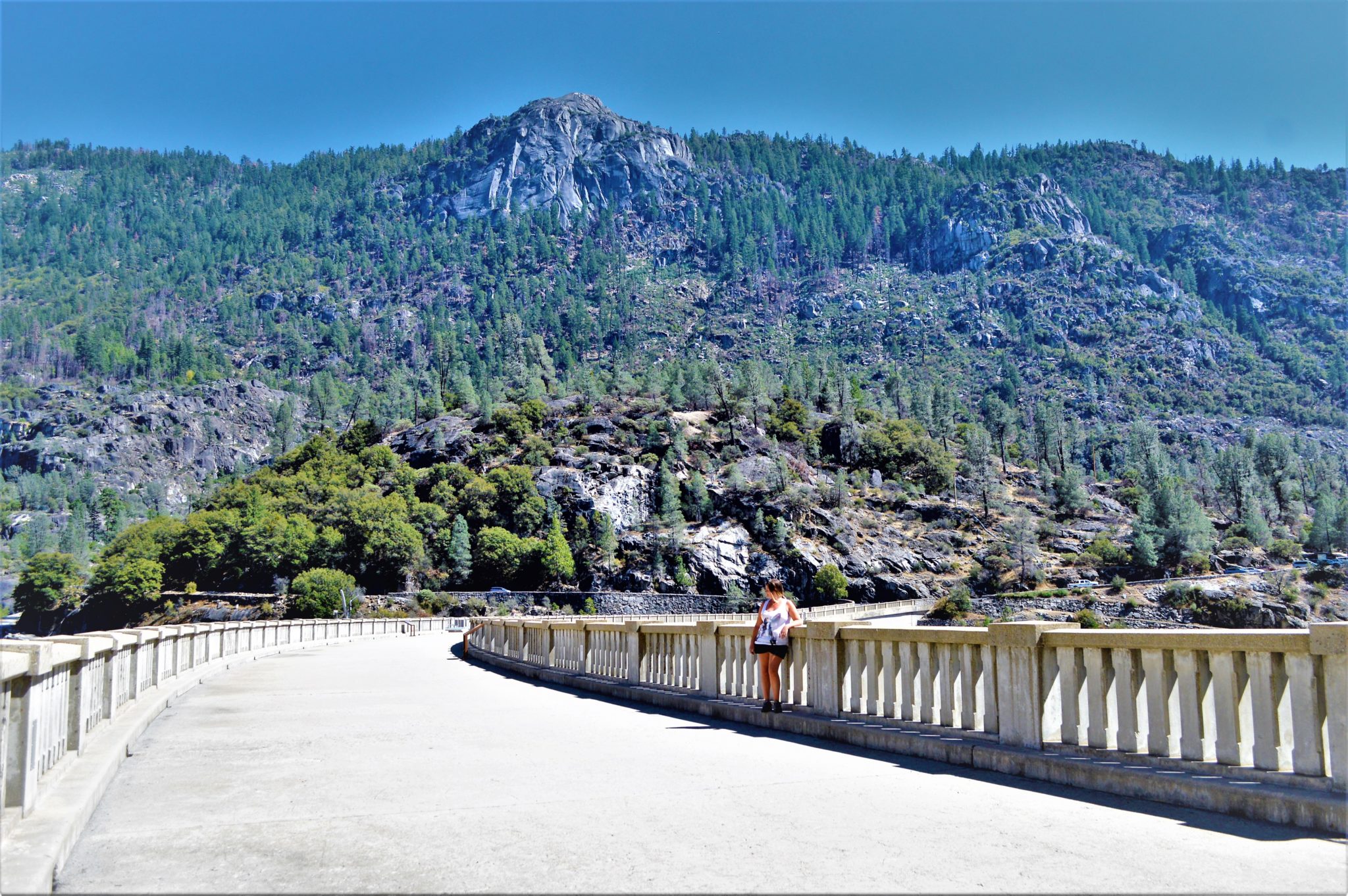
O'Shaughnessy Dam
John Muir died ten days after construction began on the dam that would drown Hetch Hetchy Valley - a place he considered the equal of Yosemite itself. The naturalist had fought for years to prevent San Francisco from flooding this glacier-carved sanctuary inside Yosemite National Park, but Congress authorized the project anyway, reasoning that public land should serve public benefit. Today, O'Shaughnessy Dam provides water to over two million people, and that water is so pure it needs no filtration. Meanwhile, the Sierra Club continues to advocate for removing the dam and restoring the valley Muir called a 'mountain temple.'
Fire and Water
San Francisco had coveted the Tuolumne River since the 1890s, when the city was already outgrowing its meager water supply of local springs and streams. But the Hetch Hetchy Valley lay within Yosemite National Park, protected land where utility development seemed unthinkable. Then came April 18, 1906. The earthquake and subsequent fire that leveled San Francisco demonstrated the catastrophic inadequacy of the city's water system. Firefighters watched helplessly as flames consumed block after block, their hoses useless. Of fourteen potential water sources the city evaluated afterward, Hetch Hetchy emerged as the clear choice: excellent geology for a dam site, sediment-free water of exceptional purity, reasonable construction costs, and significant hydroelectric potential.
Muir's Last Battle
John Muir and the Sierra Club mounted fierce opposition to flooding Hetch Hetchy. The U.S. Army Corps of Engineers reported in 1913 that the Mokelumne River offered 'a better and cheaper source than Hetch Hetchy,' but San Francisco had become, in the words of historians, 'obsessed' with the Tuolumne. On December 19, 1913, President Woodrow Wilson signed the Raker Act, permitting development on the condition that water and power serve only public utilities, never private profit. The bill passed the Senate 43 to 25. The naturalist and mountaineer who had helped create Yosemite National Park died on December 24, 1914, his Sierra Club inheriting a decade-long fight against a dam already rising in the valley.
Sixty-Eight Lives
Construction claimed 67 men and one woman. Before the dam could rise, workers built a railroad through treacherous terrain, using Shay locomotives to negotiate winding curves and 4 percent grades. They constructed a smaller dam at Lake Eleanor first, providing electricity to power the larger project. Groundbreaking on O'Shaughnessy Dam came on August 1, 1919. Workers cleared trees from the valley floor, dug tunnels to divert the Tuolumne River, and began pouring concrete for what would become a 430-foot arch-gravity dam. The initial structure was completed in 1923, though the first water didn't reach San Francisco until 1934. Engineers designed the dam's distinctive stepped face specifically to allow for a future height increase, which came between 1935 and 1938, raising the structure another 86 feet.
Crystal Clear
The Hetch Hetchy watershed produces some of the cleanest municipal water in America. Shallow soils over solid granite bedrock filter snowmelt naturally, and stringent protections - no swimming, no boating, though fishing is permitted - maintain water quality. San Francisco tap water emerges from faucets requiring only UV disinfection, no filtration, and is said to be of better quality than most bottled water. The Kirkwood and Moccasin powerhouses generate 124 megawatts of clean hydroelectricity, and the system delivers 237 million gallons daily to over two million people throughout the Bay Area. The infrastructure Muir fought against has become essential to one of America's most water-conscious regions.
The Debate Continues
The Sierra Club still lobbies for Hetch Hetchy's restoration, arguing that San Francisco could tap alternative sources like its unused allocation from Lake Don Pedro, the largest reservoir on the Tuolumne. A 2006 UC Davis study found that dam removal, combined with other infrastructure changes, would have minimal effect on water delivery. But opponents cite demolition costs of $3-10 billion, the loss of clean hydroelectric power, and no guarantee the valley can actually be restored - its famous meadows were the product of thousands of years of controlled burning by the Paiute and Miwok peoples. In 2012, San Francisco voters rejected Proposition F, which would have funded a removal feasibility study, by 77 percent. The dam John Muir died fighting remains as controversial as ever.
From the Air
O'Shaughnessy Dam is located at coordinates 37.948N, 119.788W in Yosemite National Park, damming the Tuolumne River to form Hetch Hetchy Reservoir. The concrete arch-gravity dam is visible from the air, with the reservoir stretching eight miles upstream through the submerged valley. Best viewed at 4,000-6,000 feet AGL due to surrounding Sierra Nevada terrain. Note: This is active National Park airspace; maintain awareness of park regulations. Nearest airports: Pine Mountain Lake Airport (E45) approximately 25 nm west, Mammoth Yosemite Airport (MMH) about 45 nm southeast. The dramatic granite cliffs framing the reservoir echo the famous walls of Yosemite Valley to the south.