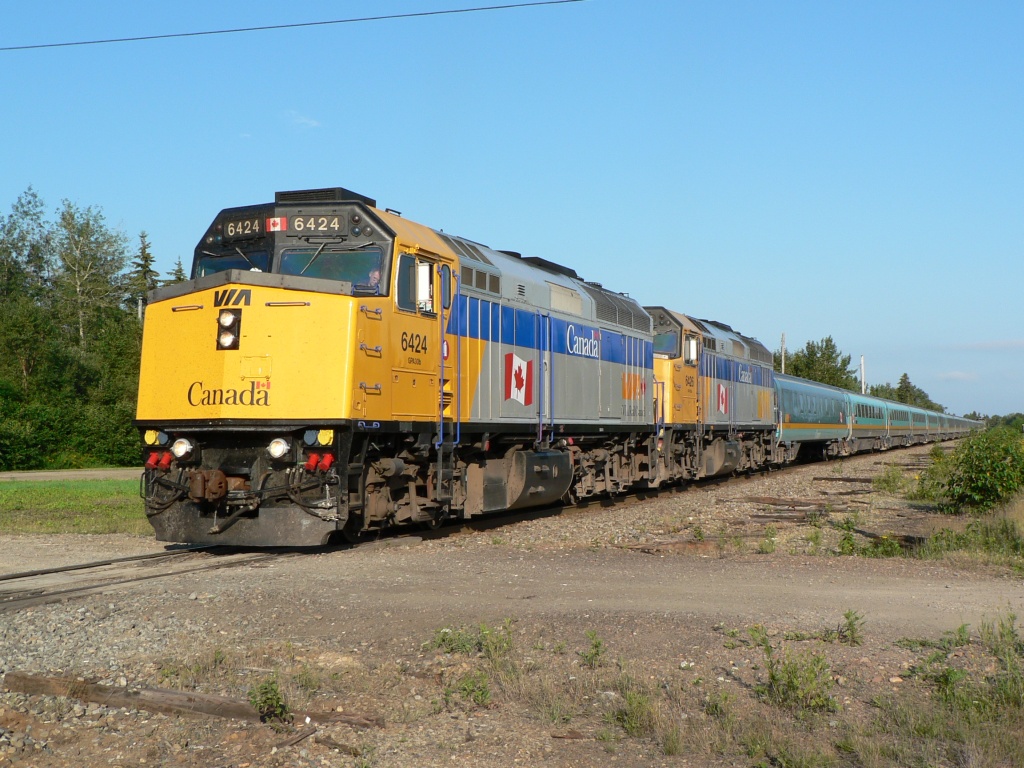
The Ocean
The whistle sounds at Montreal's Central Station in the late afternoon, and by morning the train is in another world -- winding through the Matapedia River valley, hugging the shore of Chaleur Bay, crossing the Tantramar Marshes into Nova Scotia. The Ocean has been making this overnight run between Montreal and Halifax since July 3, 1904, when the Intercolonial Railway inaugurated it as a summer-only limited-stop service. That makes it the oldest continuously operated named passenger train in North America, a distinction it has maintained not through any particular glamour but through sheer, stubborn persistence against a century's worth of forces conspiring to shut it down.
Born of Iron and Immigration
The Intercolonial Railway created the Ocean Limited to supplement the Maritime Express, connecting Halifax with central Canada at a time when the port city was the gateway for waves of European immigrants heading west to the Prairie provinces. In Halifax, the train met the Dominion Atlantic Railway's luxury service, the Flying Bluenose, creating a network that moved people and freight across the eastern half of the country. During both world wars, the Ocean Limited provided critical service to the port of Halifax, carrying troops and materiel to the embarkation point for convoys crossing the Atlantic. When the Intercolonial was absorbed into Canadian National Railways in 1918, the train continued much as before -- same route, same overnight schedule, same essential function of stitching together a country that geography keeps trying to pull apart.
A Train That Would Not Die
The Ocean's survival is a story of near-death experiences. When Via Rail took over Canada's passenger rail services in 1978, the train entered a decades-long cycle of cuts, cancellations, and reprieves. Daily service became six days a week, then three. The companion Atlantic train was cancelled, reinstated, cancelled again. In 1977, a landslide near Rimouski forced a six-month reroute hundreds of kilometres to the south, yet the train kept its schedule. In 2014, CN threatened to abandon the track between Bathurst and Moncton, which would have severed the route entirely. The governments of New Brunswick and Canada each pledged millions to save the line. The COVID-19 pandemic shut the Ocean down completely in 2020, and when the Halifax port turnaround loop was dismantled to make room for shipping containers, it seemed the train might finally be finished.
Running Backward to Go Forward
Via Rail's solution to the lost turnaround loop was characteristically Canadian: practical, unglamorous, and effective. Rather than give up, they coupled the two F40PH locomotives back to back -- an arrangement unique among Via trains -- so the engines could simply attach to the opposite end of the train in Halifax for the return trip. This meant sacrificing the iconic Park car, a stainless steel dome observation car built in 1954 that had traditionally ridden at the rear of Via's long-distance trains. The Park car could not be turned around without the loop, so it was dropped from the consist. Railfans mourned. But the train kept running. In August 2021, the Ocean returned with once-weekly service, gradually building back to three departures per week in each direction by June 2022.
22 Hours Through the Night
The route itself is the reason the Ocean endures. Departing Montreal, the train follows the St. Lawrence River valley northeast, passing through the farmland and small towns of Quebec's lower north shore. At Matapedia, the line turns south into the river valley that gives the town its name, a corridor of forested mountains that opens dramatically onto the south shore of Chaleur Bay. The train crosses into New Brunswick through country that grows progressively wilder -- the forests of the north, the Tantramar Marshes where New Brunswick meets Nova Scotia, the Cobequid Mountains and Wentworth Valley before the final descent through mixed farmland into Halifax. The 22-hour journey covers approximately 1,350 kilometres, running overnight in both directions with Renaissance-class sleeping cars and a dining car serving catered meals. In January 2026, Train No. 14 derailed near Saint-Alexandre-de-Kamouraska after colliding with transport trucks parked too close to the tracks. All 124 passengers and crew survived with no injuries -- another chapter in the long, improbable life of a train that refuses to stop.
From the Air
The Ocean's route follows the southern shore of the St. Lawrence and Chaleur Bay, roughly paralleling the coast from Montreal (CYUL) through Riviere-du-Loup, Matapedia, Campbellton, Moncton (CYQM), and into Halifax (CYHZ). The geohash coordinate 47.98N, 66.94W places this near Campbellton, New Brunswick, where the line runs along the Bay of Chaleur -- a scenic stretch visible from the air. The Matapedia River valley section is particularly dramatic from altitude. Best viewed at 3,000-5,000 feet AGL following the coastline.