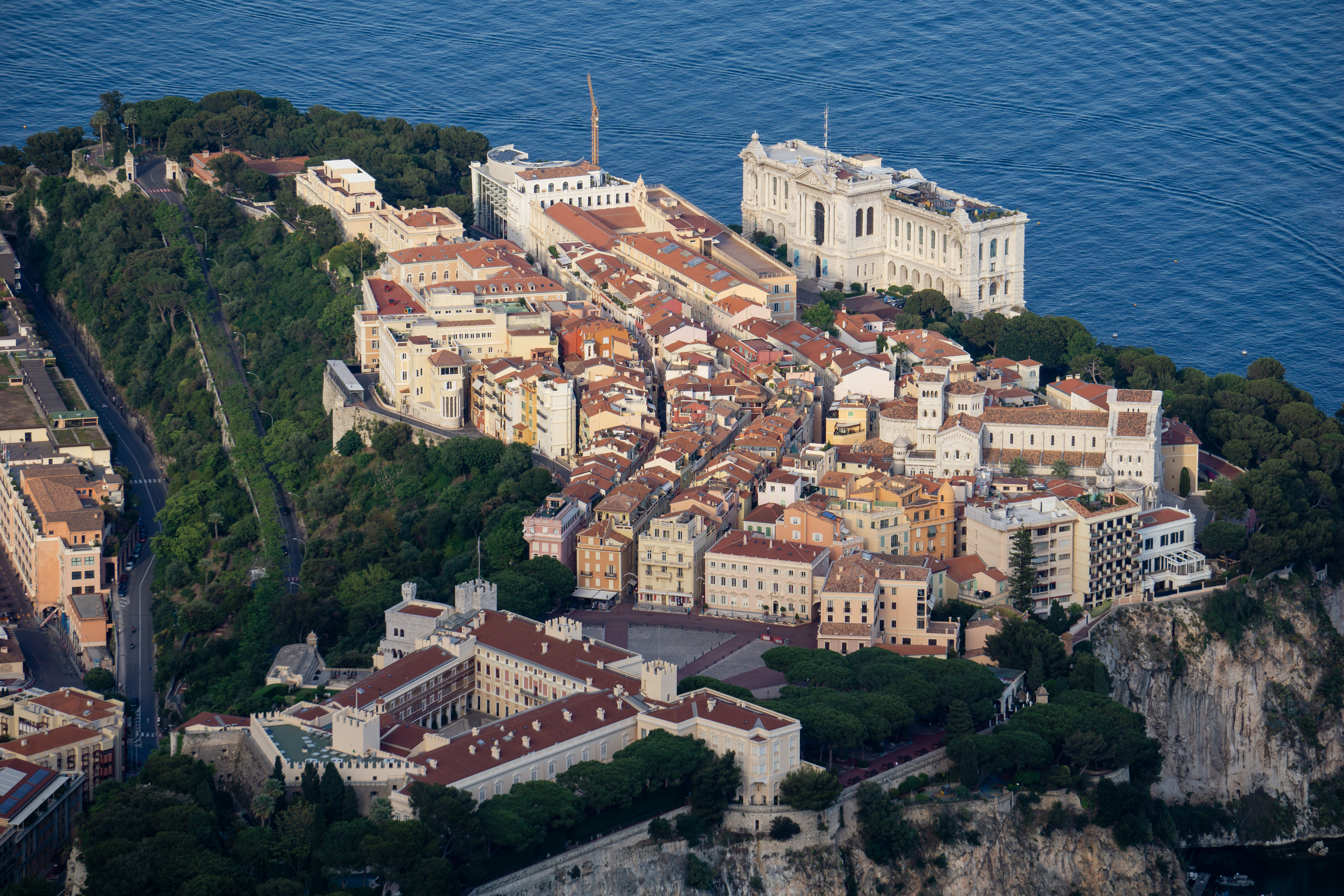
Oceanographic Museum of Monaco
It took eleven years and 100,000 tons of stone quarried from La Turbie to build. When Prince Albert I inaugurated the Oceanographic Museum in 1910, he invited not only dignitaries and celebrities but the world's leading oceanographers, because the building was always meant to be more than a museum. Albert I was a genuine scientist -- a prince who spent decades aboard research vessels, dragging nets and cataloging species -- and he wanted Monaco to become a permanent headquarters for Mediterranean marine research.
The Scientist Prince
Prince Albert I was an unlikely oceanographer. Heir to a microstate sustained by casino revenue, he chose to spend much of his life at sea. His research yacht, Princesse Alice II, carried a laboratory where observations led to a breakthrough in understanding anaphylaxis -- the severe allergic reaction that can kill within minutes. The research conducted aboard earned Dr. Charles Richet the Nobel Prize in Physiology or Medicine in 1913. Albert's collections, instruments, and field notes form the core of the museum's first-floor exhibition, "A Sailor's Career," which traces his transformation from royal heir to published scientist. The museum he built was his monument to the idea that even the smallest nation could contribute to understanding the planet's oceans.
A Cliff Made into a Cathedral
The building itself is a statement of ambition disproportionate to the country that produced it. Its Baroque Revival facade rises 279 feet above the Mediterranean, growing directly out of the Rock of Monaco as if the cliff had decided to become architecture. The names of famous oceanographic research vessels are inscribed on the facade -- the Gazelle, the Talisman, the Valdivia -- honoring the international expeditions that expanded human knowledge of the deep. Inside, the collections range from model ships and sea animal skeletons to ritual objects incorporating pearls and nacre from cultures around the world.
Cousteau's Three Decades
Jacques-Yves Cousteau served as director from 1957 to 1988, a tenure that transformed the museum from a princely vanity project into a globally recognized center for marine conservation. Under Cousteau, the museum's aquariums became a living showcase for Mediterranean and tropical marine life -- seahorses, jellyfish, sharks, rays, sea turtles -- displayed in environments designed to educate rather than merely entertain. Cousteau's fame as a filmmaker and explorer brought international attention that the museum's scientific pedigree alone could not have generated. His legacy ensures that the museum remains associated with advocacy for the oceans, not just the study of them.
Science on the Edge
The museum celebrated its centenary in 2010 after extensive renovations. It continues to operate as part of the Institut Oceanographique, committed to sharing knowledge of the oceans through exhibitions, research partnerships, and public engagement. The Mediterranean Science Commission, which Albert I helped conceptualize during the museum's inauguration celebrations, remains active. Standing on the terrace and looking down at the sea that Albert I spent his life studying, visitors confront an institution that has outlived its founder's wildest ambitions -- a palace of ocean science perched on the edge of the continent, where Europe drops into the deep blue water that drew a prince away from his throne.
From the Air
Located at 43.73N, 7.43E on the Rock of Monaco. The museum's massive Baroque facade is prominently visible from the sea, rising from the sheer cliff face. Nice Cote d'Azur Airport (LFMN) is 12 km west. Monaco Heliport (LNMC) below. Best viewed at 1,500-3,000 ft from the south or southeast, where the museum's cliff-face position is most dramatic.