Oceanside, California
Oceanside is the most populous city in North County San Diego, with 174,068 residents counted in 2020. But numbers don't explain the place. What explains Oceanside is the convergence of forces that built it: the 1798 Franciscan mission that gave the region its name and identity; Camp Pendleton immediately to the north, which has pumped military families through the city's neighborhoods for generations; the Pacific Ocean and the surfers who have made it one of Southern California's most authentic surf towns; and the downtown resurgence that in the 2010s brought galleries, restaurants, and two large Hyatt resorts to streets that had long felt like they were waiting for something.
Mission Origins
Before Oceanside existed by name, the Luiseño people — the Payomkawichum, 'People of the West' — lived along the San Luis Rey River in villages called Tacayme, Qée'ish, and 'ikáymay. Spanish explorers arrived in 1769 as part of the Portolà expedition. In 1798, Franciscan padre Fermín de Lasuén founded Mission San Luis Rey de Francia on the banks of the San Luis Rey River, naming it for King Louis IX of France.
The mission grew to become the largest of all the California missions by the early 19th century — a complex of buildings, fields, and workshops supporting thousands of converts. The Mexican secularization act of 1833 nationalized the missions, removing the Franciscan priests and transferring lands to private ownership. The mission declined. Its surrounding community gradually shifted from mission village to oceanfront resort, and the name changed slowly from San Luis Rey to Oceanside.
The Town Takes Shape
Oceanside was formally incorporated on July 3, 1888 — the same year its first pier was built. Andrew Jackson Myers, an Illinois emigrant who had settled on the land that would become the original townsite in 1882, received a patent for the property in 1883. His homestead now lies under Oceanside's City Hall.
The city that grew around it developed the distinctive character of Southern California beach towns: modest, sun-bleached, oriented toward the water. The presence of Camp Pendleton to the north, established in 1942, brought a permanent military population that shaped Oceanside's economy, demographics, and culture. For decades the city had more tattoo shops per capita than almost anywhere in California. Its beaches were wide and relatively uncrowded. Its downtown was functional rather than fashionable. That began to change in the 2010s.
The Pier and the Surf
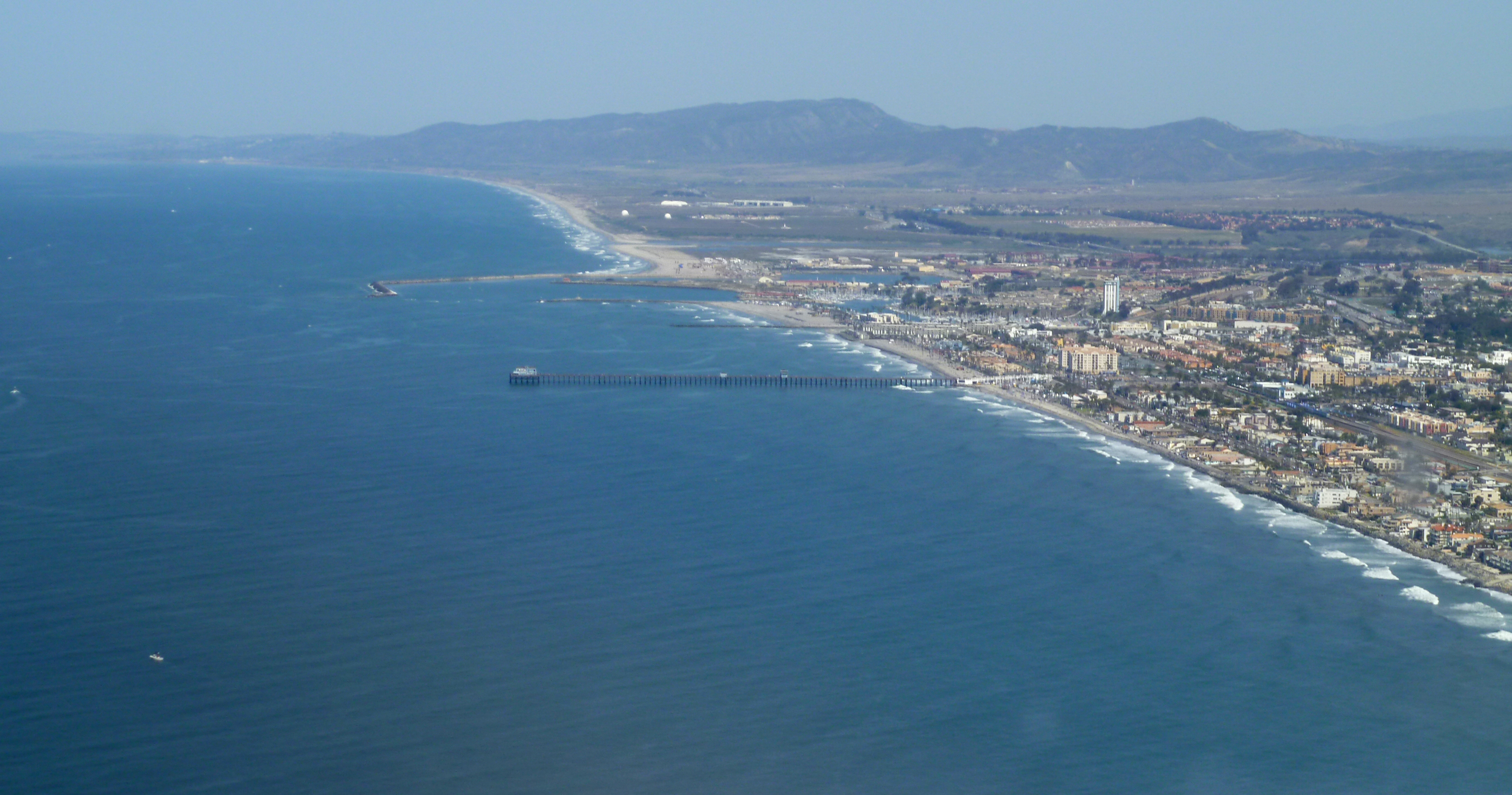
The Oceanside Pier, first built in 1888, has been destroyed by storms and rebuilt five times since, reaching its sixth incarnation in September 1987 at a cost of $5 million. At 1,942 feet, it is one of the longest wooden piers on the California coast. The pier has anchored Oceanside's identity as a beach destination for 135 years — a place to fish, to walk, to watch the surf break on both sides.
Oceanside takes its surfing seriously. The California Surf Museum is located in downtown. The city hosts the Super Girl Pro Festival, described as the world's largest surf competition for women, held annually since 2007. The San Luis Rey River mouth creates the surf break at the pier's north end; consistent swells and relatively uncrowded lineups have made Oceanside a regular stop on the California surf circuit.
Arts, Culture, and the Contemporary City
Oceanside is one of 14 designated Cultural Districts in California, a recognition from the California Arts Council of the city's concentrated arts infrastructure. The downtown cultural district includes the Oceanside Museum of Art, the historic Star Theatre, and the Thursday evening Sunset Market that turns the downtown streets into a weekly gathering of vendors and live music.
The Race Across America bicycle race begins in Oceanside each June — a 3,000-mile endurance event that starts at the pier and ends in Annapolis, Maryland. The Oceanside International Film Festival has run since 2009. The historic district of Mount Ecclesia, home to the Rosicrucian Fellowship, rises on a mesa above the San Luis Rey River Valley, an unexpected piece of esoteric California hidden in a city mostly known for its coastline. And the Top Gun House, a Folk Victorian cottage built in 1888, now houses a pie shop near the pier — a fragment of the 1986 Tom Cruise film embedded in the neighborhood like a found object.
From the Air
Oceanside sits at approximately 33.19°N, 117.38°W on California's Pacific coast, 35 miles north of San Diego. The city is easily identified from altitude by the long wooden pier extending into the Pacific and the San Luis Rey River mouth immediately to the north. Camp Pendleton's restricted airspace (R-2503) begins at the northern city limit. McClellan-Palomar Airport (CLD) is 8 miles southeast. Oceanside Municipal Airport (OKB) is a small general aviation field within the city at 33.22°N, 117.35°W.