Oda Castle: The Fortress That Refused to Stay Lost
Oda Ujiharu lost his castle three times and took it back twice. When the Satake clan seized Oda Castle for good in 1569, any reasonable lord would have accepted defeat. Ujiharu was not reasonable. He launched a guerrilla campaign that lasted twenty years, raiding and harassing the occupiers from the marshlands of Hitachi Province, occasionally coming close enough to see his old walls before being pushed back again. His tenacity ended only when Toyotomi Hideyoshi unified Japan in 1590 and handed all of Hitachi to the Satake as a reward for their submission. The castle itself, a sprawling complex of concentric water moats and earthen ramparts at the foot of Mount Oda, had already seen centuries of drama before Ujiharu's guerrilla war -- including a year when one of Japan's most important historical texts was written within its walls.
A Fortified Manor in the Marshes
Oda Castle sits five kilometers south of Mount Tsukuba in what was southwestern Hitachi Province, overlooking the Sakura River as it flows toward Lake Kasumigaura. When the castle was first built, the lake extended further inland than it does today, and the surrounding landscape was a maze of small rivers and marshes that divided the terrain into natural islands -- ideal defensive ground. Hotta Tomoie, who distinguished himself fighting the Northern Fujiwara, received estates in Hitachi from Minamoto no Yoritomo and built a fortified residence at the foot of Mount Oda. His descendants took the surname Oda from the mountain. The Oda clan -- a cadet branch of the Hatta, who served as shugo of Hitachi in the Kamakura period -- would hold this strategic position and become the most powerful local clan in the area.
The Emperor's Chronicler
When Japan split into two rival imperial courts in the fourteenth century, the Oda clan backed the Southern Court against the Ashikaga shogunate. Their loyalty brought a remarkable houseguest: Kitabatake Chikafusa, the Southern Court's most important general and intellectual, who made Oda Castle his field headquarters for over a year. While camped behind its moats and palisades, Kitabatake wrote the Jinno Shotoki -- the Chronicles of the Authentic Lineages of the Divine Emperors -- a passionate defense of the Southern Court's claim to legitimate rule. The text became one of the most influential works of Japanese political philosophy, and it was composed not in a palatial study but in a frontier fortress surrounded by hostile territory. As the Southern Court's power waned, the Oda clan eventually pledged fealty to the Muromachi shogunate, but they remained ranked among the eight most prestigious clans of the Kanto region.
Twenty Years of Guerrilla Defiance
The Sengoku period brought powerful and aggressive neighbors pressing in from all sides. The Oda allied with the Late Hojo clan against the Uesugi-Satake alliance, and Oda Castle was expanded with additional concentric enclosures and an elaborate maze-like system of water moats. It was not enough. Oda Ujiharu was defeated by the Satake in 1559, lost the castle to Uesugi Kenshin in 1564 and again in 1566 -- retreating each time to Tsuchiura Castle before fighting his way back with local support. When the Satake took Oda Castle definitively in 1569 and then besieged him at Tsuchiura in 1573, Ujiharu still refused to submit. For the next twenty years, he waged guerrilla warfare from the marshlands, never recovering his ancestral stronghold but never abandoning his claim to it either. Toyotomi Hideyoshi's unification of Japan in 1590 ended the struggle permanently.
Moats, Walls, and a Railroad Through the Middle
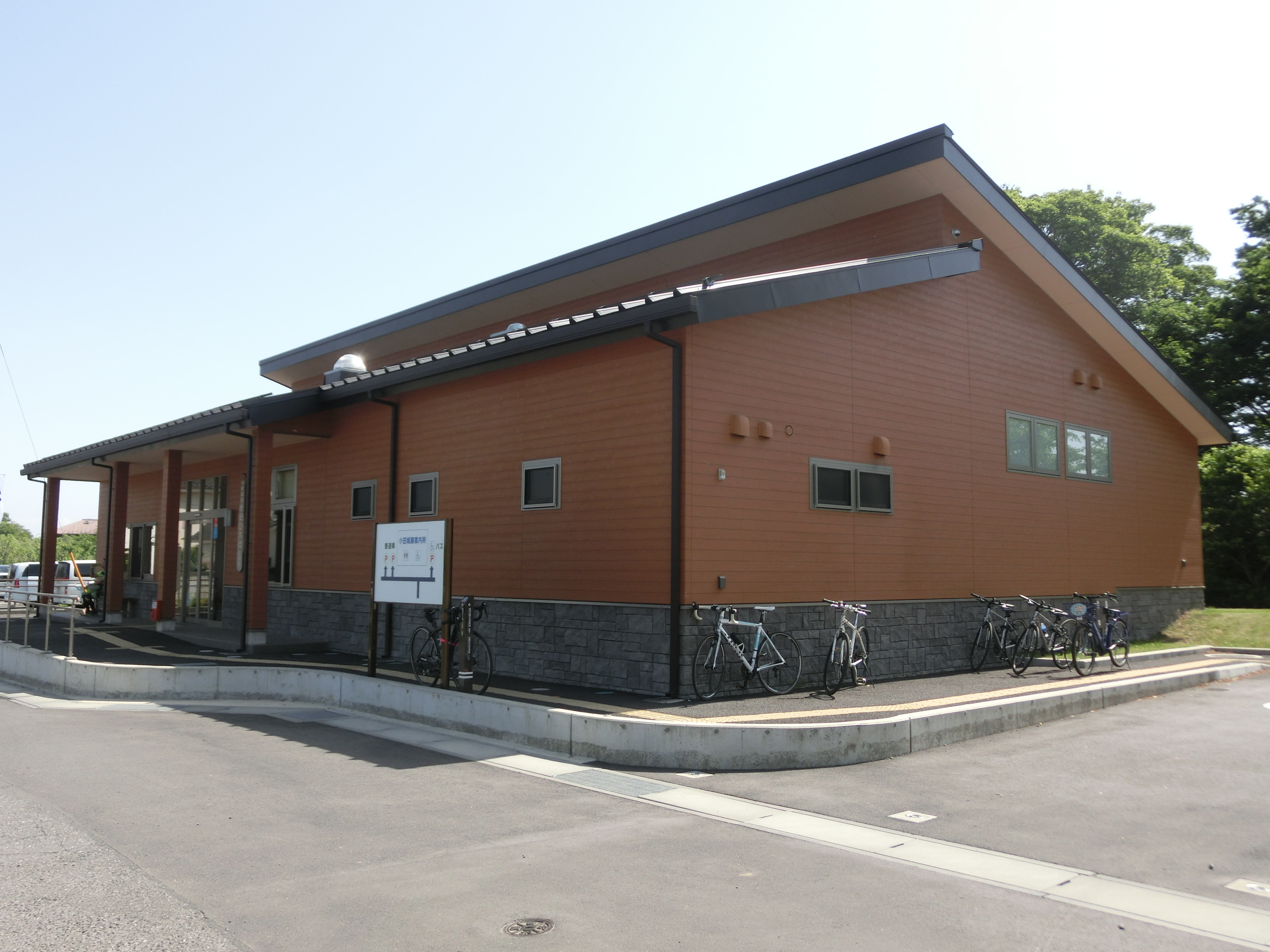
At its peak, Oda Castle measured roughly one kilometer east to west and 700 meters north to south, with four concentric enclosures protected by water moats. The innermost bailey was a rectangle of approximately 120 by 140 meters, with yagura watchtowers at the west, east, and south corners. The main gate faced north, and the clan's bodaiji temple stood to the west. After the Meiji Restoration, urban development consumed the outer enclosures, and the now-defunct Kanto Railway Tsukuba Line drove its tracks directly through the ruins. Archaeological excavations from 1997 to 2004 carefully documented what remained, and in 2016 the site reopened as the Oda Castle Ruins History Plaza, with restored clay ramparts and marshy moats. The visitor center occupies the grounds of the former train station -- a building layered atop a medieval fortress, itself built on land contested for centuries.
From the Air
Located at 36.151N, 140.111E on the Kanto Plain five kilometers south of Mount Tsukuba. The castle ruins are visible as a series of rectangular moats and green spaces amid suburban development. Best viewed at 2,000-3,000 feet AGL from the west, with the distinctive twin peaks of Mount Tsukuba (877m) framing the scene to the north and the broad expanse of Lake Kasumigaura glinting to the southeast. Ibaraki Airport (RJAH) lies approximately 20 nautical miles northeast. The Sakura River is visible flowing south from Tsukuba toward the lake.