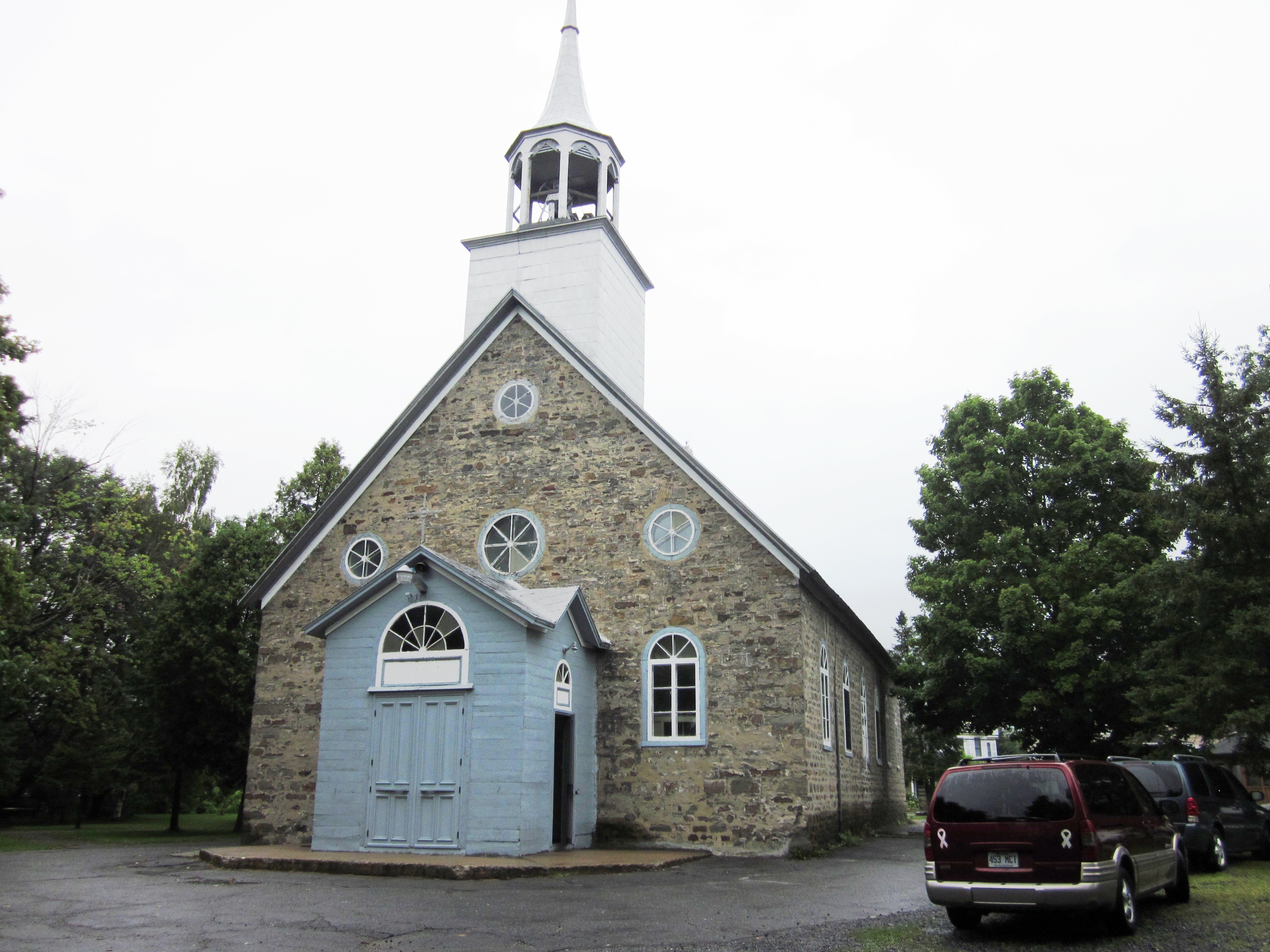
Odanak
The word itself is a quiet act of defiance. Odanak means "in the village" in the Abenaki language, and for more than three centuries, this small reserve near the mouth of the Saint-Francois River has insisted on being exactly that -- a village, a home, a place that endures. Burned to the ground by Rogers' Rangers in 1759, relocated three times before that, fortified by order of Louis XIV, and reinforced by warriors fleeing wars in Maine, Odanak has absorbed every blow the colonial era could deliver. Today, with a population of 481 as of the 2021 census, it is the home of the Musee des Abenakis and a community that has produced filmmakers, Supreme Court justices, and the only First Nations CEGEP in Quebec.
Before the Abenaki Arrived
Long before the Abenaki settled here, Iroquoian-speaking peoples farmed along the St. Lawrence River. Archaeological surveys reveal that by 1300 CE, they had built fortified villages similar to those French explorer Jacques Cartier described when he visited Hochelaga and Stadacona in the mid-16th century. By the end of that century, these people had vanished. Historians and anthropologists have since identified them as the St. Lawrence Iroquoians, a distinct ethnic group who spoke Laurentian and were separate from the powerful Iroquois Confederacy to the south. Their disappearance is believed to have resulted from attacks by the Mohawk, who sought control of the hunting grounds along the St. Lawrence and the fur trade routes above Tadoussac. By the time Samuel de Champlain arrived, the river valley was essentially uninhabited, reserved by the Mohawk as hunting territory and a path for war parties. Into this emptied landscape, the Abenaki would eventually come.
A Fortress Built by a King
The Abenaki mission at Odanak was established in the late 17th century, near a small village of Abenaki and Sokokis people that the Jesuit priest Bigot had observed during his travels in the winter of 1684-1685. The Governor General of New France, Louis-Hector de Calliere, and the Intendant Jean Bochart de Champigny arranged for land from the Crevier seigneury to be granted for the new mission. In 1704, during the War of the Spanish Succession, King Louis XIV ordered the King's Engineer, Levasseur De Nere, to fortify the site with redoubts and a palisade standing 4.7 metres high, reinforced with stone bastions. The fortification was meant to protect the families of Abenaki and Sokoki warriors who had sided with the French against the English and the Iroquois. That same year, Abenaki warriors took part in the Deerfield Raid of February 29, 1704, capturing 112 English settlers. Odanak was not merely a village; it was a military outpost woven into the fabric of New France's wars.
Three Moves and a Burning
The village relocated in 1706 from its original position on the northeastern bank of the Saint-Francois River to a site near present-day Pierreville, to accommodate a growing population. In the summer of 1711, Odanak was temporarily abandoned when Admiral Hovenden Walker and Colonel Francis Nicholson threatened Quebec City. The warriors marched to defend Quebec while women and children were sent to Trois-Rivieres and Montreal. After Walker's fleet withdrew in failure, the Abenaki returned. In 1715, the village moved again, this time to its current location high on the riverbank to escape seasonal flooding. Following Dummer's War in 1725, 300 Abenaki warriors and their families arrived from the Narransouac and Pentagouet missions in Maine, swelling the population. Then came October 4, 1759. Major Robert Rogers, under orders from Jeffery Amherst, led 200 men against Odanak while most of its warriors were away defending Quebec City under General Montcalm. Rogers' men destroyed and burned the entire village, including the mission's records and archives. Casualty accounts diverge sharply: Rogers claimed 200 dead, while French sources recorded 30, of whom 20 were women and children.
The People Who Stayed
The Abenaki rebuilt. They had done it before and would keep doing it. Odanak today is a community that punches far above its weight in cultural significance. The Musee des Abenakis, dedicated to the history, culture, and art of the Western Abenaki people, anchors the village. Filmmaker Alanis Obomsawin, born in 1932, grew up in Odanak and went on to produce landmark documentaries for the National Film Board of Canada, including Waban-Aki: People from Where the Sun Rises, a tribute to the community. Elijah Tahamont, born in 1855, became the silent film actor known as Dark Cloud. Alexis Wawanoloath served in the National Assembly of Quebec. In 2022, Michelle O'Bonsawin became the first Indigenous person nominated to the Supreme Court of Canada. In 2011, the only First Nations CEGEP in Quebec opened its doors in Odanak. The storyteller Theophile Panadis, recognized as a Person of National Historic Significance, kept the oral tradition alive through the mid-20th century. Three centuries of displacement, warfare, and destruction could not erase what Odanak means in its own language: the village.
From the Air
Odanak is located at 46.07°N, 72.83°W, near the confluence of the Saint-Francois River and the St. Lawrence River in the Centre-du-Quebec region. From cruising altitude, the Saint-Francois River is visible winding through agricultural lowlands before meeting the St. Lawrence. The reserve sits across the river from Saint-Francois-du-Lac and is partly within the limits of Pierreville. The nearest airports include Trois-Rivieres (CYRQ) to the northeast and Drummondville (CYDN) to the southeast. Best viewed at 2,000-4,000 feet AGL to appreciate the river confluence and the village's position on the high riverbank.