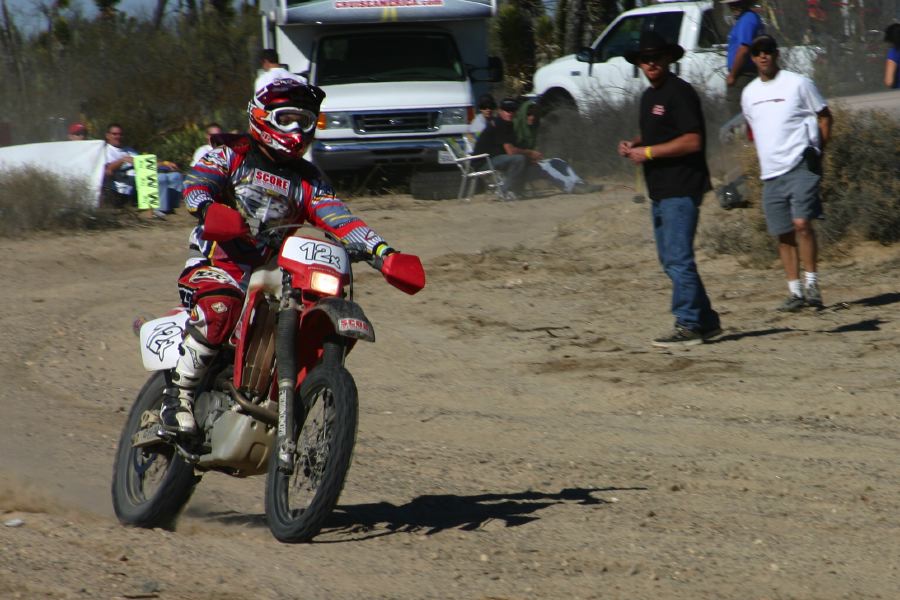
Off-roading in Baja
Dust rises in a towering plume behind a modified trophy truck as it launches off a hidden dip in the desert floor, all four wheels briefly airborne before slamming back to earth and charging onward toward the distant mountains. This is Baja, the long finger of land that extends south from California into the Pacific, where the terrain has been testing vehicles and drivers for over half a century. The peninsula earned its fearsome reputation in the 1960s when Honda sent motorcycles down its spine to prove their durability, sparking a motorsports tradition that endures today. Now a paved highway runs the thousand-mile length from Tijuana to Los Cabos, but the backcountry remains wild: remote sierras, searing deserts, tidal salt marshes, hidden hot springs, and prehistoric caves accessible only to those willing to leave the pavement behind.
Birth of the Baja 1000
The first official Baja 1000 race roared to life in 1967, five years after Honda's demonstration runs showed the world what the peninsula demanded of machines. The first car to complete the thousand-mile crossing was a dune buggy built on a humble Volkswagen Beetle chassis, a choice that would define Baja racing for decades. Through the 1960s and 1980s, motorcycles and small modified cars dominated the winners' lists, but since 1990, four-wheel-drive trucks from Chevrolet, Ford, and Toyota have claimed most victories. The race typically runs from Ensenada in the north to La Paz in the south each November, though some years feature a loop course that returns to the starting line. Whatever the route, the Baja 1000 remains motorsports' ultimate endurance test.
The Racing Calendar
The Baja 1000 anchors a full calendar of off-road competition on the peninsula. June brings the Baja 500, a shorter but equally demanding loop course based in Ensenada. Further south in Baja California Sur, the Loreto 400 and Loreto 300 challenge drivers along the Sea of Cortez coastline. The San Felipe 250 runs on the eastern side of the peninsula, where the terrain shifts from desert to salt flats to coastal dunes. Motorsports fans book Ensenada hotels months in advance, knowing that race weekends transform the city. One of the best spectating spots is Rosarito Beach, where fans gather to watch machines scream past against the backdrop of the Pacific.
Adventure Beyond Racing
You do not need a million-dollar trophy truck to experience Baja's backcountry. Rental companies throughout the peninsula offer everything from ATVs to fully equipped Jeeps, and guided tours range from afternoon beach runs to multi-day expeditions into the mountains. Companies catering to adventure tourists provide route planning, camping gear, and support trucks that follow with spare tires and emergency supplies. For those bringing their own vehicles from the United States, a word of caution: standard Mexican auto insurance typically does not cover off-road use, and custom 4WD vehicles may be classified as motorcycles, which carry different coverage rules. Understanding the paperwork is as important as understanding the terrain.
Hidden Treasures Off the Highway
The real reward of Baja off-roading lies in what cannot be reached by pavement. Secluded coves and hidden beaches line both coasts, accessible only by rough tracks that wind down from the mountains or across the desert. Natural hot springs bubble up in remote canyons where the only other visitors might be a family of bighorn sheep. Prehistoric caves contain rock art left by peoples who inhabited the peninsula thousands of years before the Spanish arrived. These destinations demand self-sufficiency: extra fuel, water, tools, and the knowledge to use them. But for those who come prepared, Baja delivers an off-road experience that has drawn adventurers for sixty years and shows no signs of losing its wild edge.
From the Air
The Baja Peninsula extends from approximately 32N to 23N along Mexico's Pacific coast, spanning over 1,000 miles. This article focuses on the northern regions around coordinates 31.2N, 114.9W. Terrain varies dramatically from coastal dunes to interior mountain ranges exceeding 10,000 feet. Major airports include General Abelardo L. Rodriguez International (MMTJ) in Tijuana, El Cipres International (MMEP) in Ensenada, and Manuel Marquez de Leon International (MMLP) in La Paz. San Felipe International (MMSF) serves the Sea of Cortez side.