Ohio State Reformatory: Where Redemption Found a Second Act
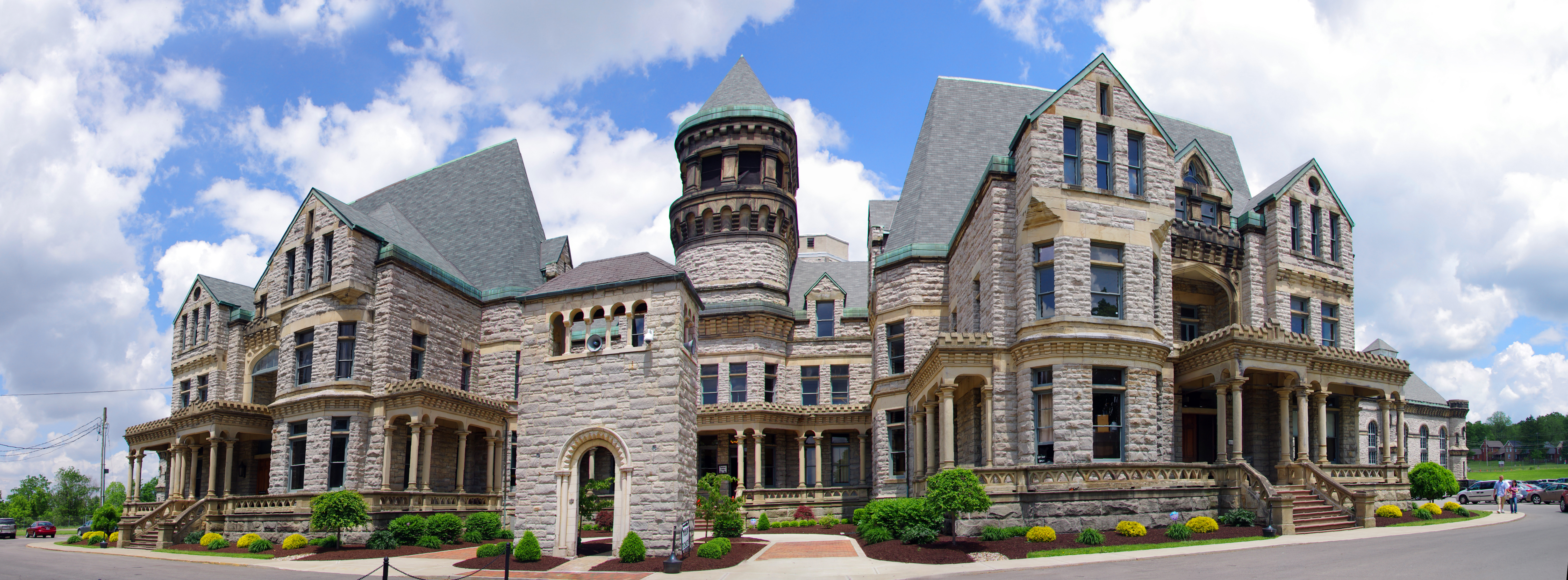
The building looks wrong for Ohio. Rising from the flat farmland outside Mansfield like something transplanted from medieval Europe, the Ohio State Reformatory presents a facade of Romanesque arches, Victorian Gothic towers, and castle-like battlements rendered in brick and stone. This was intentional. When architect Levi Scofield designed the prison in the 1880s, he chose these styles to stir something spiritual in the young first-time offenders who would pass through its gates -- the architecture itself was meant to be reformative, a physical sermon in stone urging inmates toward redemption. A century later, a different kind of redemption arrived: a film crew looking for a prison that could stand in for the fictional Shawshank State Prison, and a preservation society determined to save the crumbling structure from demolition.
From Training Camp to Penitentiary
The land where the reformatory stands carries layers of history. In 1862, during the Civil War, this field served as Camp Mordecai Bartley, a training ground for Union soldiers named after a former Ohio governor from Mansfield who had served in the 1840s. Five years later, in 1867, Mansfield pitched itself as the site for Ohio's new Intermediate Penitentiary, a facility conceived as a halfway point between the Boys Industrial School in Lancaster and the State Penitentiary in Columbus. The city raised $10,000 to purchase 30 acres; the state added 150 adjoining acres for $20,000. Construction began in 1886 under architect Friedrich Ferdinand Schnitzer, who oversaw the creation of the entire complex. The facility blended three architectural styles -- Victorian Gothic, Richardsonian Romanesque, and Queen Anne -- giving it a grandeur unusual for a prison. On September 15, 1896, the first 150 inmates arrived by train from Columbus and were immediately put to work building the 25-foot stone wall that would surround them.
Six Tiers of Steel
The East Cell Block remains the largest freestanding steel cell block in the world. Six tiers of cells rise from the concrete floor in a single soaring structure of riveted steel, each level connected by narrow catwalks and spiral staircases. The scale is staggering -- standing at the ground level and looking up through the tiers feels less like being inside a building and more like standing inside a machine. The reformatory was renamed from Intermediate Penitentiary in 1891 and operated continuously for nearly a century. But the grandeur of Scofield's architecture masked increasingly grim conditions. By the late 1970s, overcrowding and deterioration had turned the reformatory into a place that violated the very principles of reform its design was meant to embody.
The Boyd Consent Decree
The end came through the courts. In a prisoners' class-action lawsuit citing overcrowding and inhumane conditions -- Boyd v. Denton -- District Judge Frank J. Battisti of the U.S. District Court for the Northern District of Ohio ordered the prison closed by December 1986. Construction delays on the replacement facility, Mansfield Correctional Institution, pushed the actual closing to December 1990. Most of the grounds and support buildings were demolished afterward, including the imposing outer wall. What remained was the main building itself -- architecturally magnificent, structurally deteriorating, and seemingly destined for the wrecking ball.
Shawshank's Castle
The reformatory's second life began with Hollywood. The prison had appeared in films while still operational -- Harry and Walter Go to New York in 1975, Tango and Cash in 1989. But it was the 1994 filming of The Shawshank Redemption that transformed the building from abandoned ruin to cultural landmark. The warden's office, the long corridors, the towering cell blocks -- they became the visual vocabulary of one of the most beloved films ever made. Air Force One used the facility as a Russian prison in 1997. Music videos, paranormal television shows, and independent films followed in a steady stream. The building's brooding Gothic presence proved irresistible to cameras. In 1995, the Mansfield Reformatory Preservation Society formed to save the building, funding restoration through tour fees and donations. Today the reformatory hosts history tours, Hollywood-themed tours, ghost hunts, the annual INKcarceration Music and Tattoo Festival, and a Halloween haunted attraction called Blood Prison.
The Architecture of Hope
Restoration work continues. The Warden's quarters and the central guard room between the East and West Cell Blocks have been fully restored. Stained glass windows are being replaced. The Preservation Society maintains the facility as a museum where visitors can walk the same corridors that held inmates for a century and film crews for decades after. There is an irony Scofield might have appreciated: his prison, designed to redeem its inmates through the power of architecture, failed at that purpose and was shut down for cruelty. But the architecture itself was redeemed. The building that could not reform the people inside it became a place of pilgrimage for fans of a film about hope -- a story where redemption comes not through castle walls but despite them.
From the Air
Located at 40.79°N, 82.51°W in Mansfield, Ohio. The reformatory is visible from altitude as a large castle-like structure on the north side of Mansfield, distinctive for its Romanesque towers amid flat Ohio farmland. The modern Mansfield Correctional Institution is visible immediately to the west. Nearby airport: Mansfield Lahm Regional Airport (KMFD), approximately 3 miles north. Best viewed at 2,000-4,000 feet AGL. The reformatory's towers and the surrounding cleared grounds make it identifiable even at moderate altitude. Interstate 71 runs south of the city.