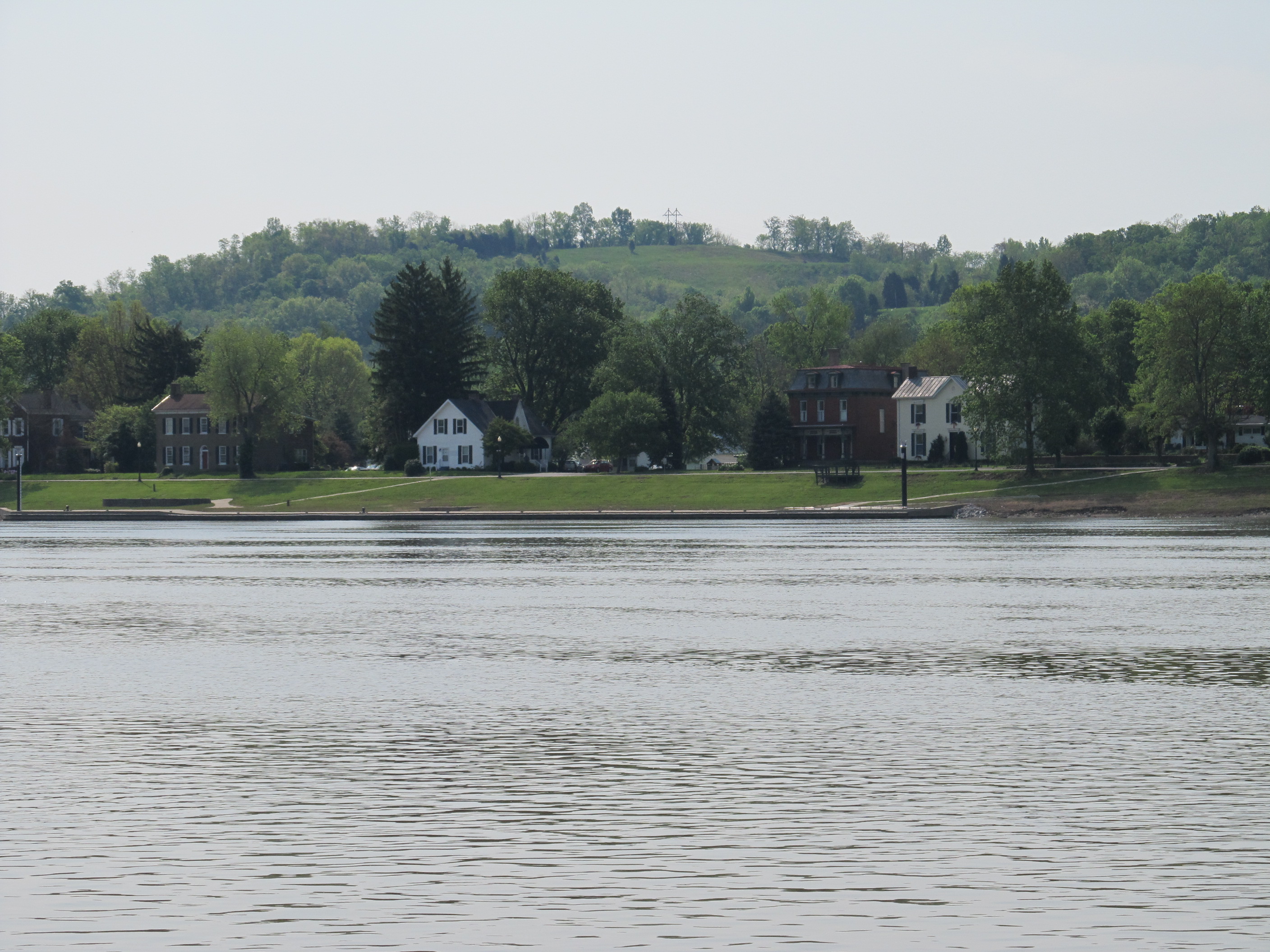
Ripley and the Underground Railroad
Stand on the Kentucky shore and look north across the Ohio River. On the hill above Ripley, Ohio, a small house with a light in the window marks where America argued about its soul. Reverend John Rankin kept that light burning for decades - a beacon for freedom seekers crossing the Ohio from slave states. The light said: swim, row, cross the ice, and climb these stairs. You will be hidden. You will be moved north. You will be free. An estimated 2,000 people crossed through Ripley, climbing the 100 steps to Rankin's door. The town became famous as a station on the Underground Railroad - so famous that slaveholders offered bounties on Rankin's head. He ignored them. The light stayed lit.
The House on the Hill
John Rankin was a Presbyterian minister who moved to Ripley in 1822 and immediately began helping escaped enslaved people reach freedom. His house sat on a bluff 300 feet above the town - visible from Kentucky, visible to anyone on the river looking for help. The light in the window was literal: a lantern that burned through the night, a signal that freedom seekers knew and slave catchers feared. Rankin's thirteen children participated in the work, hiding people in the house, guiding them to the next station, risking imprisonment and violence. The house is now a museum, the stairs restored, the light still visible from the Kentucky shore.
The Network
Ripley was uniquely positioned for Underground Railroad activity. The Ohio River marked the border between slavery and freedom - Kentucky on the south bank, Ohio on the north. Freedom seekers needed only to cross the river and climb the hill. From Ripley, routes led north through Ohio to Lake Erie, where boats carried passengers to Canada. The network included free Black families, white abolitionists, and Quaker communities. Some operators were public (Rankin defied slave catchers openly); others worked in secret. The network in and around Ripley may have helped 2,000 people reach freedom - a significant fraction of all Underground Railroad passengers through Ohio.
The Story
In the winter of 1838, an enslaved woman named Eliza escaped from Kentucky, carrying her infant across the frozen Ohio River, leaping between ice floes. She reached the Ripley shore and was helped by a man who may have been Rankin. Harriet Beecher Stowe heard the story, transformed it into the central scene of 'Uncle Tom's Cabin,' and changed American history. The novel sold 300,000 copies in its first year, galvanized the abolitionist movement, and was credited by Lincoln as one of the causes of the Civil War. The real Eliza survived; she reached Canada and freedom. Her crossing lives on in a scene that defined how America imagined slavery.
The Risk
Underground Railroad work was illegal. The Fugitive Slave Act required northerners to return escaped enslaved people; those who helped them faced fines and imprisonment. Slave catchers crossed into Ohio regularly, hunting escapees and their helpers. Rankin's house was attacked; his barn was burned. Bounties were offered for his capture - dead or alive. He responded by arming his sons and continuing his work. The moral clarity that seems obvious now was desperately contested then; Rankin and his allies were breaking the law, defying their government, risking everything on the belief that human freedom mattered more than legal compliance.
Visiting Ripley
Ripley is located on the Ohio River in Brown County, Ohio, accessible via Route 52. The John Rankin House is a National Historic Landmark, open for tours seasonally; the 100 steps from town to the house are original. The Ripley Museum interprets Underground Railroad history and local abolitionism. The riverfront shows where freedom seekers crossed - Kentucky is visible across the water. Cincinnati is 50 miles west; Maysville, Kentucky is directly across the river. The town is small but significant; the history is everywhere. The stairs are steep. The climb mattered. The light in the window still means something.
From the Air
Located at 38.75°N, 83.85°W on the Ohio River in southern Ohio. From altitude, Ripley appears as a small town on the river's north bank, with Kentucky's green hills rising on the south shore. The Rankin House is visible on the bluff above town - a small white building on the hilltop. The Ohio River curves past, marking the boundary between free and slave states that defined this landscape's history. The bridge connecting Ohio and Kentucky didn't exist during the Underground Railroad era; the river itself was the barrier. The town's position - directly on the border, with high ground offering visibility - made it ideal for the work that happened here.