Ojuela
The bridge is the last thing standing. Ojuela's church is a ruin, its miners' houses are foundations without walls, and its saloons have not poured a drink in nearly a century. But the suspension bridge -- the Puente de Ojuela, originally designed by the Roebling brothers, the same engineers behind the Brooklyn Bridge -- still stretches across the canyon, connecting a ghost town to nothing in particular. When it was completed in 1898, it was the third-longest suspension bridge in the world. Now it connects tourists and mineral collectors to one of Mexico's most atmospheric abandoned places, five kilometers northwest of the old mining town of Mapimi in the Durango desert.
Silver in the Sierra
Spanish prospectors discovered abandoned mines in these mountains in 1598, and the potential was immediately clear. Gold and silver lay in the rock, and within years a settlement had taken root at the mountaintop near the main mine entrance. The logic was simple: keep the workers as close to the work as possible. Ojuela grew rapidly from camp to village, acquiring the institutions of permanence -- a post office, a Catholic church, general stores, warehouses, saloons. By the late nineteenth century, the Penoles Mining Company had acquired the property, and the railroad's arrival meant that ore could be transported to Mapimi for processing. The town hummed with purpose. Nobody imagined the mountain would run dry.
Revolution and Ruin
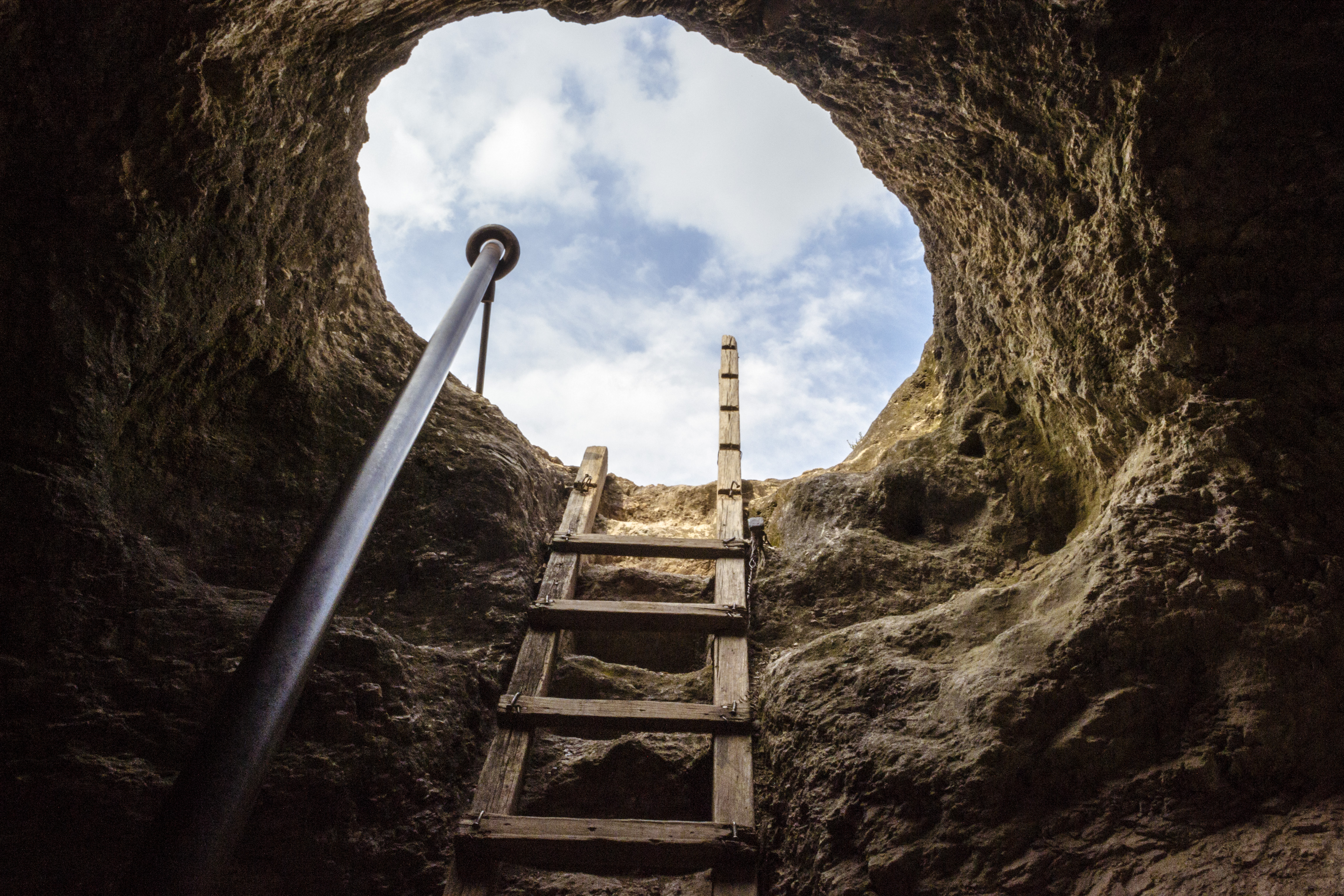
The twentieth century brought two enemies the mines could not defeat. The Mexican Revolution, which swept northern Mexico from 1910 onward, disrupted operations with the chaos that accompanied it. More insidious was the water that seeped into the mine shafts, flooding the tunnels and making extraction increasingly difficult. When the revolution ended, mining resumed, but the ore reserves were dwindling. Penoles eventually leased the operation to a local miners' cooperative -- a quiet admission that the company saw no future worth investing in. The cooperative scraped what it could, but the economics were unforgiving. The town emptied gradually, its residents drifting away to Mapimi and Torreon and wherever work could be found. Today, the only commerce at Ojuela comes from a handful of fossil sellers and tour guides who lead visitors down into the old mine tunnels.
The Bridge That Outlived Its Purpose
The original Puente de Ojuela was built in 1898 by the Roebling brothers -- Washington and his family's engineering firm, famous for designing the 1866 Roebling Suspension Bridge in Cincinnati and the 1883 Brooklyn Bridge. At the time of construction, it ranked as the third-longest suspension bridge in the world, an engineering marvel serving a mining town that most of the world would never hear of. The original structure was eventually scrapped; its main arches are now on display at the Torreon Exposition Center. Penoles rebuilt the bridge, and this replacement is what visitors cross today, swaying above the canyon floor with the wind rising from below. Walking across, you can see the ruins of Ojuela spread across the mountainside -- the church's stone walls open to the sky, the foundations of houses that once held families whose lives revolved around the next shift underground.
A Mineral Collector's Shrine
Ojuela may be dead as a town, but among mineral collectors it remains very much alive. The mine has yielded 117 distinct mineral species, making it one of the most important collecting localities in the Americas. Its adamite specimens -- vivid green, yellow, and purple crystals -- have set the standard for the species worldwide. Legrandite crystals from Ojuela are equally prized. The mine is the type locality for five minerals: paradamite, lotharmeyerite, metakottigite, mapimite, and ojuelaite, meaning these species were first scientifically described from specimens found here. For collectors, making the journey to this remote corner of Durango is a pilgrimage. The desert that killed Ojuela as a community has preserved it as something else entirely -- a place where the earth's hidden architecture is on display, and where a bridge built to carry ore now carries people who come simply to look.
From the Air
Coordinates: 25.79°N, 103.79°W. Ojuela is located 5 km northwest of Mapimi in the Durango desert, in the Bolson de Mapimi basin. The terrain is arid and mountainous. The suspension bridge and mine ruins are visible from low altitude. Nearest significant airport: Torreon International (MMTC/TRC), approximately 75 km southeast. Approach from the east for the best view of the bridge spanning the canyon.