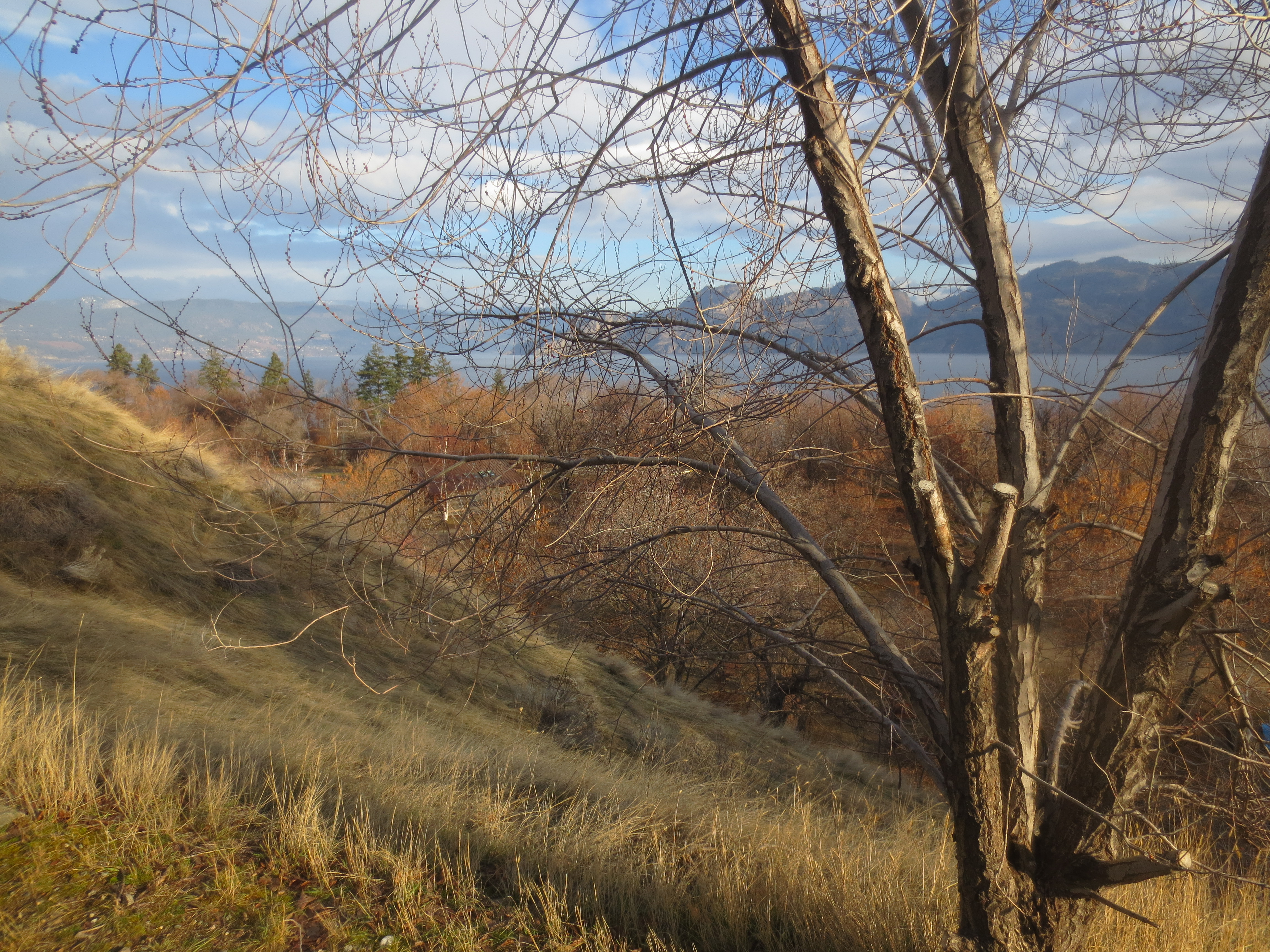
Okanagan
The First Nations people who have lived here for thousands of years called it the place of water. The Okanagan Valley stretches 135 kilometers from Vernon in the north to Penticton in the south, threaded by the lake that gives it a name and a character unlike anywhere else in Canada. This is the country's sunshine belt - hot, dry summers that turn hillsides golden and ripen fruit on the vine. Osoyoos, near the American border, contains Canada's only true hot desert, complete with sagebrush and rattlesnakes. The contrast with rainy Vancouver, just a day's drive west, could hardly be starker. Tourists flood the beaches in summer; wine enthusiasts tour the hundred-plus wineries year-round; retirees settle in communities that promise more sunshine than their pension checks could buy elsewhere.
The Lake That Defines
Okanagan Lake dominates everything. Its waters moderate the climate, its beaches draw the crowds, its presence shapes the valley's economy and identity. In summer, the shoreline transforms into a continuous party - paddleboards and jet skis, beach bars and volleyball courts, the particular buzz of a place that knows its season is short and intends to enjoy every moment. Kelowna anchors the central stretch, the largest city in the valley and its transportation hub. Penticton bookends the south, wedged between Okanagan Lake and smaller Skaha Lake, a town that calls itself the 'Peach City' for reasons that become obvious when the orchards bloom. Vernon holds down the north, quieter but no less devoted to the outdoor lifestyle. Between them, smaller communities - Summerland, Peachland, Lake Country - string along the shores like beads on a turquoise strand.
Wine Country Arrives
Father Charles Pandosy planted the first grapes near Kelowna in 1859, missionary work requiring communion wine. Commercial viticulture came much later, in the 1980s, when farmers began replacing apple orchards with vineyards and winemakers discovered that the same conditions that grew perfect peaches - hot days, cool nights, long growing seasons - produced remarkable wines. Today over a hundred wineries scatter across the valley, concentrated around the Black Sage Bench and Golden Mile near Oliver, the Naramata Bench east of Penticton, and the hillsides around Kelowna and West Kelowna. Mission Hill, Quail's Gate, and Mount Boucherie draw the connoisseurs; smaller operations welcome visitors with less pretension and more conversation. The region now produces over 60 grape varietals, including ice wines that benefit from the occasional hard freeze.
Four Seasons, Four Reasons
Summer brings the beach crowds and the fruit stands, the wine tours and the flotillas of boats on every lake. Fall quiets things down, though the wine harvest continues and the autumn colors paint the hillsides. Winter transforms the valley's eastern slopes into ski destinations - Big White and Silver Star draw snowsports enthusiasts from across western Canada, their dry 'champagne powder' a counterpoint to the Coast Range's heavier snow. Spring melts the slopes and starts the orchard cycle again, cherry blossoms preceding the peach and apricot blooms that carpet the valley in pink and white. The Okanagan never quite stops, just shifts its focus with the seasons. There's always a reason to be here, though that reason changes every few months.
The Desert Edge
South of Osoyoos, Canada essentially ends. The border crossing to Washington state marks more than a political boundary - it separates one of Canada's most unusual ecosystems from its American continuation. The Osoyoos Desert - sometimes called the Great Basin extension - receives less than 300mm of rainfall annually, supports rattlesnakes and scorpions, and bakes under summer sun that can push temperatures past 40C. The local economy capitalizes on this uniqueness: desert tours, interpretive centers explaining this unlikely landscape, beaches on Lake Osoyoos where the water warms to swimmable temperatures by June. It's not Arizona, but for a country known for winter, it's close enough. Visitors from Vancouver, Calgary, and Edmonton stream through all summer, escaping coastal rain or prairie mosquitoes for a taste of heat that feels almost foreign.
From the Air
Located at 49.75N, 119.72W, the Okanagan Valley runs roughly north-south for 135km, defined by Okanagan Lake and flanked by mountains on both sides. Highway 97 is visible as the main corridor through the valley. Kelowna International Airport (YLW) offers commercial service and is the region's primary gateway; Penticton Regional Airport (YYF) provides smaller-scale commercial options with connections to Vancouver. The valley floor sits at approximately 340m elevation; surrounding mountains rise to 2,000m+. Weather is notably drier and sunnier than the coast, with hot summers and mild winters in the valley, though upper elevations receive significant snowfall. The desert ecosystem around Osoyoos near the US border is distinctive from altitude - brown and sage-colored compared to the green orchards and vineyards to the north.