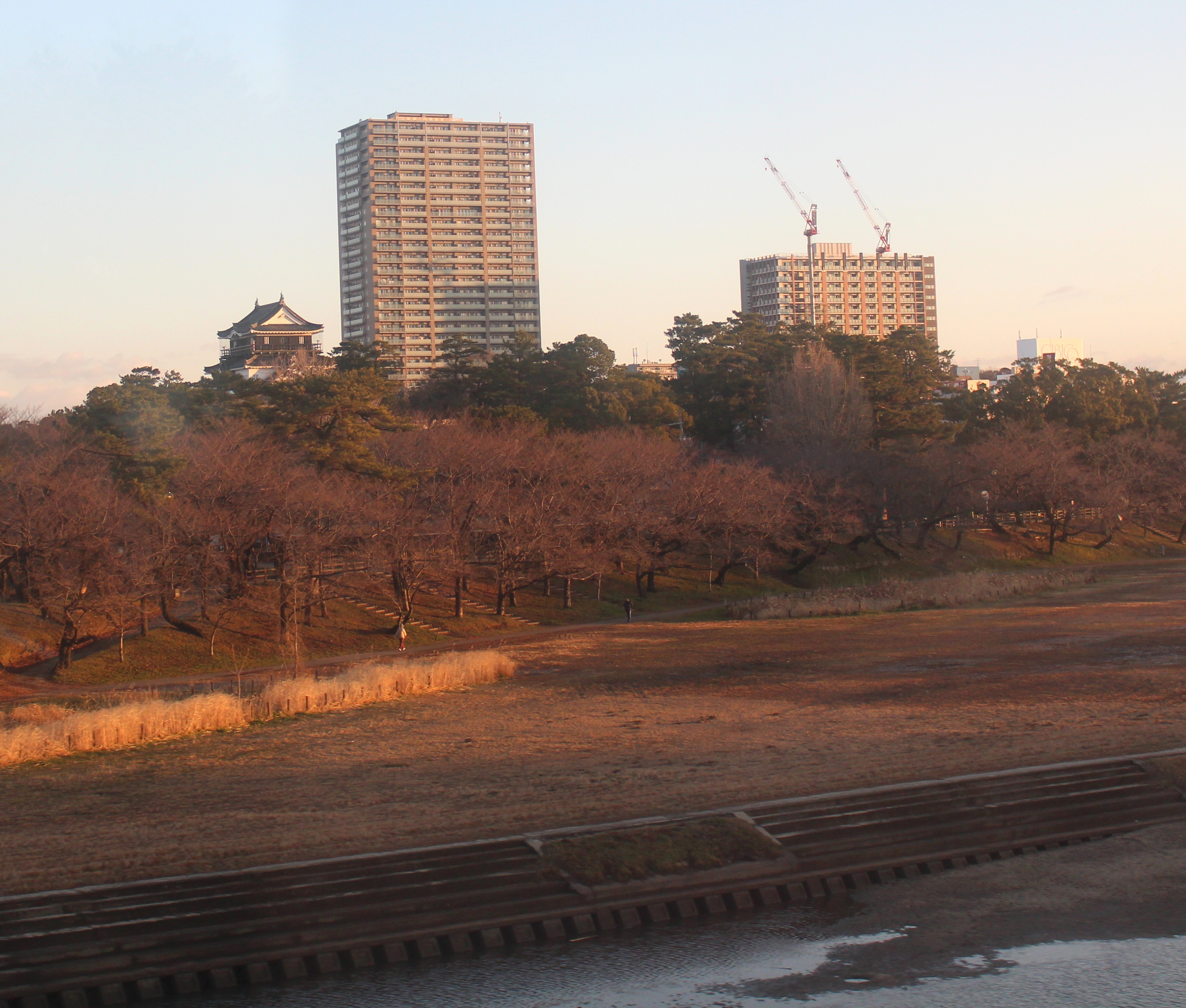
Okazaki Castle
On January 31, 1543, a baby's cry echoed through the chambers of Okazaki Castle. That infant, born Matsudaira Takechiyo, would grow up to become Tokugawa Ieyasu -- the man who ended Japan's century of civil war and founded a shogunate that governed for over 260 years. The castle where he drew his first breath still stands in Aichi Prefecture, rebuilt in ferroconcrete but weighted with the gravity of its history. Every stone in its foundation carries the ambitions and betrayals of the clans who fought to possess it.
A Fortress Born from Ambition
Before there was a castle, there was a dirt-walled fort. Saigo Tsugiyori raised crude earthen ramparts in 1455 in the Myodaiji area of Okazaki, staking a claim on the fertile Mikawa plain. Nearly seventy years later, in 1524, Matsudaira Kiyoyasu seized control of the area, tore down the old fortification, and built Okazaki Castle on its present site. The Matsudaira were building more than walls -- they were building a dynasty. Kiyoyasu's grandson, born within these fortifications, would carry that ambition to its ultimate conclusion. But first, the castle and the boy would both need to survive the treacherous Sengoku period, an age when alliances shattered as easily as they formed and hostage-taking was standard diplomacy.
The Hostage Who Became Shogun
Young Ieyasu's childhood was defined by captivity. When the Imagawa clan defeated the Matsudaira in 1549, the six-year-old was taken to Sunpu Castle as a political hostage. He would spend years there, learning the arts of war and governance from his captors. The turning point came in 1560 at the Battle of Okehazama, where Oda Nobunaga's surprise attack crushed the Imagawa. Ieyasu seized his chance, reclaiming Okazaki Castle and beginning his long march toward supreme power. He left his eldest son, Matsudaira Nobuyasu, to hold the castle when he moved to Hamamatsu in 1570. That decision ended in tragedy -- Oda Nobunaga ordered Nobuyasu's death in 1579, and the Honda clan stepped in as castellans. After Toyotomi Hideyoshi relocated the Tokugawa to Edo following the Battle of Odawara, the castle passed to Tanaka Yoshimasa, who expanded its fortifications and developed the castle town along the great Tokaido road.
Centuries of Stewardship
Once Ieyasu established the Tokugawa shogunate, Okazaki gained special significance as the ancestral seat. His close retainer Honda Yasushige received the castle, and a three-story donjon was completed in 1617. Over the following centuries, the castle passed through a procession of custodial clans: the Mizuno from 1645 to 1762, the Matsudaira from 1762 to 1769, and finally a branch of the Honda who governed until the Meiji Restoration. In 2007, construction workers near the castle unearthed stonework from the outer baileys, lending weight to the claim that Okazaki Castle was once the fourth largest in Japan -- evidence of just how seriously the Tokugawa regarded their family's origin point.
Demolished and Reborn
The Meiji era was merciless to Japan's castles. In 1869, the last daimyo Honda Tadanao surrendered Okazaki to the new government. It briefly served as prefectural headquarters for Nukata Prefecture, but when that was absorbed into Aichi Prefecture in 1872, the castle lost its administrative purpose. Government directives in 1873 sealed its fate: the original structure was demolished and the land sold to private owners. For nearly a century, only stone walls and moats recalled what had been. Then, in 1959, the current donjon rose in ferroconcrete -- a five-floor reconstruction with three rooflines that captures the proportions if not the materials of the original. The main gate followed in 1993, and an east corner yagura watchtower was added in 2010, gradually stitching the castle grounds back together.
Blossoms and Samurai Spirits
Today the castle grounds form a public park that draws visitors year-round. Inside the reconstructed donjon, exhibits display Japanese swords, suits of armor, and dioramas that trace the region's history from the Sengoku period through the Tokugawa era. A separate museum explores the life of Ieyasu and the Mikawa samurai who fought beside him. Outside, a Noh theater stages traditional performances, and a small clock tower features karakuri mechanical puppets -- ingenious automata that have captivated Japanese audiences for centuries. But the park may be most beloved for its seasonal beauty: cherry blossoms canopy the grounds each spring, followed by cascades of wisteria and blazing azalea. In 2006, Okazaki Castle was proclaimed one of Japan's 100 Fine Castles, a recognition that this birthplace of a shogun remains one of the nation's essential historical landmarks.
From the Air
Located at 34.956N, 137.159E in central Okazaki, Aichi Prefecture. The castle sits along the Otogawa River, identifiable from the air by its white reconstructed donjon rising above the green park grounds. The nearest major airport is Chubu Centrair International (RJGG), approximately 50 km to the southwest. Nagoya Airfield (RJNA) lies about 35 km northwest. Approach from the south along the river corridor for the best view of the castle and its surrounding moats. Recommended viewing altitude: 2,000-3,000 feet AGL.