Okefenokee National Wildlife Refuge
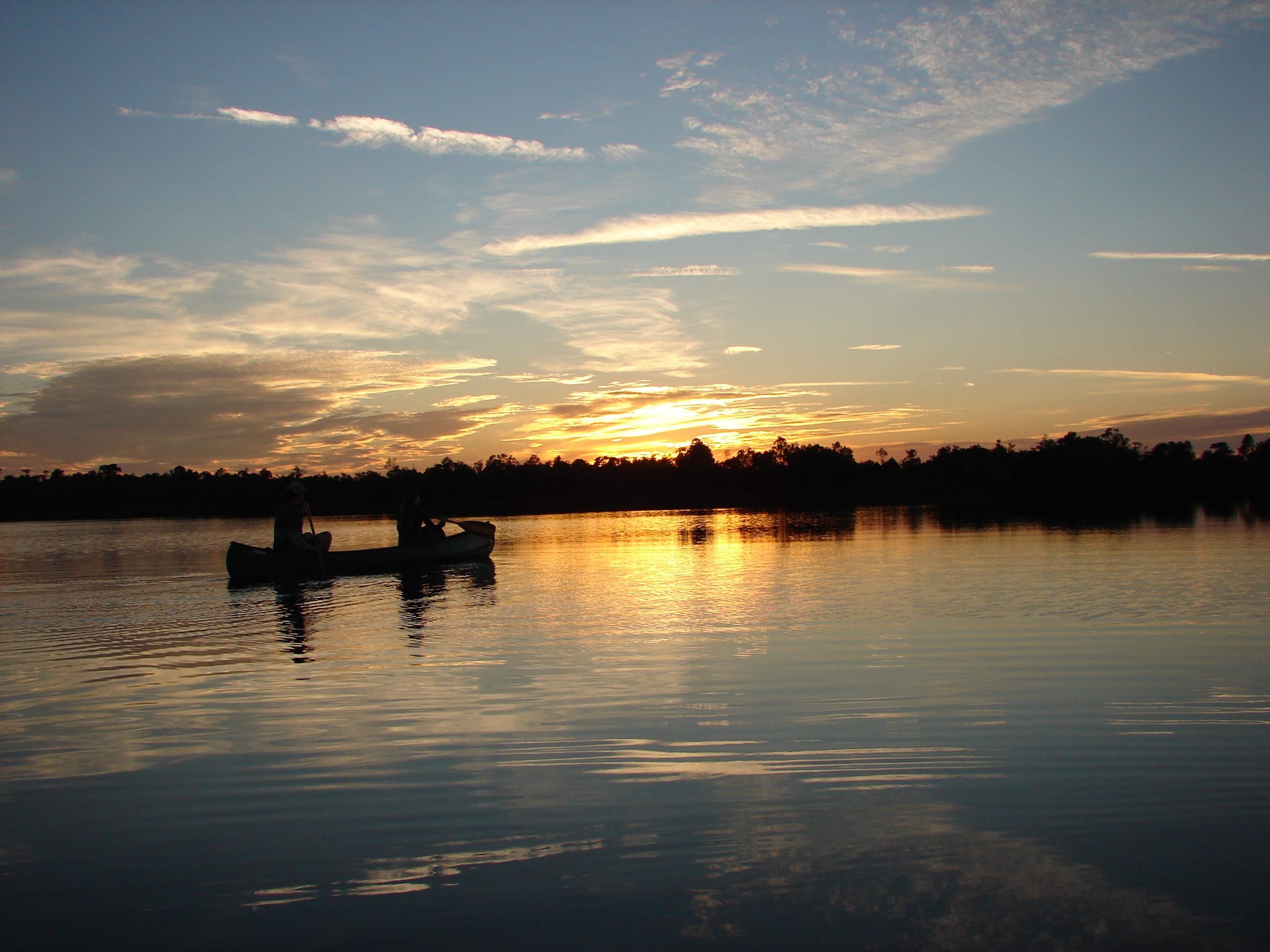
Step on the ground and it moves. Not a metaphor - the peat mat literally trembles beneath your weight, trees swaying in response to your footsteps as if the entire landscape were breathing. The Hitchiti people called this place oki fanoki, meaning "bubbling water," and English speakers twisted that into Okefenokee, often translated as "land of trembling earth." Both names capture something essential about this 402,000-acre swamp straddling the Georgia-Florida border: nothing here is quite solid. The ground floats on water. The water darkens to the color of strong tea. Ancient cypress trees rise from pools so still they become perfect mirrors, doubling the forest into an inverted world. Established as a National Wildlife Refuge in 1937, the Okefenokee protects one of the largest intact freshwater ecosystems on Earth - and in September 2023, it was nominated to become Georgia's first World Heritage Site.
Built by Fire, Sustained by Drought
The Okefenokee exists because of a cycle most people would consider destructive. Every twenty to thirty years, drought drops the water table and lightning ignites the peat and vegetation. Fire rips through the swamp, burning back the encroaching hardwoods and shrubs that would otherwise choke the open prairies. When the rains return, water fills the charred basins, creating fresh habitat for the fish, amphibians, and wading birds that define the ecosystem. Without this cycle of burning and flooding, the Okefenokee would gradually transform into ordinary forest. The swamp needs fire the way a garden needs pruning - it is destruction in service of renewal. The refuge harbors 39 fish species, 37 amphibian species, 64 reptile species, 234 bird species, and 50 mammal species, all dependent on this rhythm of drought, flame, and rain.
Prairies That Aren't, Islands That Float
The Okefenokee's geography defies easy categories. Its "prairies" are not grasslands but vast openings of shallow water dotted with aquatic plants - lily pads, bladderwort, floating hearts - where the canopy parts and sunlight floods in. The eastern side of the refuge is dominated by these wet prairies, while the western side is cloaked in dense cypress swamp, the trees draped in Spanish moss so thick it filters the light to a greenish glow. Between them lie "islands" - patches of higher ground, some only inches above the waterline, where pine and hardwood trees grow in relative stability. But even these islands are not always fixed. Peat mats detach from the bottom and float, carrying entire groves of trees on slow journeys across the swamp. The Chesser Homestead, accessible via Swamp Island Drive on the east side, preserves the home of a family that lived on one such island for generations.
Footprints Four Thousand Years Deep
Humans have navigated the Okefenokee for millennia. Native Americans inhabited the swamp as early as 2500 BC, with peoples of the Deptford Culture, the Swift Creek Culture, and the Weeden Island Culture all occupying sites within the vast wetland. European explorers arrived later, followed by ambitious engineers who attempted a massive drainage project to convert the swamp to farmland - an effort that ultimately failed against the stubborn geography. Timber companies moved in next, harvesting the towering cypress trees that grow slowly in the tannic water, their wood prized for its resistance to rot. By the 1930s, enough people recognized the Okefenokee's value as wilderness rather than resource, and the refuge was established to protect what remained. The swamp endured all of it - the settlement, the exploration, the drainage schemes, the logging - and absorbed each chapter into its dark water like ink dissolving into tea.
Three Doors into the Dark Water
The Okefenokee offers three entrances, each revealing a different face of the swamp. The East Entrance, the main U.S. Fish and Wildlife Service gateway southwest of Folkston, Georgia, leads to the open prairies and the Chesser Homestead boardwalk with its observation tower - the best panoramic view of the swamp's expanse. The West Entrance at Stephen C. Foster State Park, east of Fargo, Georgia, plunges visitors directly into the cypress swamp, where the trees form cathedral-like canopies over blackwater channels. The North Entrance at Okefenokee Swamp Park, south of Waycross, Georgia, provides a more curated experience with interpretive exhibits. Canoe trails thread through all three zones, with camping shelters spaced along routes that can take days to paddle. Nearly 400,000 visitors come each year, making it the sixteenth most-visited refuge in the National Wildlife Refuge System.
The Swamp That Refused to Die
The Okefenokee has outlasted every human plan imposed upon it. Drainage failed. Logging took the biggest trees but the forest regenerated. Roads and canals cut into its edges but the interior remained impenetrable. Even wildfire - the 2007 blaze that burned for months and sent smoke across much of the Southeast - was simply the swamp doing what it has always done, resetting the clock for the next cycle of growth. Now nominated as a World Heritage Site, the Okefenokee stands as proof that some landscapes are too stubborn, too strange, and too vast to be tamed. The ground still trembles when you walk on it. The water still runs black. The alligators still float like logs in the shallows, patient and unhurried, as if they know the swamp will be here long after the rest of us have moved on.
From the Air
Located at 30.74N, 82.12W, straddling the Georgia-Florida border in southeastern Georgia. The Okefenokee is unmistakable from altitude: a vast dark expanse of wetland approximately 38 miles long and 25 miles wide, visibly distinct from the surrounding pine forest and farmland. Open prairies appear as lighter patches within the darker swamp. The Suwannee Canal cuts a visible straight line from the east side into the interior. Nearby airports: Waycross-Ware County (KAYS) approximately 20nm north; Folkston municipal strip near the east entrance. Jacksonville International (KJAX) is approximately 60nm southeast. Best viewed at 3,000-5,000 feet for full swamp panorama. Morning flights offer best visibility; afternoon thunderstorms are common in summer months. The St. Marys River forms the swamp's southern boundary and is a good orientation landmark.