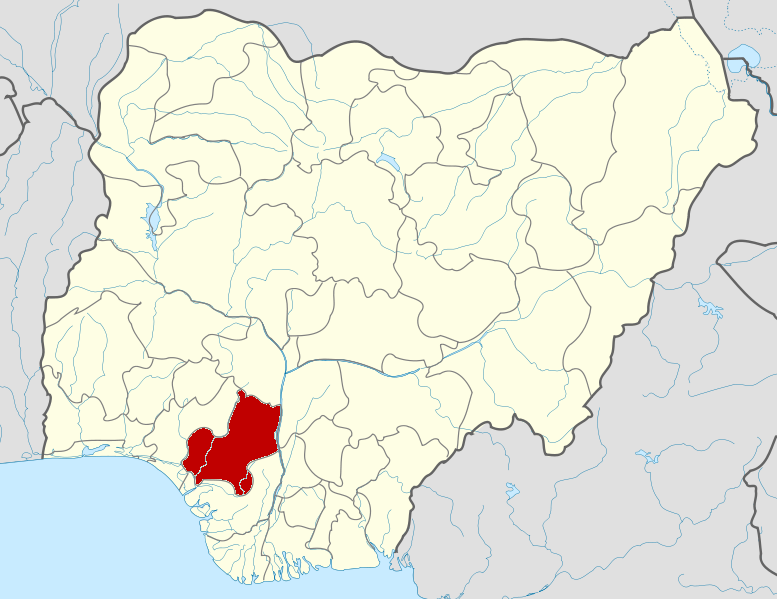
Okomu National Park
The forest elephants are still here, though you are unlikely to see one. They move through the understory of Okomu National Park like rumors, their presence confirmed more often by tracks and broken branches than by direct sighting. This 200-square-kilometer block of rainforest in Edo State is what remains of a woodland that once stretched in a continuous belt from the Niger River westward to the Dahomey Gap in Benin, 50 to 100 kilometers wide. Villages have pressed inward from every side, and as of 2021 the park covers less than a third of its original area. What survives is not just a nature reserve. It is the last viable habitat for species that have nowhere else to go.
From Sanctuary to National Park
Okomu's protected status has been assembled in stages, each one an attempt to outpace the encroachment closing in around it. The original Okomu Forest Reserve was established in 1935 during the colonial era. For decades it existed as a reserve in name but with limited enforcement. A 1982 review of southwestern Nigeria's forests recommended stronger preservation measures, and in 1986 the state government formally defined the Okomo Wildlife Sanctuary within the reserve, covering just 66 square kilometers. The Nigerian Conservation Foundation took over management in 1987 and immediately expanded the protected area to 114 square kilometers by adding a 1.6-kilometer-wide buffer zone. The foundation also worked with migrant farmers in surrounding communities, helping them develop livelihoods that did not require cutting deeper into the forest. The sanctuary eventually grew into the 200-square-kilometer national park that exists today, nested within the larger 1,082-square-kilometer Okomu Forest Reserve in the Ovia South-West Local Government Area.
What Lives in the Canopy
Okomu's species list reads like an inventory of what Nigerian lowland rainforests once supported in abundance. Thirty-three mammal species have been documented, including African buffalo and the endangered African forest elephant. The birdlife is richer still: over 200 species have been identified, among them the Angolan pitta, grey parrot, wrinkled hornbill, fish eagle, and several species of hornbill including the black-casqued, yellow-casqued, and grey. Spinetails dart through the canopy, Sabine's and Cassin's and black, alongside negrofinches in three varieties: white-breasted, chestnut-breasted, and pale-fronted. The yellow-throated cuckoo calls from the mid-story. This concentration of avian diversity in a shrinking forest patch makes Okomu one of the most important birding sites in southern Nigeria, a place where the canopy still functions as a living ecosystem rather than a memory of one.
Treehouses Above the Forest Floor
Two elevated observation platforms sit at Lakes 64 and 52, offering visitors views across the canopy from above the forest floor. The treehouse at Lake 52 perches high enough to survey the surrounding greenery and spot movement in the treetops. Below, the Okomu and Osse rivers and the Arakhuan stream wind through the park, providing opportunities for boat cruises and sport fishing. A canopy walkway stretches between trees at height, giving a perspective on the forest that the ground trails cannot match. The A.P. Leventis Centre near the park entrance serves as an interpretive facility, displaying artifacts and information about Okomu's ecology and history. Just outside the entrance, chalets built on stilts sit among large trees where Mona monkeys regularly appear, comfortable enough with human presence to go about their business in plain view.
The Forest That Keeps Shrinking
Okomu's story is one of persistent loss held barely in check. The lowland forests that once formed a nearly continuous belt across southern Nigeria have been fragmented by agriculture, logging, and settlement. What remains at Okomu is ecologically significant precisely because so little else survives. The park sits roughly 60 kilometers northwest of Benin City, a four-hour drive from Lagos, accessible but not yet overrun. The annual rainfall of approximately 2,100 millimeters, concentrated between February and November with peaks in June, July, and September, sustains the forest through a wet season that keeps the canopy dense and the rivers flowing. December and January bring the driest conditions. For the elephants that still move unseen through the understory, for the hornbills that still call from the high branches, Okomu is not a park. It is the world.
From the Air
Located at 6.42°N, 5.47°E, in Edo State, southern Nigeria, approximately 60 kilometers northwest of Benin City. From altitude, the park appears as a dark green block of intact rainforest canopy contrasting with surrounding agricultural clearings and settlement. Benin Airport (DNBE) is the nearest significant airfield, located roughly 30 nautical miles to the southeast. The terrain is low-lying equatorial forest with rivers threading through. Visibility is often reduced by tropical humidity, haze, and convective cloud buildup, particularly during the wet season from February through November.