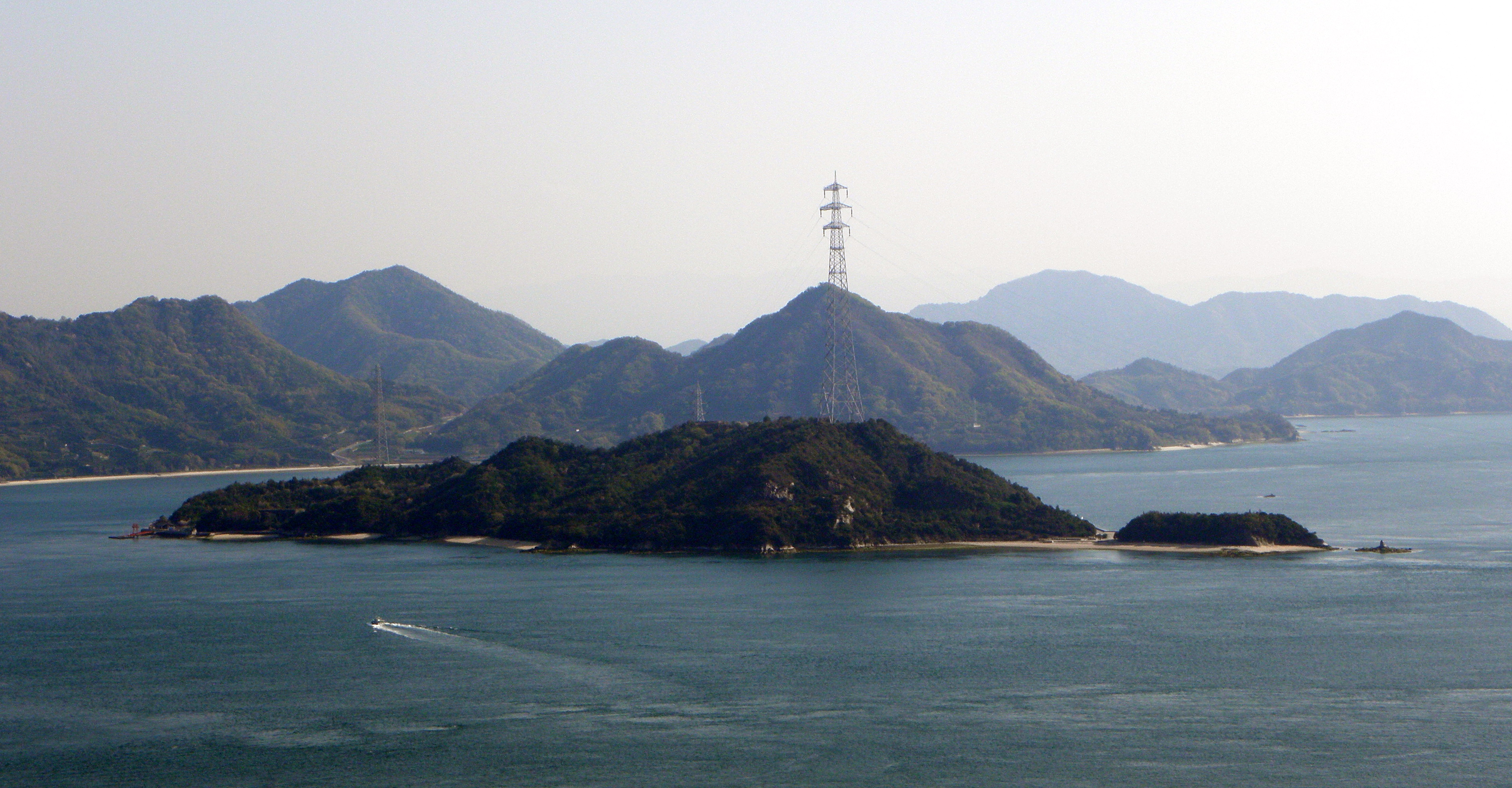
Okunoshima
Hundreds of rabbits come bounding across the grass the moment a ferry passenger steps onto Okunoshima. They are fearless, habituated to humans, and utterly charming -- the reason this small island in the Seto Inland Sea has earned the nickname Rabbit Island and become a viral tourist destination. But walk a few hundred meters inland, past the campsites and nature trails, and the mood shifts. Crumbling concrete ruins emerge from the undergrowth: the remains of a poison gas factory so secret that it was erased from maps during World War II. Okunoshima holds both realities simultaneously, an island where visitors come to feed rabbits among the ruins of one of Imperial Japan's most hidden atrocities.
The Factory That Didn't Exist
Between 1927 and 1929, the Japanese military built a chemical munitions plant on Okunoshima, chosen for its isolation and distance from population centers. The island had been fortified during the Russo-Japanese War with ten coastal defense forts, and only three fishing families lived there. The military converted a local fish preservation processor into a toxic gas reactor. Workers were not told what they were manufacturing. Under harsh conditions and with inadequate safety equipment, the plant went on to produce over six kilotons of mustard gas and tear gas, used in Japan's chemical warfare during the Second Sino-Japanese War in China. Many workers suffered chronic illnesses from toxic exposure, their suffering compounded by official silence -- they were told to say nothing about the factory's purpose.
Buried Secrets
When the war ended, the cover-up continued. Documents were burned. Allied Occupation Forces disposed of the remaining gas stockpiles by dumping them at sea, burning them, or burying them on the island. Workers were instructed to remain silent, and several decades passed before the Japanese government provided medical aid to those who had suffered exposure-related illnesses. The ruins of the gas factory and the Russo-Japanese War forts still stand across the island, but entry is prohibited because the structures remain too dangerous. In 1988, the Okunoshima Poison Gas Museum opened -- a small, two-room facility whose curator, Murakami Hatsuichi, told The New York Times: "My hope is that people will see the museum in Hiroshima City and also this one, so they will learn that we were both victims and aggressors in the war."
The Rabbits Arrive
After the war, when the island was developed as a park, rabbits were intentionally released onto Okunoshima. The wartime rabbits -- used to test the effectiveness of the chemical weapons -- had all been euthanized when the factory was demolished and are not the ancestors of today's population. The current rabbits descended from those postwar introductions, thriving in an environment where hunting is forbidden and dogs and cats are not permitted. They have multiplied into the hundreds, approaching visitors without hesitation and crowding around anyone carrying food. In 2015, the BBC featured the island in its series Pets -- Wild at Heart, and social media turned Okunoshima into an international destination. The island is part of the Setonaikai National Park, connected to the mainland by Japan's tallest powerline crossing at 226 meters.
Two Museums, One Message
The Poison Gas Museum's two rooms offer a stark complement to the rabbits outside. The first room documents the factory's construction, working conditions, and the fates of the workers whose families donated personal artifacts. The second room explains how poison gas attacks the human body -- lungs, eyes, skin, heart -- illustrated with images of victims from Iraq and Iran. The museum is aimed primarily at Japanese visitors, but English summaries accompany each section. Curator Murakami's hope that visitors would understand Japan as both victim and aggressor captures the island's strange duality: a place where the cutest destination in Japan sits atop one of its darkest chapters, and where neither truth cancels the other.
From the Air
Located at 34.309N, 132.993E in the Seto Inland Sea, Hiroshima Prefecture. Okunoshima is a small, distinct island visible from low altitude among the islands of the Inland Sea. Connected to the mainland (Takehara) by the Chushi Powerline Crossing, which at 226 meters is the tallest in Japan -- a distinctive visual marker. Nearest airports: Hiroshima Airport (RJOA) approximately 40 km west, Matsuyama Airport (RJOM) approximately 45 km south across the Inland Sea. Best viewed from 2,000-3,000 feet; the island's small size makes it easy to identify from its surrounding water.