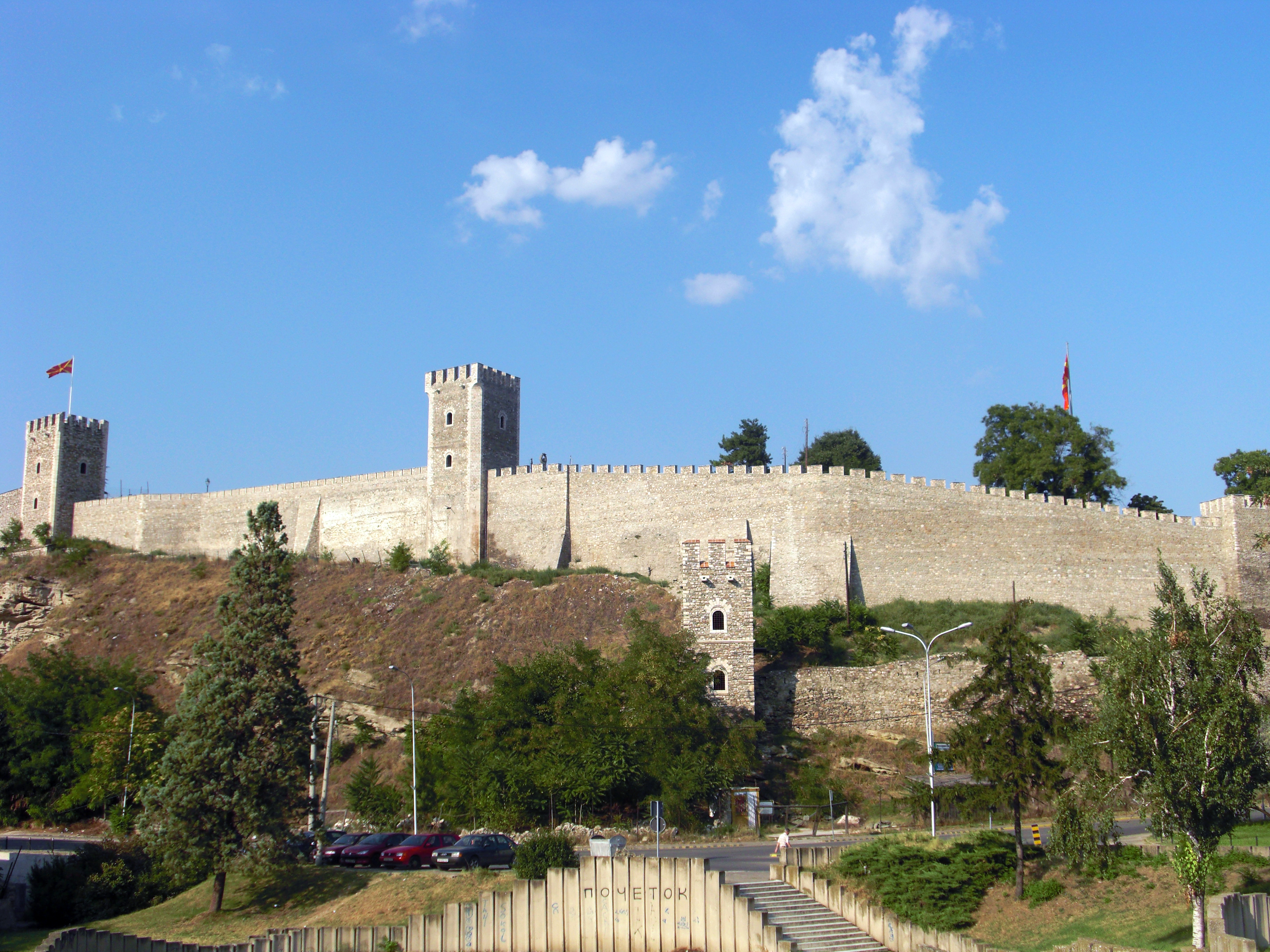
Old Bazaar, Skopje
Cross the Stone Bridge over the Vardar River and the century changes. On the south bank, Skopje is a city of broad boulevards and neoclassical facades built after the 1963 earthquake. On the north bank, the Old Bazaar unfolds in a different grammar entirely -- narrow lanes, Ottoman-era mosques, caravanserais with lead-covered roofs, and the sound of hammered copper coming from workshops that have occupied the same stone stalls for generations. This marketplace has anchored Skopje's commercial life since at least the 12th century, making it one of the oldest continuously operating bazaars in the Balkans. It has been burned, shaken to rubble, bombed, and rebuilt each time, emerging with the same layout and roughly the same purpose: a place where people come to buy, sell, eat, and argue.
Layers Beneath the Cobblestones
The ground beneath the Old Bazaar has been inhabited since approximately 4,000 BCE, when the earliest known settlers occupied the hill where the Kale Fortress now stands. The Paeonians were the first historically recorded people in the area, followed by Romans, who built temples, baths, and theaters in the city they called Scupi. A devastating earthquake in 518 CE destroyed Scupi so thoroughly that the Byzantine emperor Justinian I ordered a new city built at a different location, but the local population drifted back to the high ground around the fortress. By the time the Byzantine emperor Basil II took control in 1018, Skopje had reasserted itself as an episcopal seat and regional capital. The 12th century brought relative stability under the Komnenoi dynasty, and the settlement below the fortress began to function as a proper trading quarter -- the earliest documented form of the bazaar that exists today.
The Ottomans Build in Stone
The Ottoman conquest transformed the bazaar from a modest trading quarter into one of the great commercial complexes of the Balkans. The process was driven by two men in particular: Ishak Beg and his son Isa Bey, whose combined governorship from the early to late 15th century produced a wave of construction. Ishak Beg completed the Sultan Murad Mosque in 1436 and began his own mosque in 1438. Isa Bey followed with the Bezisten -- a covered market that still stands -- and the Chifte Hamam, a double bathhouse that served the city until 1915 and now houses the Contemporary Art Gallery. Between 1489 and 1497, Grand Vizier Daut Pasha added the hamam that bears his name, a fifteen-room bathhouse covered by thirteen domes, now home to the National Art Gallery. By the 16th and 17th centuries, the bazaar had reached its economic peak. Yahya Pasha Mosque went up in 1504; the Mustafa Pasha Mosque, built in 1492 on an older Christian site, rose above the bazaar near the fortress, its minaret climbing 47 meters.
Destruction and Reinvention
The bazaar's history reads as a cycle of catastrophe and reconstruction. A major earthquake struck in 1555. In 1689, the retreating Austrian general Piccolomini ordered Skopje burned to prevent plague from spreading -- the fire consumed much of the bazaar. Both World Wars inflicted damage. Then, on July 26, 1963, the earthquake that killed over a thousand people and left 200,000 homeless struck the already scarred district again. The clock tower, built in the 16th century on the foundations of an even older structure, cracked but survived. The Chifte Hamam was damaged and later repaired. The Suli Han, a 15th-century caravanserai with 54 guest rooms on its upper floor and stables below, required extensive restoration. Each time, the bazaar was rebuilt -- not identically, but recognizably. The street plan persists. The hans and hamams persist. The rhythm of commerce, briefly interrupted, resumes.
Sacred Ground, Contested Ground
The Old Bazaar is not merely a marketplace; it is a compressed archive of the region's religious and ethnic complexity. The Mustafa Pasha Mosque, considered one of the most elegant Islamic buildings in North Macedonia, stands near the fortress with its courtyard full of roses and a hexagonal marble tomb holding Mustafa Pasha's remains. Below it, the Church of the Holy Salvation -- half underground, because Ottoman law forbade Christian buildings from exceeding the height of mosques -- preserves a wooden iconostasis 10 meters long and up to 7 meters high, elaborately carved in the 19th century. Skanderbeg Square, completed in 2018 at a cost of roughly 10 million euros, centers on a statue of the Albanian national hero and reflects the Albanian majority inChair Municipality. The Kurshumli Han, largest of the surviving caravanserais, once roofed in lead -- stripped during World War I -- now sits open to the sky, its stone arches framing the complexities of a place where Byzantine, Ottoman, Slavic, and Albanian histories overlap on every block.
From the Air
Located at 42.00°N, 21.44°E on the eastern bank of the Vardar River in central Skopje, North Macedonia. The Old Bazaar extends from the Stone Bridge north to the Bit Pazar market and from the Kale Fortress east to the Serava River. The fortress on the hilltop and the cluster of mosque minarets are visible landmarks. Skopje Alexander the Great Airport (LWSK) is approximately 17 km to the southeast. Best viewed at 3,000-5,000 ft AGL to distinguish the bazaar's tight medieval street pattern from the post-earthquake grid south of the river.