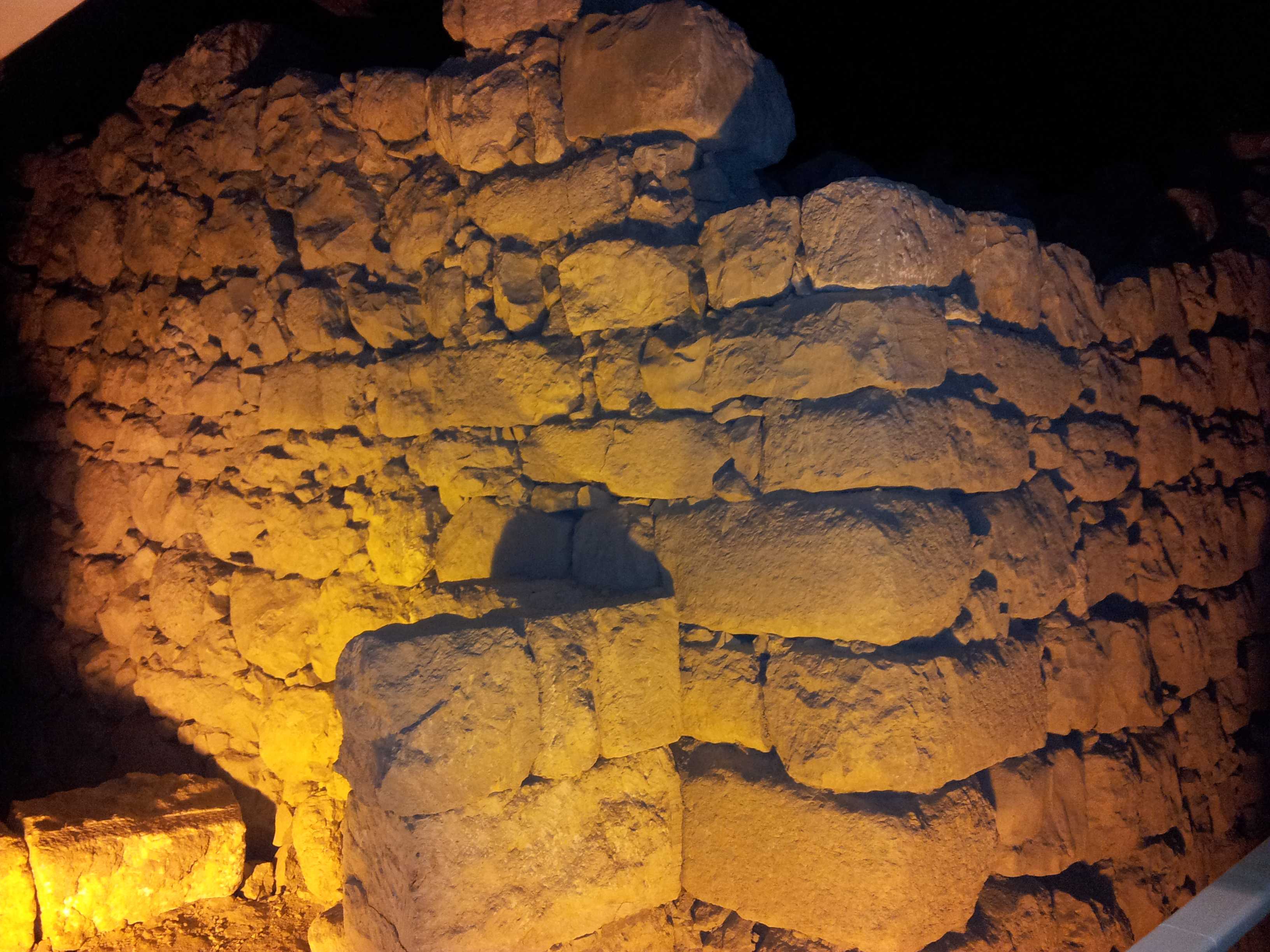
Old City of Jerusalem
Every conqueror who took Jerusalem rebuilt its walls, and every successor tore them down. The cycle repeated for three millennia -- Jebusites, Israelites, Babylonians, Persians, Greeks, Romans, Byzantines, Arab caliphates, Crusaders, Ayyubids, Mamluks, Ottomans -- until Suleiman the Magnificent built the current ramparts between 1535 and 1542. Those walls, stretching 4.5 kilometers around less than one square kilometer of densely packed stone, still define the Old City today. Within them, four uneven quarters -- Muslim, Christian, Armenian, and Jewish -- share the most spiritually concentrated real estate on Earth, a place where the Western Wall, the Church of the Holy Sepulchre, and the Dome of the Rock stand within a ten-minute walk of one another.
Three Thousand Years of Walls
According to the Hebrew Bible, King David captured the Jebusite city in the eleventh century BCE, and his son Solomon extended the walls to encompass the First Temple on the mount above. When Nebuchadnezzar's Babylonian army destroyed that temple in 586 BCE, they razed the city along with it. The returning exiles rebuilt on a smaller scale under Persian authority, and the Second Temple rose in 516 BCE. Herod the Great expanded the Temple Mount with massive retaining walls -- the most famous surviving section being the Western Wall -- and the city grew to its largest extent before the Romans destroyed it entirely in 70 CE. Emperor Hadrian rebuilt it around 130 CE as Aelia Capitolina, a pagan city that barred Jews from entry. Each iteration of Jerusalem's walls tells the story of who held power and what they chose to protect.
Conquerors Who Preserved
When the Caliph Umar entered Jerusalem in 637 CE, the Patriarch Sophronius reportedly received him at the Church of the Holy Sepulchre. Umar sat in the church courtyard, but when the time for prayer arrived, he left and prayed outside. His reason, according to the account of the Patriarch Eutychius of Alexandria, was to prevent future Muslims from using his precedent to convert the church into a mosque. He then issued a decree prohibiting Muslim congregational prayer at the site. The gesture -- restraint as a form of governance -- stands in sharp contrast to the Crusaders who arrived in 1099 and massacred the city's inhabitants before converting the Dome of the Rock into a church. When Saladin retook the city in 1187, he summoned the Jews and permitted them to return. Jerusalem's history is not a simple story of conquest and destruction; it is also a record of unexpected acts of coexistence and restraint.
The Quarters Within
The modern division into four quarters dates not to antiquity but to an 1841 British Royal Engineers map. Before that, the city was divided into many smaller neighborhoods, and the boundaries between communities were more porous than the modern labels suggest. Thirty percent of the houses in the Muslim Quarter were rented to Jews; seventy percent of the Armenian Quarter was home to non-Armenians. The Muslim Quarter, the largest and most populous, extends from the Lions' Gate in the east to the Damascus Gate corridor in the west. The Christian Quarter centers on the Church of the Holy Sepulchre. The Armenian Quarter, the smallest, houses one of the oldest diaspora communities in the world. The Jewish Quarter, largely destroyed during the 1948 war and rebuilt after 1967, was excavated before reconstruction, revealing palatial mansions from the Herodian period and a carved depiction of the Temple menorah made while the original still stood.
Gates That Open and Close
Suleiman's walls contain seven operational gates, each with its own history and character. The Damascus Gate, the most imposing, opens onto the main north-south market street that has served as the city's commercial artery for centuries. The Jaffa Gate faces west toward the Mediterranean and was widened in 1898 to allow Kaiser Wilhelm II to enter on horseback. The Lions' Gate on the eastern wall was the entry point for Israeli paratroopers during the 1967 Six-Day War. The sealed Golden Gate in the eastern wall, through which Jewish and Christian tradition holds the Messiah will enter, has been bricked shut for centuries -- Suleiman reportedly reopened it briefly during construction before sealing it again. Until 1887, every gate was locked at sunset and opened at sunrise, a practice that had continued for as long as the walls had stood.
Living in the Layers
Roughly 31,000 people live within the Old City walls today, down from nearly 37,000 in 2007. The UNESCO World Heritage Site designation, granted in 1981 and added to the List of World Heritage in Danger in 1982 at Jordan's request, reflects both the city's cultural importance and its contested status. East Jerusalem is considered occupied territory under international law; Israel asserts sovereignty over the entire city. These political realities shape daily life in ways large and small -- from building permits to access routes, from archaeological excavations that reveal Israelite towers beneath Byzantine churches to the delicate protocols governing who may pray where on the Temple Mount. The Old City is not a museum. It is a place where people buy groceries, attend school, and argue with neighbors in the narrow streets above ruins that descend two or three stories below the current ground level, each stratum a chapter in a story that shows no sign of ending.
From the Air
Located at 31.777N, 35.234E at approximately 750m elevation. The Old City is immediately recognizable from the air: a roughly rectangular walled enclosure (4.5 km perimeter) with the golden Dome of the Rock gleaming on the Temple Mount in the eastern portion. The Mount of Olives rises to the east, the Kidron Valley runs along the eastern wall, and modern Jerusalem spreads in all directions. Nearest major airport is Ben Gurion International (LLBG), approximately 50 km northwest. Atarot Airport (LLJR, closed) lies about 10 km north.