Old Faithful Historic District
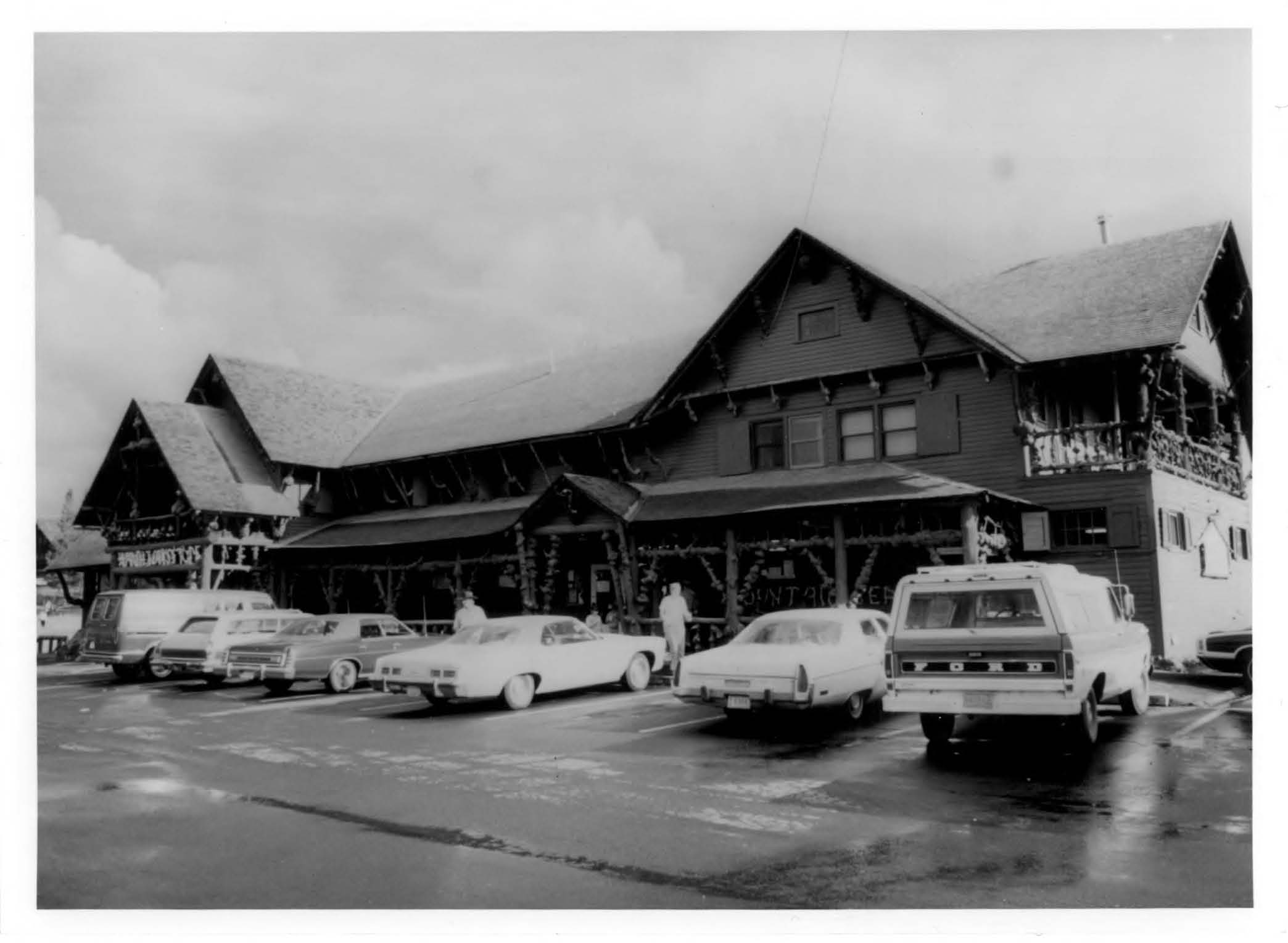
Step inside the Old Faithful Inn and look up: 85 feet above, the lobby rises to a ridgeline pierced by dormer windows, the whole space encircled by tiers of log balconies where guests once gathered to hear musicians perform from a perch called the Crow's Nest. This is the heart of the Old Faithful Historic District, a collection of buildings that defined how Americans would experience their national parks for generations. Here, architecture learned to speak the language of wilderness.
Robert Reamer's Masterwork
The Old Faithful Inn opened in 1904, designed by a 29-year-old architect named Robert Reamer who had never built anything comparable. Reamer's genius was understanding that a building beside a geyser needed to match geological drama with architectural ambition. The lobby's four-sided stone fireplace rises 16 feet from massive hearths, built from tons of local stone. Log columns support balconies that feel almost organic, their gnarled railings and half-log stairs suggesting trees barely domesticated into structure. Reamer designed even the copper light fixtures and imitation candlesticks mounted on log walls. The Inn was listed on the National Register of Historic Places in 1973, its interior spaces, including original guest rooms with high-tank toilets and clawfoot bathtubs, specifically cited for their significance.
A Community in the Steam
The Old Faithful Historic District extends far beyond the famous Inn. The Old Faithful Lodge, designed by Gilbert Stanley Underwood beginning in 1923, adds another architectural voice with its stone masonry columns and log poles. Hamilton's Stores brought commerce to the basin: the Lower Hamilton Store, built as Klamer Store in 1894 and expanded by Charles Hamilton after 1914, features a second-floor sitting room papered entirely with canceled checks totaling one million dollars, reportedly recorded in Ripley's Believe It or Not. Service stations, dormitories, photo shops, and powerhouses complete the district. These supporting buildings, many built in the 1920s and 1930s, share architectural DNA with the Inn through their exposed log rafter ends, wood-shingled gable roofs, and careful integration with the landscape.
The Million Dollar Room and Other Curiosities
Details distinguish the district. The Upper Hamilton Store, built in 1929, has walls of concrete laid to resemble hewn logs, with log rafter ends tapered and whittled to mimic beaver gnawings. The Photo Shop, built by Haynes, Inc. in 1927, was physically moved to its present location in 1971. The Inn's original dining room features arabesque etchings of flora and fauna on fir panels, the only rustic touches in what became the Bear Pit cocktail lounge in 1962. Mission Furniture from an upstate New York manufacturer and hickory chairs from the Old Hickory Furniture Company fill public spaces. These are not reproductions: the original furnishings represent the Arts and Crafts Movement and remain significant components of the historic buildings.
What Was Lost
Not everything survived. The Old Faithful Museum of Thermal Activity once formed part of a trailside museum group alongside the Madison, Norris, and Fishing Bridge Museums, all National Historic Landmarks. In 1971, the Old Faithful Museum was demolished to make way for a Mission 66 visitor center, which itself has been replaced by the current Old Faithful Visitor Education Center. The Snow Lodge cabins behind the main building have been altered considerably, losing their architectural integrity. The district's 1982 nomination to the National Register carefully distinguishes between buildings that retain historical significance and those that have been compromised. What remains tells the story; what was lost reminds us that heritage requires vigilance.
Where the Loop Road Passes
The Old Faithful Historic District lies along the 140-mile Grand Loop Road Historic District, part of a network of historic landscapes that makes Yellowstone an open-air museum of park development. The district includes the Old Faithful Inn, Old Faithful Lodge, three stores, two service stations, five dormitories, ten support buildings, and guest cabins. Together they represent how the National Park Service and private concessionaires collaborated to create tourist infrastructure that honored wilderness while serving visitors. The rustic style born here would spread to parks across the country, making Old Faithful not just a geological wonder but an architectural origin point for the American park experience.
From the Air
Located at 44.4536N, 110.8358W in the Upper Geyser Basin of Yellowstone National Park. At cruising altitude, the steam plumes from Old Faithful and surrounding geysers provide unmistakable visual markers. The historic buildings cluster around the geyser basin with the distinctive Old Faithful Inn visible as the largest structure. Best viewed at 2,000-4,000 feet AGL for architectural detail, or higher for basin context. The Grand Loop Road traces a visible path through the area. Nearest airport: West Yellowstone Airport (KWYS) 30nm west. Steam activity varies with atmospheric conditions; clear cold mornings produce the most dramatic plumes.