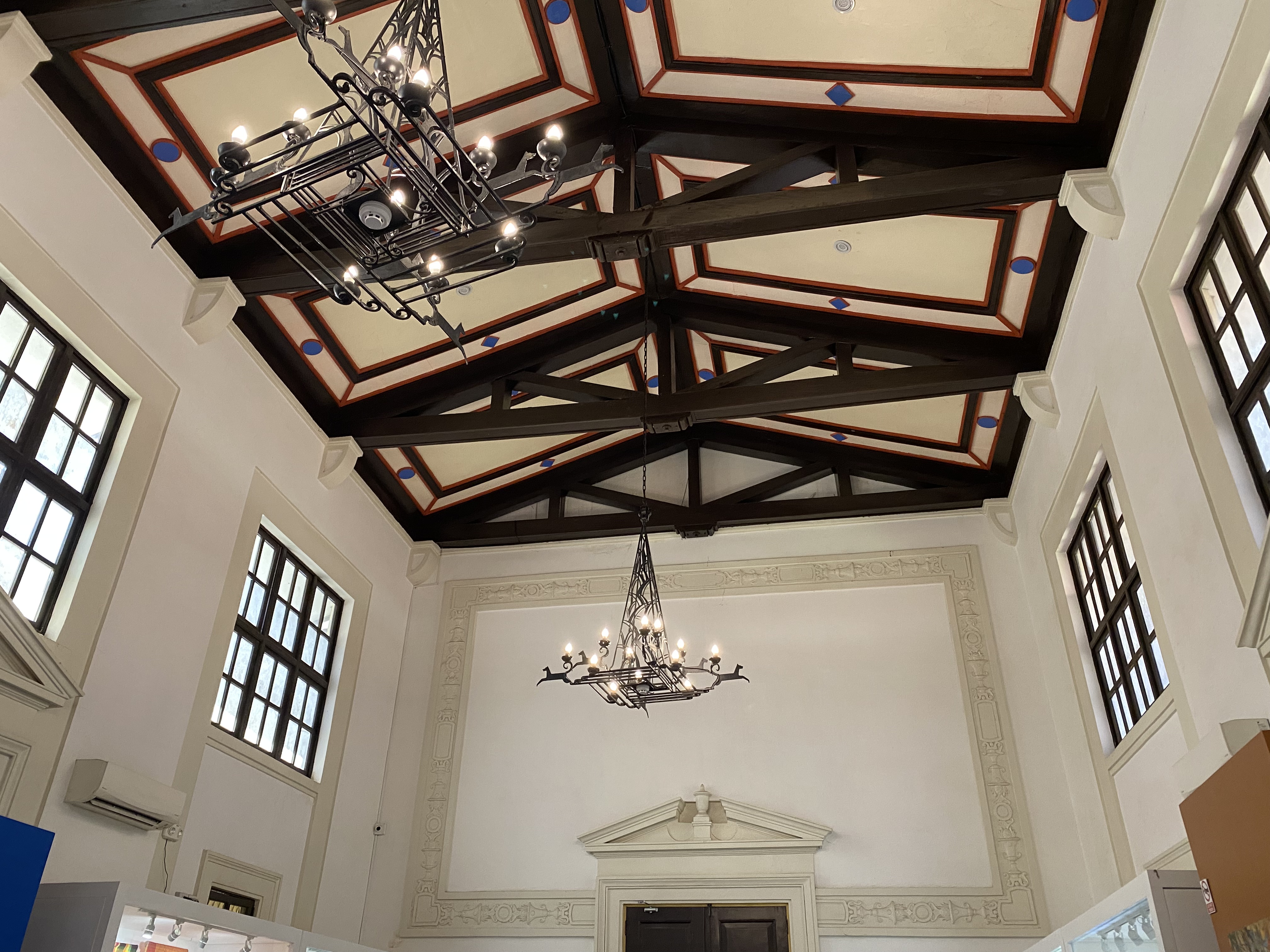
Old Iloilo City Hall
For decades, the building sat empty and deteriorating in Iloilo City Proper - a neoclassical structure occupying a 10,000-square-meter lot that the city had once donated to its own government. Construction began in February 1931, and the building hosted the Iloilo City Hall as early as 1935, with formal inauguration following in December 1936. It was, by the standards of its time, a statement: a purpose-built seat of local governance in a city that took governance seriously. Then the Japanese arrived. In 1942, soldiers of the Imperial Japanese Army occupied the building and converted it into a garrison. What happened inside during those years is the kind of history that buildings absorb silently. When the war ended, the city hall resumed its civilian function, but eventually the city government moved on, and the building entered a long twilight of underuse and decay.
Arellano's Hand in the Provinces
The Old Iloilo City Hall bears the mark of Juan M. Arellano, one of the most important architects of the American colonial period in the Philippines. Arellano's portfolio includes the Manila Post Office, the Jones Bridge, and the Manila Metropolitan Theater - buildings that defined the civic architecture of the national capital. His work in Iloilo represents an extension of that ambition into the provinces: the same neoclassical vocabulary applied to a municipal building far from Manila, signaling that provincial cities deserved the same architectural seriousness as the capital. The building's columns, its symmetrical facade, and its interior courtyard all speak the language of American colonial civic design - the architecture of democratic institutions rendered in concrete and stone, transplanted from Washington to the Visayas.
A Garrison's Ghosts
The Japanese occupation of the Philippines transformed civic buildings across the archipelago into military installations, and the Iloilo City Hall was no exception. From 1942, Japanese soldiers used the building as their garrison in the city. The conversion was typical of the occupation - schools, churches, and government buildings throughout the Philippines were repurposed by the occupying forces, their civilian functions suspended. For the residents of Iloilo, seeing their city hall serve as a foreign military headquarters was a daily reminder of lost sovereignty. When the war ended and the Americans returned, the building reverted to civilian use, but the occupation had left its mark - not in visible damage, necessarily, but in the kind of historical weight that accumulates when a building designed for democratic governance is used for military occupation.
The University Inherits
The building's rebirth began when the University of the Philippines Visayas took ownership and initiated a restoration. The project, supported by the National Historical Commission of the Philippines, aimed to return the structure to its original architectural character while adapting it for academic use. On August 16, 2019, the restored building reopened as the main building of UP Visayas' Iloilo City campus. The transformation from city hall to university is its own kind of statement. Where mayors once governed, students now study. Where Japanese soldiers once garrisoned, faculty now teach. The building's courtyard, once the administrative heart of a colonial-era city government, now serves the educational mission of the country's premier state university. The National Historical Institute had already placed a historical marker on the building, recognizing its significance, but the restoration gave it something a marker cannot: a living purpose.
Civic Architecture as Memory
The Old Iloilo City Hall sits on a lot donated to the city government by its own citizens - a 10,000-square-meter parcel given freely for the construction of a building that would represent democratic governance in a colonial territory. That act of donation, followed by construction, occupation, decay, and restoration, compresses a century of Philippine history into a single address. The building is now classified among the Philippines' National Historical Landmarks, a designation that protects it from demolition and ensures its continued maintenance. From the air, it reads as a substantial neoclassical structure within the urban grid of Iloilo City Proper, its courtyard and symmetrical plan distinguishing it from the commercial buildings nearby. What the aerial view cannot show is the layering - the 1930s civic ambition, the wartime trauma, the postwar neglect, and the twenty-first-century academic revival, all occupying the same walls.
From the Air
Located at 10.698°N, 122.555°E in Iloilo City Proper. The neoclassical building with its distinctive courtyard occupies a 10,000-square-meter lot within the urban grid. It is now the UP Visayas Iloilo City campus main building. Iloilo International Airport (RPVI / ILO) is approximately 19 km northwest. Best viewed at 1,500-3,000 ft AGL. The heritage buildings along Calle Real and the Iloilo River are nearby reference points.