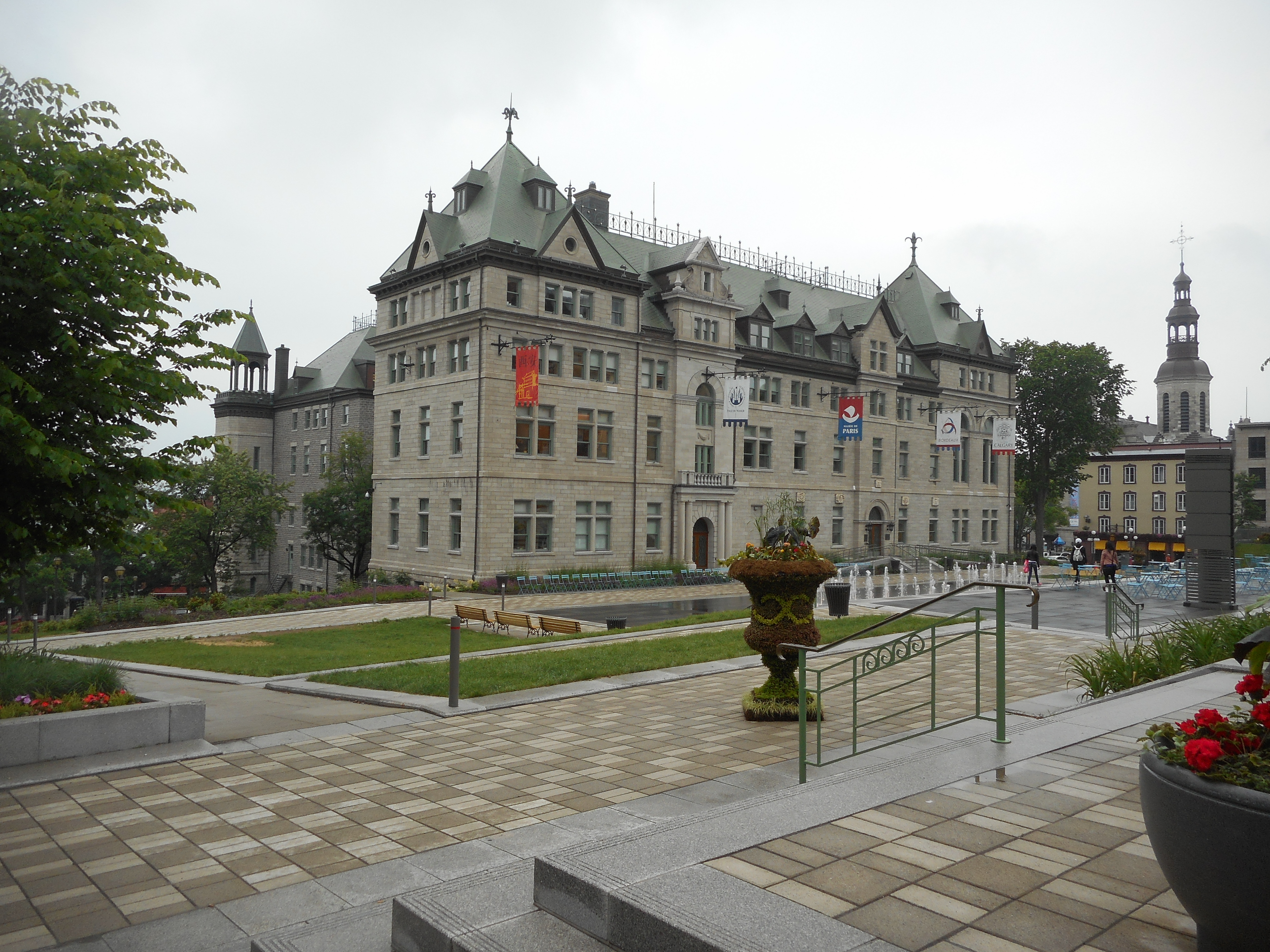
Old Quebec
In the late 19th century, a movement arose to tear down the fortifications. The stone walls ringing Old Quebec were obsolete, the argument went -- relics of colonial warfare that blocked modern urban development. It took Lord Dufferin, the Governor General of Canada, to persuade officials that the ramparts were worth preserving. That decision saved the only walled city in North America north of Mexico and set the stage for UNESCO to designate the Historic District of Old Quebec a World Heritage Site on December 3, 1985. Today, 1,400 buildings stand within and around those walls, some dating to the 17th century, in a neighborhood that splits dramatically into two levels: the Upper Town atop the promontory of Cap Diamant, and the Lower Town pressed against the Saint Lawrence River below.
The Promontory and the Fort
Samuel de Champlain understood the military logic of Cap Diamant immediately. In 1608, he chose this high ground as the site for Fort Saint Louis, and the promontory has served as Quebec City's military and administrative center ever since. The strategic position attracted British government officials and Catholic clergy after the Conquest, while French and English merchants and artisans settled in the Lower Town below. Most of the Upper Town's buildings date to the 19th century, though several survive from the 17th and 18th centuries. The commercial streets of Saint Jean, Sainte Anne, and De Buade wind through the district, passing the Seminaire de Quebec, the Ursulines Convent, the Augustinian Monastery, and the Hotel-Dieu de Quebec. Presiding over everything is the Chateau Frontenac, the copper-roofed hotel that has defined Quebec City's skyline since 1893 and that remains the most photographed hotel in the world.
Below the Cliff
The Lower Town sits at the base of Cap Diamant, anchored by Place Royale -- the square where Champlain built his original habitation in 1608. The remains of that first settlement still lie beneath the cobblestones. The Church of Notre-Dame-des-Victoires, begun in 1687 and completed in 1723, stands at the heart of the square, one of dozens of buildings in the Lower Town dating to the 17th and 18th centuries. The neighborhood was deliberately restored to reconstruct its French colonial character, and the narrow streets, stone facades, and wrought-iron details give the area a density of historical texture unmatched in North America. The Musee de la civilisation, the Musee naval de Quebec, and the Theatre Petit Champlain anchor a cultural district that runs along the waterfront. A funicular -- the Old Quebec Funicular -- carries visitors between the Lower Town's Petit-Champlain road and the Upper Town above, spanning the vertical distance that once divided social classes.
Saving the Walls
The preservation of Old Quebec was not inevitable. After falling into disrepair in the 1950s, the neighborhood's future was debated publicly from 1945 to 1965. On July 10, 1963, the National Assembly of Quebec passed an amendment to the Historic Sites and Monuments Act, declaring the area a "Declared Historic District" -- the first such designation in the province. The protected area was expanded in 1964 and ultimately covered 1.4 square kilometers, encompassing the fortified core and its immediate surroundings between the Saint-Charles River and the Saint Lawrence River. New construction began in the 1970s, not to replace the old buildings but to fill gaps and revitalize the district. When UNESCO granted World Heritage status in 1985, it recognized what Lord Dufferin had argued a century earlier: that these walls and the city they enclosed were irreplaceable.
A City That Still Moves
Old Quebec is not a museum piece frozen under glass. The Gare du Palais, a chateauesque train station opened in 1916 by the Canadian Pacific Railway and designed to echo the Chateau Frontenac, still serves as an active transportation hub. Via Rail operates regular service to Montreal via Drummondville, and the private coach company Orleans Express connects the station to destinations across the province. Quebec City's Jean Lesage International Airport sits just 16 kilometers to the east. Within the walls, commercial life persists on streets where merchants have traded for four centuries. The Latin Quarter, named for the Seminaire de Quebec and the original site of Laval University, still hums with student energy. Parks -- De l'Esplanade, Artillerie, Des Gouverneurs, Montmorency -- provide green space within the stone perimeter. The fortifications that nearly came down in the 19th century now define the city's identity, drawing visitors from around the world to walk ramparts that have stood for over 300 years.
From the Air
Old Quebec is located at 46.813N, 71.208W, on the north shore of the Saint Lawrence River. From the air, the district is unmistakable: look for the star-shaped Citadelle of Quebec atop Cap Diamant and the distinctive copper-green turrets of the Chateau Frontenac, one of the most recognizable structures in North America. The stone ramparts encircling the Upper Town are clearly visible from 3,000 feet and above. The Lower Town spreads along the waterfront below the cliff face. Nearest airports: Quebec City Jean Lesage International (CYQB) approximately 13 nm west-southwest. The Port of Quebec docks are visible along the river to the east of the Lower Town.