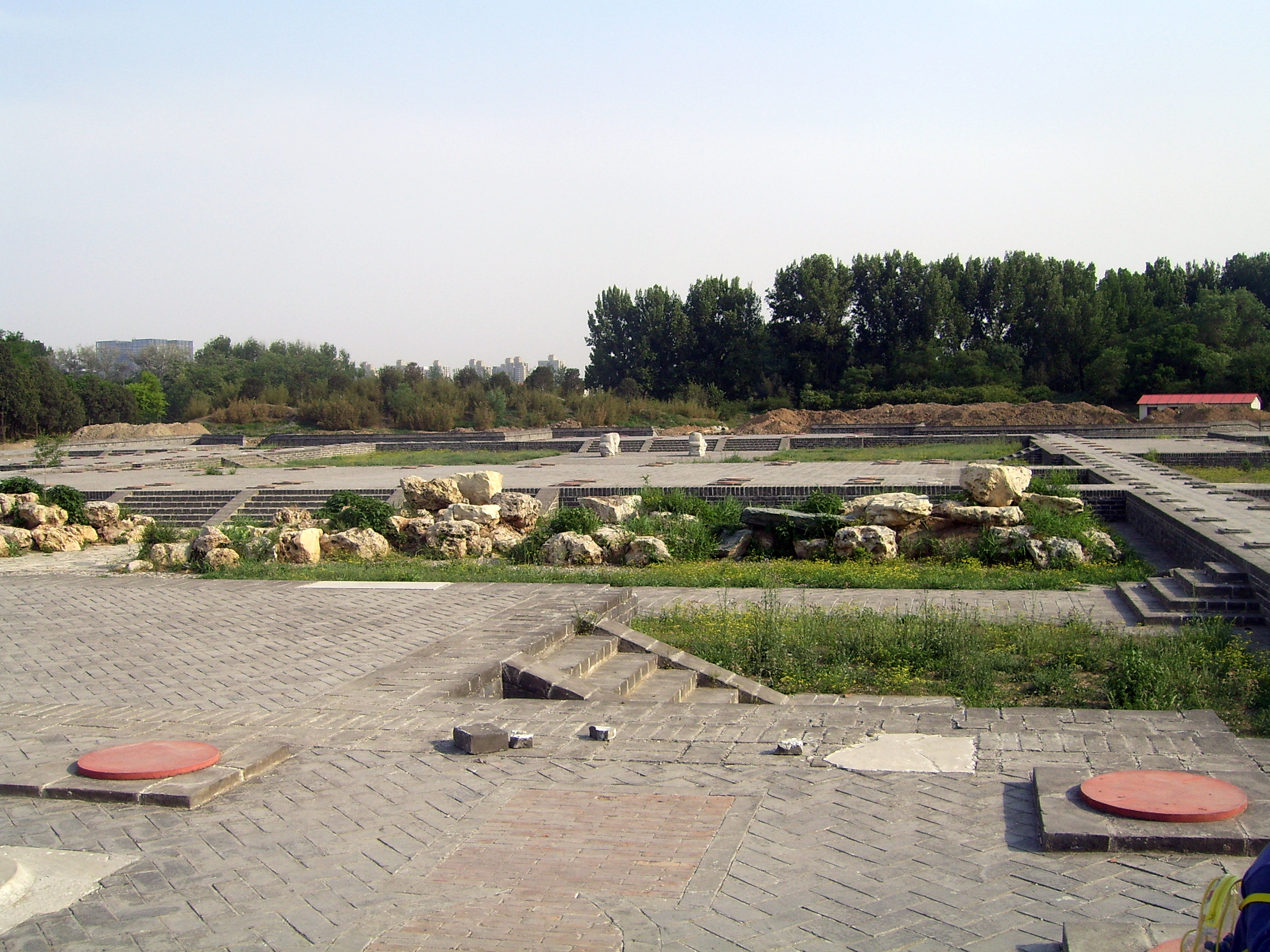
Old Summer Palace
Victor Hugo called it one of the wonders of the world. In the same breath, he called its destroyers bandits. The Old Summer Palace -- Yuanmingyuan -- was not merely a collection of buildings but an entire landscape conjured into being: three interconnected gardens spanning 3.5 square kilometers, nearly five times the Forbidden City, filled with halls, temples, pavilions, lakes, and what was described as the greatest concentration of historic treasures anywhere on earth. For over a century, Qing emperors governed from here rather than the Forbidden City, which they reserved for ceremonies. Then, in October 1860, 3,500 British soldiers set the whole thing ablaze, and the fire burned for three days.
An Empire in Miniature
Construction began in 1707 as a gift from the Kangxi Emperor to his fourth son, the future Yongzheng Emperor, who expanded the gardens enormously after ascending the throne in 1725. He created lakes, streams, and ponds to complement rolling hills, naming 28 scenic spots within the grounds. The Yongzheng Emperor also built what might be called imperial theater -- 'living tableaux' where court eunuchs posed as rural farmers on an island or as shopkeepers in a mock village, allowing the imperial family to play at ordinary life. The Qianlong Emperor later added European-style palaces designed by the Italian Jesuit Giuseppe Castiglione, complete with elaborate fountains engineered by the French Jesuit Michel Benoist. Yet these Western buildings occupied less than five percent of the grounds. More than 95 percent of the Yuanmingyuan was Chinese in style, with additional structures reflecting Tibetan and Mongol traditions.
Three Days of Fire
The destruction came during the Second Opium War. In September 1860, a combined Anglo-French force marched inland from Tianjin toward Beijing. A British diplomatic delegation, including journalist Thomas William Bowlby of The Times, was seized by Qing general Sengge Rinchen and taken to Beijing's Ministry of Justice. Nineteen captives died from torture. When the 8th Earl of Elgin learned of their fate, he ordered the palace destroyed as retaliation. French troops had already looted extensively, despite their commander's assurances that 'nothing had been touched.' When the British set the fires on October 18, some 300 eunuchs and palace maids who had hidden in locked rooms perished in the inferno. Only 13 structures survived. The palace was sacked again in 1900 by the Eight-Nation Alliance, completing the devastation.
The Weight of Absence
What remains today is deliberately incomplete. The most prominent ruins belong to the European-style Western Mansions, their carved marble pillars and broken arches standing against the sky like a wound left open on purpose. This has led some visitors to assume incorrectly that the entire palace was European in design, when in fact the vast majority was classically Chinese. The lakes and waterways in the eastern half have been dug out and refilled, and several temples have been refurbished, but no above-ground reconstruction of the main structures has been approved. The Chinese government and scholars continue to debate whether to apply for UNESCO World Heritage status -- the ruins are significant precisely because they are ruins, a physical embodiment of what the Chinese call their 'century of humiliation.'
Scattered Treasures
According to UNESCO, looted artworks from the Yuanmingyuan now reside in 47 museums worldwide. The most famous are the twelve bronze zodiac fountain heads from the Haiyan Tang water clock, of which eight have been recovered while four remain missing. Some of the finest porcelain ended up at the Chinese Museum in the Palace of Fontainebleau, which Empress Eugenie established in 1867 specifically to house these acquisitions. In 2014, seven marble columns displayed at the KODE Art Museums in Bergen, Norway were returned to Peking University as part of a deal involving a $1.6 million donation by Chinese alumnus Huang Nubo. The slow trickle of returns continues, but the vast majority of the collection remains dispersed across the globe, a reminder that the fire of 1860 never fully stopped burning.
From the Air
Coordinates: 40.012N, 116.307E. Located in Haidian District, northwest Beijing, about 8 km from the former Imperial City. From the air, the restored lakes and canals of the eastern gardens are visible, along with the green parkland surrounding the ruins. The nearby Summer Palace (Yiheyuan) and Kunming Lake provide prominent visual landmarks. Nearest major airport is Beijing Capital International (ZBAA/PEK), approximately 25 km to the northeast. Beijing Daxing International (ZBAD/PKX) lies about 55 km to the south.