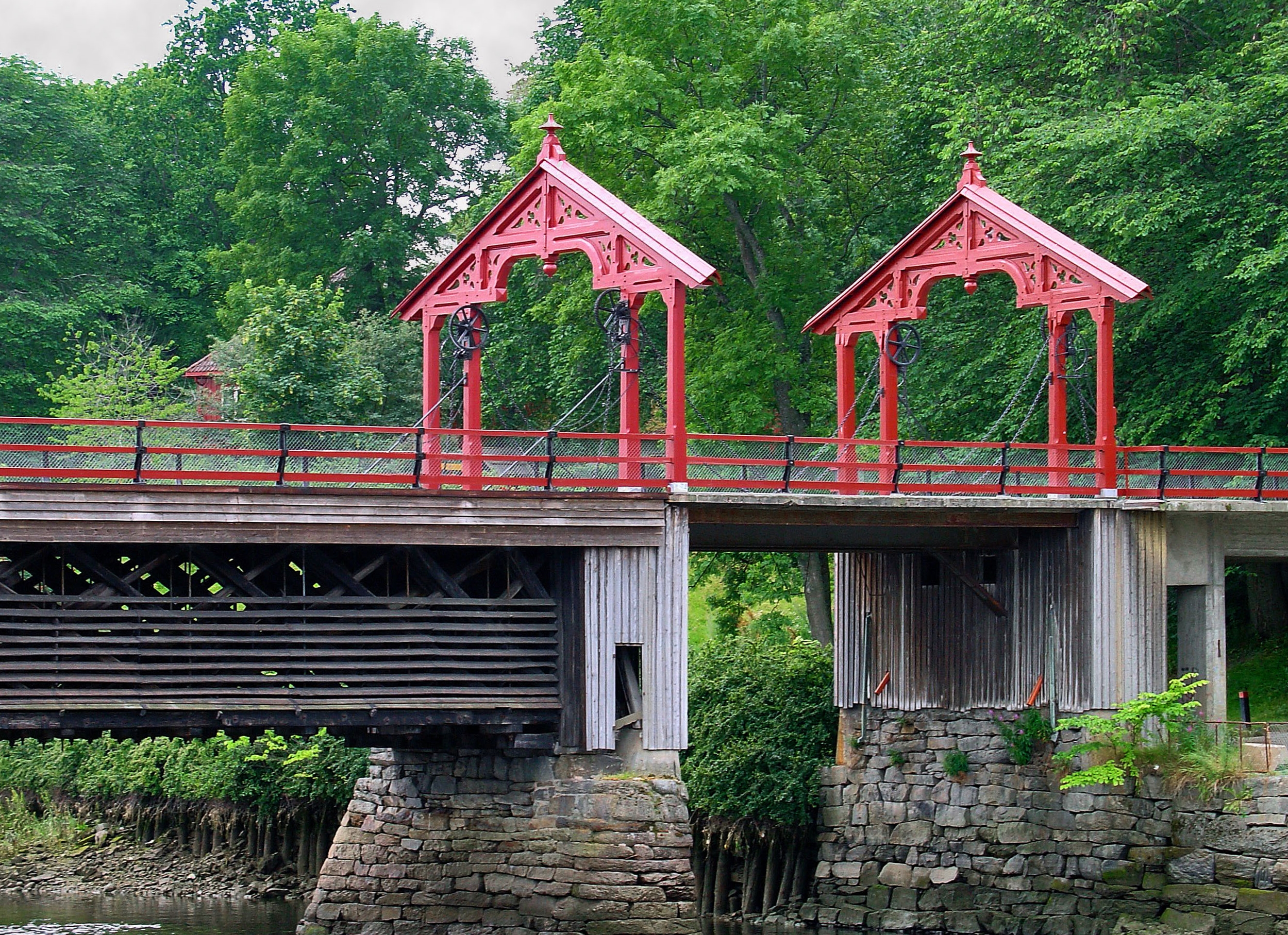
Old Town Bridge
The Norwegians call it Lykkens portal -- the Gate of Happiness. The name comes from a waltz, and the waltz comes from a young man who stood on this bridge one night in late April 1940, looked out over the Nidelva River, and composed the song "Nidelven stille og vakker du er" -- "Nidelven, quiet and beautiful you are." His name was Kristian Oskar Hoddø, and he was 23 years old. Three and a half years later, the Nazi occupiers executed him along with eight other members of the Norwegian resistance. The bridge still stands. The waltz is still sung. And every crossing of Gamle Bybro carries, whether the walker knows it or not, a thread of that story.
Born from Ashes
Gamle Bybro -- Old Town Bridge -- exists because Trondheim burned. The great fire of 1681 devastated the city, and Johan Caspar von Cicignon, tasked with redesigning Trondheim from the ruins, laid plans that included both a new street grid and this strategic river crossing. King Christian V of Denmark funded the construction. The bridge was completed in 1685, spanning the Nidelva from the south end of Kjøpmannsgata to the neighborhood of Bakklandet. Its placement was no accident: Cicignon chose the location for its military-strategic value, and simultaneously designed Kristiansten Fortress on the hill above. The bridge replaced the older Elgeseter Bridge nearby, which was allowed to decay and collapse once the new crossing opened. Originally built of wood on three stone piers, Gamle Bybro carried an iron gate at its center and served as a guarded city gate until 1816.
Toll Gates and Transformations
For well over a century, nobody crossed Gamle Bybro without passing inspection. Toll and guardhouses stood at each end, controlling passage into and out of the city. The eastern guardhouse was demolished in 1824, but the western access house still stands, a remnant of the era when bridges were borders. In 1861, engineer Carl Adolf Dahl reconstructed the bridge substantially, updating a structure that had already endured nearly two centuries of Norwegian winters. Today the bridge is one of Trondheim's most recognizable landmarks, an elegant red-painted wooden structure that photographs beautifully against the colorful wharves of Bakklandet and the river below. Pedestrians and cyclists share the crossing now; cars take other routes. The iron gate is long gone, but something of the bridge's character as a threshold -- between the commercial center and the residential neighborhood, between the planned city and the organic old quarter -- persists in the experience of walking across it.
A Waltz for the River
Oskar Hoddø was a singer, a composer, and a member of the Norwegian resistance during the German occupation. According to tradition, he wrote his most famous song while standing on Gamle Bybro in late April 1940, just weeks after the German invasion of Norway. The waltz "Nidelven stille og vakker du er" became beloved in Trondheim and beyond -- a tender tribute to the river and the city, composed at a moment when both were under threat. Hoddø continued his resistance work through 1943, when he was captured. On November 17, 1943, at the age of 27, he was executed in Trondheim alongside eight fellow resistance fighters. The bridge acquired its nickname Lykkens portal -- the Gate of Happiness -- from the lyrics of his waltz. It is a name that carries more weight than it might first suggest, shadowed by the fate of the man who inspired it.
Where Two Trondheims Meet
Cross Gamle Bybro heading east and you step from the wide streets of Cicignon's planned city into Bakklandet, a neighborhood of narrow lanes, wooden houses, and the kind of small-scale charm that fire-and-rebuild urban planning typically erases. Bakklandet survived because it sits on the far side of the river, outside the footprint of the 1681 fire that prompted Trondheim's reconstruction. The contrast is vivid: gridded avenues give way to winding paths, commercial scale shrinks to residential. The bridge itself is the hinge between these two versions of the city. From its boards, the colorful wooden warehouses along the riverbank form one of the most photographed scenes in Norway. The Nidelva flows quietly beneath, just as Hoddø described it. Quiet, and beautiful.
From the Air
Gamle Bybro (Old Town Bridge) crosses the Nidelva River at 63.4281°N, 10.4018°E in central Trondheim. The distinctive red-painted wooden bridge is easily spotted from the air, connecting the city center to the colorful Bakklandet neighborhood. Recommended viewing altitude: 1,500-2,500 feet for the bridge in context with the river, wharves, and Kristiansten Fortress on the hill above. Nearest airport: Trondheim Airport Vaernes (ENVA), approximately 32 km east. The Nidelva River provides a clear navigation reference through the city center.