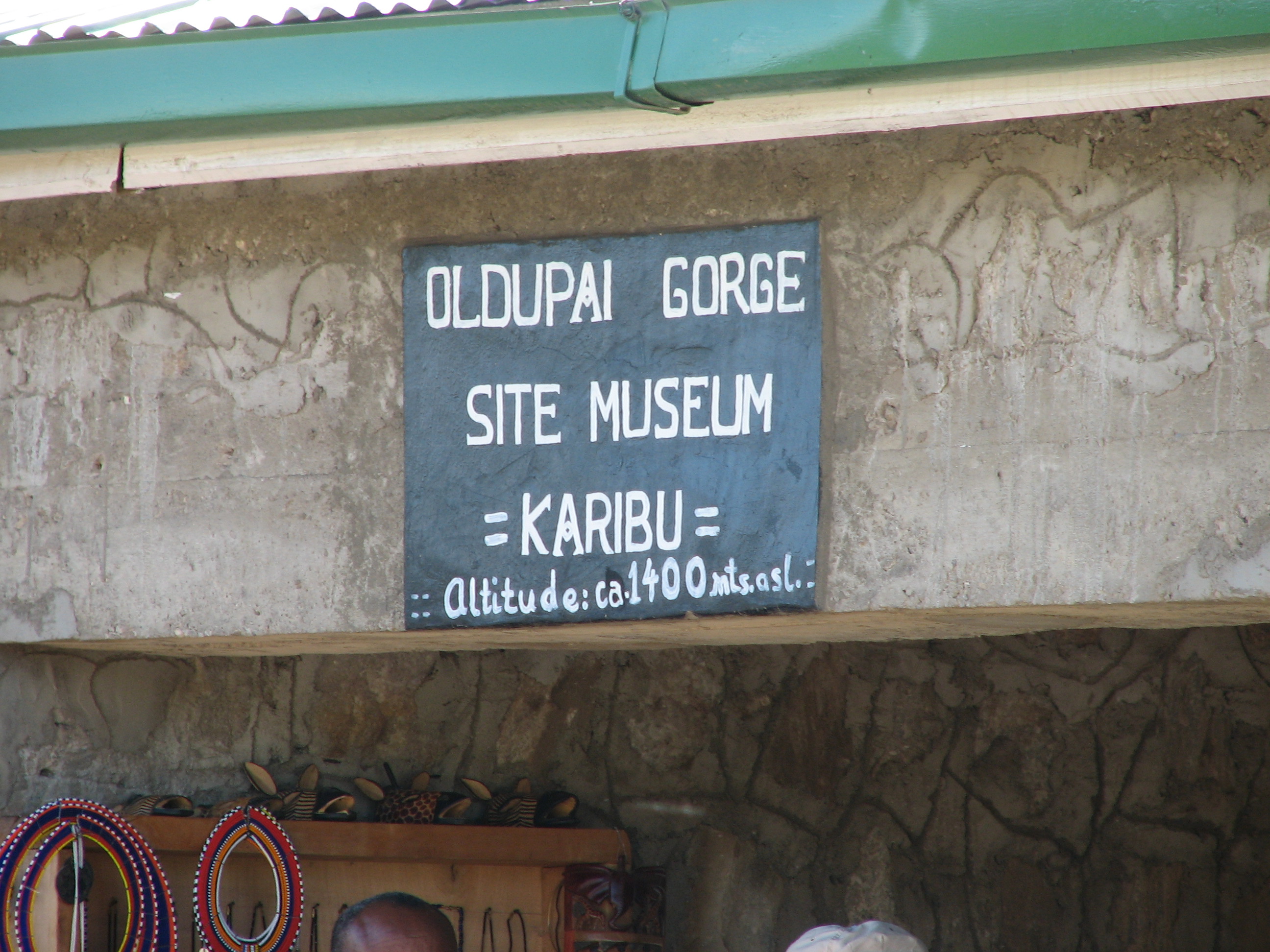
Olduvai Gorge Museum
On July 17, 1959, Mary Leakey spotted a fragment of bone protruding from the sediment at Olduvai Gorge. It turned out to be the skull of Paranthropus boisei -- nicknamed 'Nutcracker Man' -- and it made headlines worldwide. She and her husband Louis had been digging in this Tanzanian gorge for nearly three decades by then, living in canvas tents and working through seasons when funding was almost nonexistent. The museum she later founded at the rim of the gorge was her way of ensuring that what they found would not simply disappear into foreign collections. It sits where it belongs: at the edge of the place that changed how humanity understands itself.
A Museum Born from Decades of Dust
Mary Leakey established the museum in the late 1970s, decades after she and Louis first began their work at Olduvai in the 1930s. The original structure was modest -- a small building designed to house and display the paleoanthropological artifacts emerging from the gorge and the nearby Laetoli site. After Mary's death in 1996, control passed to the Tanzanian government's Department of Cultural Antiquities. In the mid-1990s, the J. Paul Getty Museum's conservation department renovated the facility and added a new wing with professionally designed exhibits. But the real transformation came in 2018, when the Ngorongoro Conservation Area Authority opened an entirely new museum and visitors center. Designed by engineer Joshua Mwankunda, the new building is constructed from local quartzite stone, with exhibit halls arranged in a ring around a central open courtyard -- deliberately echoing the layout of a Maasai boma, the traditional circular enclosure.
Footprints Older Than Language
The museum's most arresting exhibit is a cast of the Laetoli footprints -- tracks left in volcanic ash by three Australopithecus afarensis individuals 3.6 million years ago. Made in 1996 by conservators from the J. Paul Getty Museum, the cast preserves details so fine you can see individual toe impressions. These are the oldest direct evidence of bipedal walking by human ancestors: three figures, one apparently stepping in the prints of another, crossing a landscape that had just been dusted by an eruption from a nearby volcano. Accompanying charts and photographs explain how the ash hardened into rock, preserving a moment of ordinary movement for millions of years. In a separate hall, the Leakey family's work at Olduvai is documented through original artifacts, excavation maps, and casts of key hominid fossils, including the Zinjanthropus skull that brought the Leakeys to international attention.
Where the Gorge Opens Below You
Part of the museum's power comes from its location. It sits at the junction of the main gorge and a smaller side gorge, approximately five kilometers off the road between the Serengeti and Ngorongoro Crater. A covered theater-like viewing platform extends to the edge of the rim, giving visitors a direct view down into the layered sediments where the fossils were found. The gorge itself is roughly 48 kilometers long and up to 90 meters deep, its walls exposing two million years of geological strata in clearly visible bands. During peak season, the museum receives roughly 3,000 visitors per day, most arriving by safari vehicle on their way between the Serengeti and Ngorongoro. They stop for lunch, a guided lecture at one of the two outdoor presentation areas, and a museum tour. For many, it is a brief stop on a longer safari itinerary. But the view from the platform -- down into the gorge where the oldest known stone tools were discovered -- tends to slow people down.
A Maasai Boma for Human History
The 2018 redesign added a cultural boma where visitors can explore aspects of Maasai life -- a recognition that Ngorongoro's story is not only about fossils and evolution but also about the people who have lived in these highlands for centuries. A small restaurant serves visitors who once had nowhere to eat between game drives. The architecture itself makes a quiet argument: by building the museum in the form of a boma, the design insists that the story of human origins belongs to the land and the people who inhabit it, not to distant institutions. Mary Leakey began with that same instinct when she chose to build her museum at the gorge's edge rather than ship everything to Nairobi or London. The artifacts stay close to where they were found. The footprints remain near the ground that held them.
From the Air
Located at 2.996S, 35.352E within the Ngorongoro Conservation Area in northern Tanzania. The museum sits at the rim of Olduvai Gorge, visible from altitude as a narrow gash cutting through the flat plains between the Ngorongoro Crater highlands to the east and the Serengeti plains to the west. The gorge runs roughly east-west for about 48 km. The museum complex is approximately 5 km off the main Serengeti-Ngorongoro road. Nearest airports are Lake Manyara Airstrip (HTMLA) to the southeast and Seronera Airstrip in the Serengeti to the west. Kilimanjaro International Airport (HTKJ) is the nearest major international airport, approximately 200 km to the east.