Olympia
Every four years since 776 BCE, athletes gathered at Olympia to compete in games honoring Zeus, king of the gods. For over a millennium, Greek city-states set aside their perpetual conflicts for an Olympic Truce, allowing safe passage to this sanctuary in the Peloponnese hills where religious ritual and athletic competition merged into something unprecedented. Champions won only olive wreaths but achieved immortality - their names and cities recorded, their statues erected, their victories celebrated in poetry that survives today. The games continued for 1,169 years until a Christian emperor banned them as pagan in 393 CE. Earthquakes, floods, and time buried the sanctuary. Yet when Baron Pierre de Coubertin revived the Olympic movement in 1896, he looked to Olympia for inspiration. Today the ancient site draws visitors who walk where champions ran, while priestesses still kindle each Olympic flame here using sunlight and a parabolic mirror, carrying fire to host cities worldwide.
Sacred Ground
Olympia was never a city - it was a sanctuary, a sacred precinct dedicated to Zeus and visited only during religious festivals. The central area, called the Altis, contained the temples, altars, and treasuries that made this Greece's most important religious site after Delphi. The Temple of Zeus once housed one of the Seven Wonders of the Ancient World: a 13-meter statue of the god, seated on a throne, crafted of ivory and gold by the sculptor Phidias. The statue is long gone - probably destroyed in Constantinople centuries after removal from Greece - but the temple's fallen columns still mark where it stood. The smaller Temple of Hera, better preserved, serves as the site where the Olympic flame is lit before each modern Games. Throughout the Altis, athletes and city-states erected statues of victors, funded by winning cities seeking eternal glory.
The Ancient Games
The original Olympics featured events modern audiences would recognize - foot races, wrestling, boxing - alongside competitions lost to history: chariot racing, the brutal pankration combining wrestling and boxing, and the pentathlon's combination of running, jumping, discus, javelin, and wrestling. Athletes competed naked, oiled, and exclusively male; women were barred even from spectating, with one exception: the priestess of Demeter Chamyne held ceremonial duties. The games lasted five days, combining religious sacrifice with athletic competition. Winners received olive wreaths cut from a sacred tree, but the true prize was fame - returning champions were celebrated throughout the Greek world, sometimes granted free meals for life in their home cities. The stadium, still visible, held 45,000 spectators who sat on grass embankments rather than stone seats, grouped by region and tribe in patterns archaeologists reconstruct from coin finds.
Fall and Rediscovery
The games survived Alexander's conquests and Roman occupation - the Romans loved Greek athletics even as they built their own empire. But Christianity's rise brought the end. Emperor Theodosius I banned the games in 393 CE as pagan, and his successor ordered the temples destroyed. Earthquakes in the 6th century toppled what remained; the Alpheios and Kladeos rivers flooded the site repeatedly, burying ruins under meters of sediment. For over a thousand years, Olympia vanished. German archaeologists began systematic excavation in 1875, uncovering temples, treasuries, and the stadium. The discoveries inspired Baron de Coubertin's Olympic revival, connecting ancient and modern games through the flame lighting ceremony established in 1936. Today excavations continue, revealing new structures and artifacts while modern visitors walk paths athletes trod when the games began, 2,800 years ago.
What Remains
Time and earthquakes have left Olympia a field of fallen columns and foundation outlines rather than intact buildings. The experience requires imagination - or an excellent guide - to transform toppled stones into the grandeur that once stood here. The Temple of Zeus survives as drum-shaped column sections scattered like giant's toys; only one column of the Temple of Hera still stands. The stadium retains its original length of 192 meters - one 'stadion,' the unit that gives the structure its name - and visitors can stand at the ancient starting blocks where runners launched themselves. The Archaeological Museum of Olympia, essential to any visit, houses the site's surviving sculptures including the famous Hermes of Praxiteles and remnants of the Temple of Zeus's pediments showing the mythical chariot race that explained the games' origins. Together, site and museum reconstruct a world where athletic excellence was worship and victory brought glory to gods and cities alike.
Visiting Olympia
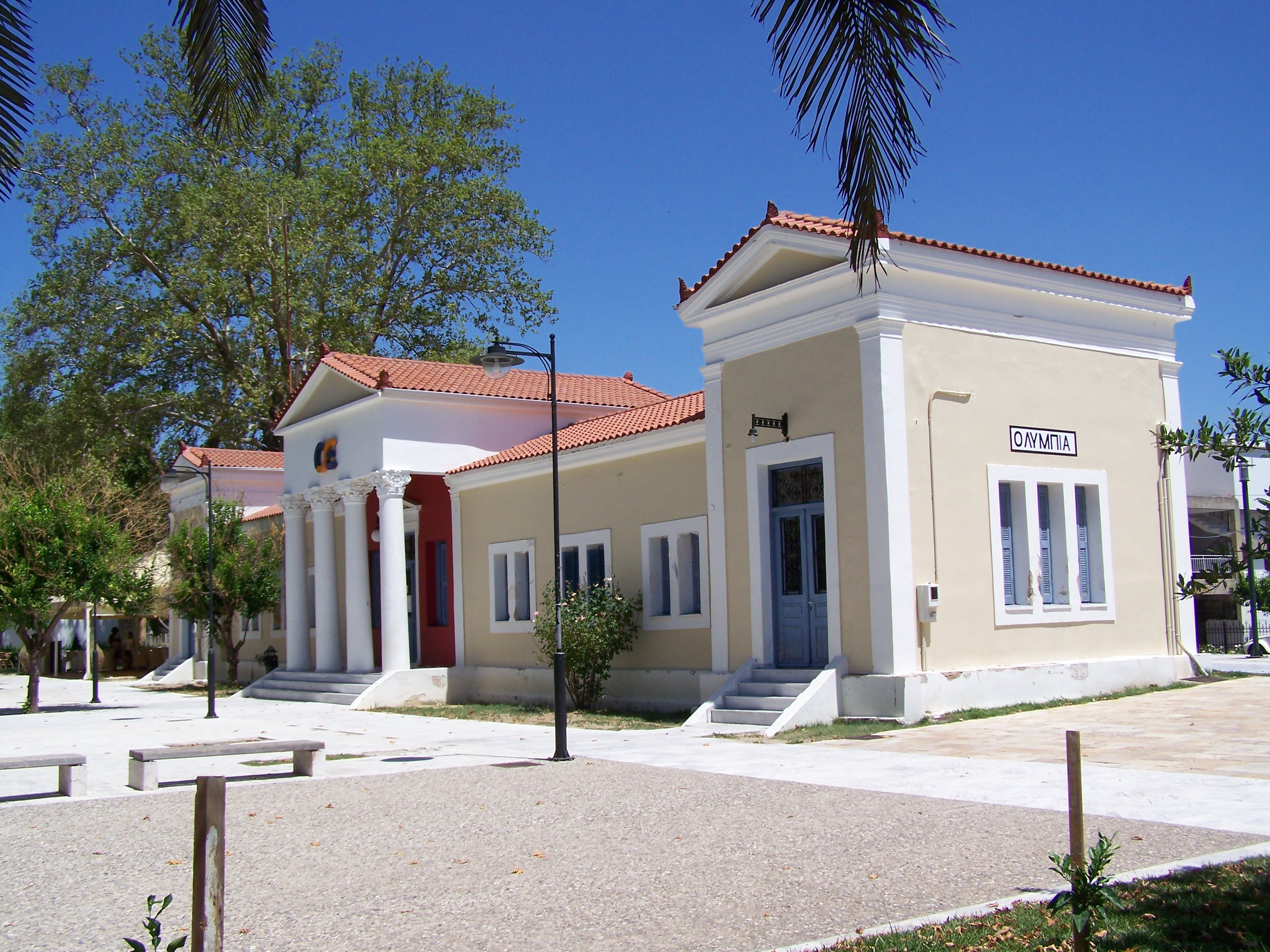
The modern village exists purely to serve the archaeological site - a handful of hotels, restaurants, and shops along streets named after ancient champions. The ruins lie a pleasant twenty-minute walk away, set among umbrella pines and wild olive trees that evoke the original sanctuary's sacred grove. Allow three to four hours for the site and museum together; summer visitors should prepare for heat and sun without shade. The site opens early - arriving at opening avoids afternoon crowds and midday temperatures. The museum provides essential context; viewing the sculptures first helps visitors understand what stood on the now-empty foundations outside. From Athens, Olympia requires four to five hours by car through Peloponnese landscapes. Organized tours from Athens and Patras run daily. The flame-lighting ceremony for each Olympic Games takes place here months before the opening ceremony, a media event that briefly transforms this quiet site into global news.
From the Air
Located at 37.64°N, 21.63°E in the western Peloponnese, Greece. The site occupies a valley between the Alpheios and Kladeos rivers, visible from altitude as an open area amid green hills and agricultural land. The modern village is adjacent to the archaeological site. The nearest airport is Araxos Airport (GPA), 60km northwest near Patras. Athens International Airport (ATH) lies 300km east. The region shows typical Mediterranean agricultural patterns with olive groves prominent.