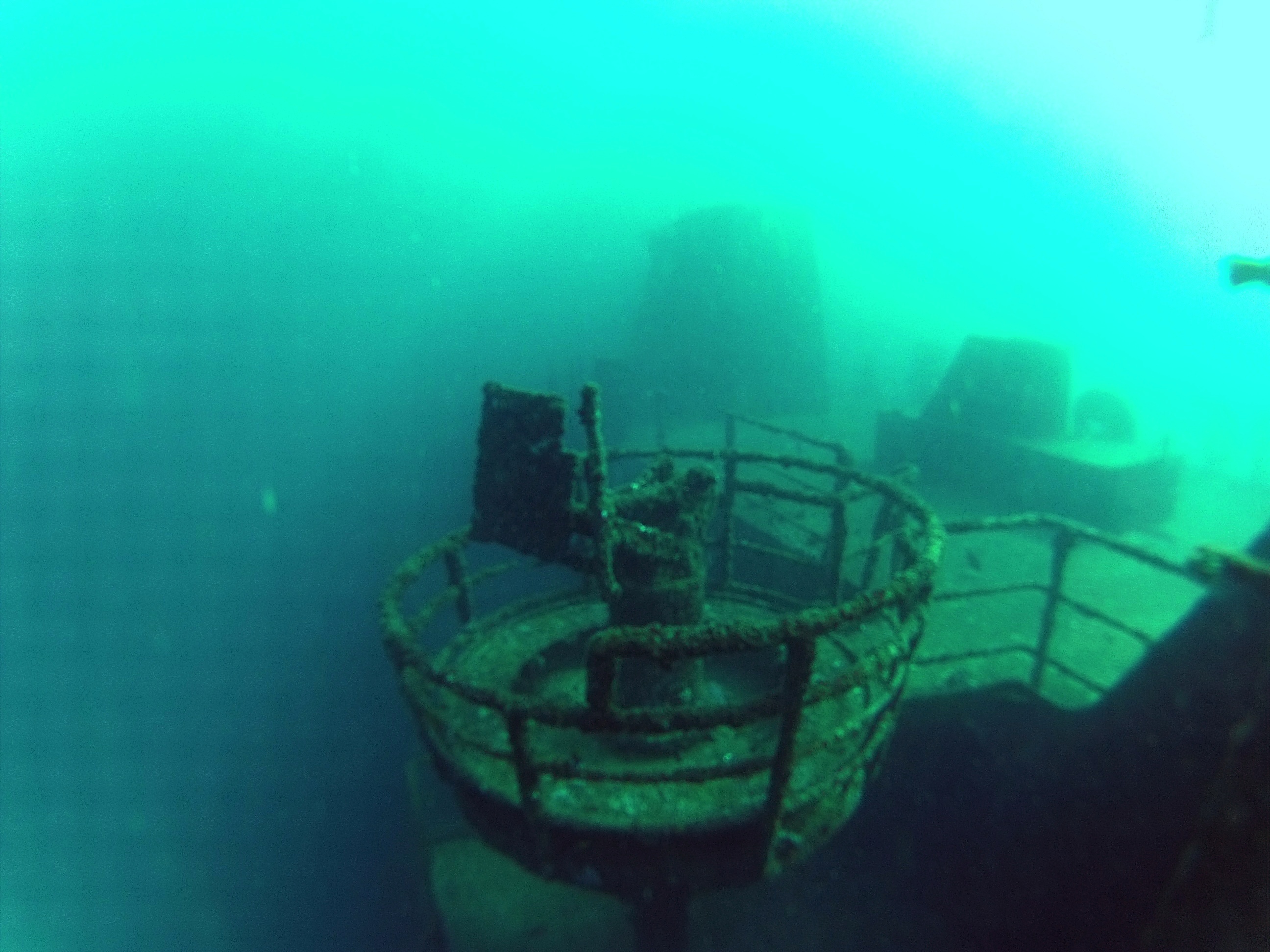
Omani Ship Al Munassir
On April 22, 2003, the Royal Navy of Oman sank one of its own ships. Not in battle -- deliberately, in controlled fashion, lowering the 84-meter hull of the Al Munassir to the seabed off Muscat's coast. The amphibious warfare vessel that had spent 25 years prepared to rush troops and tanks to the Strait of Hormuz began its second career as a reef, its gun mounts slowly colonized by coral and its passageways patrolled by yellowbar angelfish.
Built for the Strait
The Al Munassir was ordered in 1977 from Brooke Marine, a British shipyard in Lowestoft, and laid down on July 4 of that year. She was designed for a specific strategic anxiety: Oman's Musandam Governorate, which commands the southern shore of the Strait of Hormuz, has no land border with the rest of Oman. The UAE separates them. If a crisis erupted at the strait -- through which a significant share of the world's crude oil passes -- the only way to reinforce the Musandam garrison was by sea. The Al Munassir was that reinforcement: capable of carrying 550 tons of cargo or eight main battle tanks, plus 188 fully equipped troops who would disembark through bow doors and a ramp. A crew of 45, including nine officers, kept her running.
Dimensions of Duty
At 84.1 meters long with a beam of 14.9 meters and a draft of just 2.3 meters, the Al Munassir was designed to operate close to shore and in shallow waters -- exactly the conditions she would face in the Musandam's rocky inlets. Her displacement of 2,169 tons made her substantial enough for open-water transit but shallow enough for beach approaches. From 1985, she operated alongside the smaller Nasr al Bahr in the contingency fleet designated for northern operations. For a quarter century, the ship waited for a crisis at Hormuz that never came -- a career measured not in engagements but in readiness.
Second Life on the Seabed
After decommissioning, the navy chose to give the Al Munassir a purpose beyond the scrapyard. Sinking decommissioned vessels as artificial reefs was an established practice worldwide, and the Omani government placed the ship carefully off Muscat's coast, where it settled at depths accessible to recreational divers. The wreck now rests between roughly 10 and 30 meters below the surface, its silhouette still recognizably that of a warship. Marine life colonized rapidly. Bigeye snappers school in the cargo holds. Bluestreak cleaner wrasses set up stations along the hull. Indo-Pacific sergeants, moon wrasses, pennant coralfish, ring-tailed cardinalfish, and yellowfin goatfish have all claimed territories in the ship's structure.
Diving the Warship
The Al Munassir is now one of Oman's most popular dive sites, drawing both beginners and experienced wreck divers. The relatively shallow maximum depth makes it accessible to a wide range of certification levels, while the ship's size offers enough complexity for multiple dives. Penetration divers can explore the cargo spaces where tanks would have been secured, the troop compartments, and the bridge structure. Outside, the hull has become a vertical reef, with hard and soft corals establishing along every surface that offers purchase. The transformation is a reminder that the sea reclaims everything given time and opportunity -- a warship designed to project power across the Strait of Hormuz is now a housing complex for goatfish.
From the Air
The Al Munassir wreck site lies at approximately 23.52N, 58.76E, off the coast of Muscat. Not visible from altitude as it sits 10-30 meters below the surface, but the surrounding coastline and Muscat harbor are prominent landmarks. Muscat International Airport (OOMS) is nearby. The Strait of Hormuz, the ship's original operational area, lies approximately 300 km to the north in the Musandam Governorate.