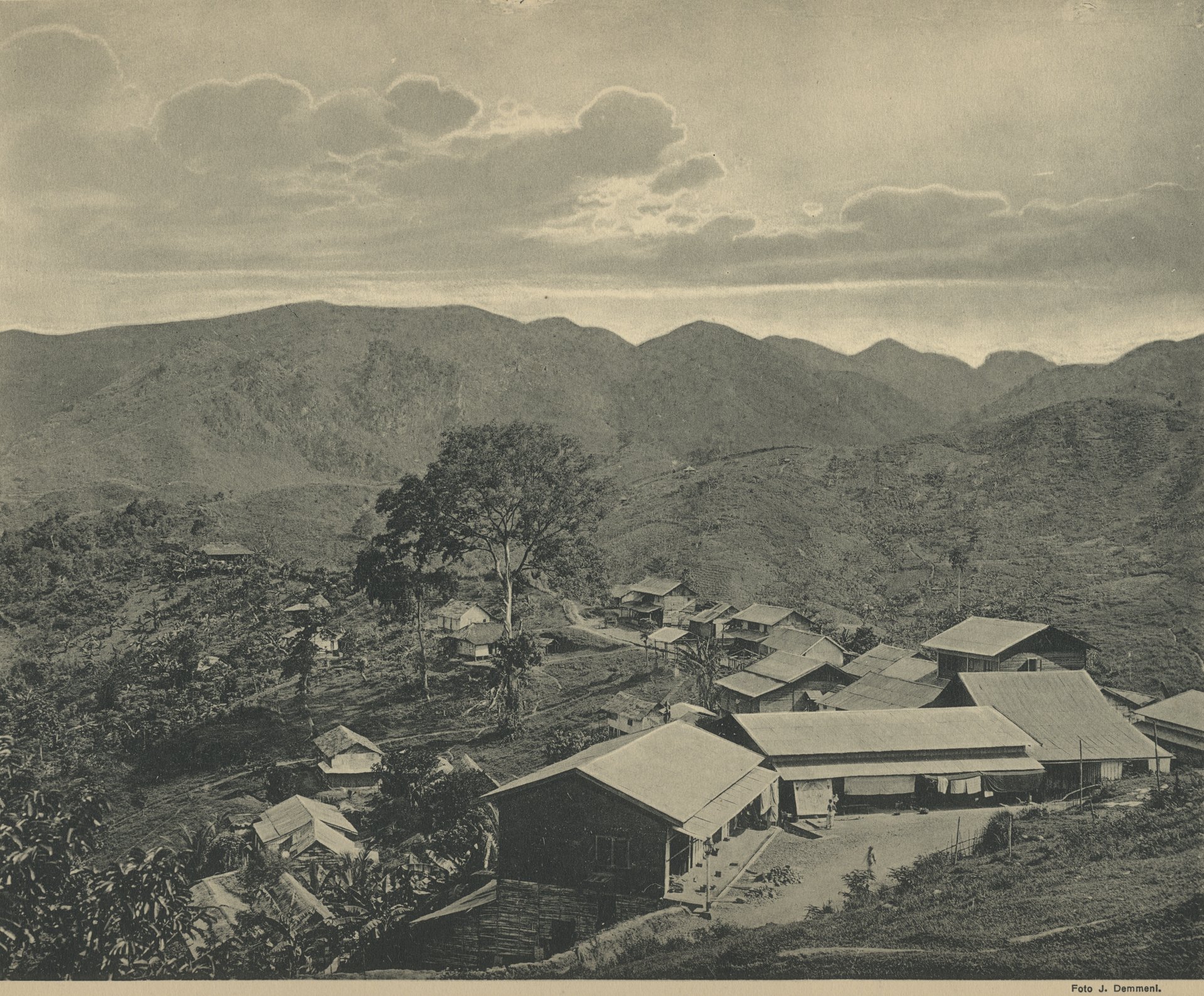
Ombilin Coal Mine
In 1867, a Dutch engineer named Willem Hendrik de Greve found coal in a narrow valley between the Polan, Pari, and Mato hills of West Sumatra. What followed was not just a mine but an entire colonial system -- railways, ports, forced labor camps, and a century of extraction that would power the Dutch East Indies and scar the landscape and people of Sawahlunto forever. The Ombilin Coal Mine, Southeast Asia's oldest, earned UNESCO World Heritage status in 2019. The recognition honors not just the industrial archaeology but the full, uncomfortable truth of how it was built.
People in Chains
The Dutch called them kettingganger -- "people in chains." Prisoners transported from Java and Sumatra arrived at Ombilin with their legs, hands, and necks shackled. They were the mine's primary workforce. Coal production began in earnest in 1892, after the Dutch constructed a railway to haul the black rock out of this remote valley, approximately 70 kilometers northeast of Padang. By 1930, production peaked at more than 620,000 tonnes per year, and Ombilin's coal fulfilled 90 percent of the Dutch East Indies' energy needs. The profits were enormous. The human cost was staggering. Forced laborers earned 18 cents per day in 1908 and faced whipping as legal punishment for resistance. Contract workers received 32 cents per day with housing; free laborers earned 62 cents with no benefits at all. The hierarchy of exploitation was carefully calibrated, each tier just marginally less brutal than the one below it.
A Century of Black Gold
The mine changed hands with the tides of history. Japan controlled it from 1942 to 1945, and production declined sharply during the occupation. After Indonesian independence, it passed through a series of government directorates before becoming the Ombilin production unit of the state coal mining company in 1968. Production surged again, reaching a peak of nearly 1.2 million tonnes in 1976. By 2008, engineers estimated the mine still held 90.3 million tonnes of coking coal in reserve, with 43 million tonnes considered mineable. China's CNTIC invested $100 million in the operation. But the economics of coal shifted, and by 2019, PT Bukit Asam had halted operations at Ombilin entirely. Over more than a century, the mine had yielded approximately 30 million tonnes of coal -- a fraction of what remained underground, but enough to build and transform an entire region.
From Pit to Heritage Site
What the Dutch built to extract, Sawahlunto has reimagined to preserve. The Ombilin Coal Mining Museum now occupies part of the complex, displaying the tools and machinery that once drove production. The Mbah Soero tunnel -- named for a forced-labor foreman -- stands open for visitors. Workers' housing at Tangsi Baru and the surrounding residential compounds have been maintained as historical exhibits, along with the coal filtering facilities, railway workshops, and government offices that once made this valley a self-contained colonial enterprise. Around the old mining infrastructure, the landscape has been softened. Reforestation has reclaimed scarred hillsides. Former excavation pits have filled with water to become lakes. A zoo and horse-riding track now occupy land where coal was once hauled to the surface. The transformation is deliberate: tourists from Malaysia and Singapore visit the well-maintained mining pit, which has been fitted with lighting and ventilation, to walk where chained laborers once worked in darkness.
The Weight of Recognition
UNESCO's 2019 inscription of the Ombilin Coal Mining Heritage placed this remote Sumatran valley on the global map. The designation recognizes the site's completeness -- mine, railway, port, and town forming an integrated colonial-industrial system that is rare in its preservation. But heritage status also asks visitors to sit with the full weight of what happened here. The railway that carried coal to Emmahaven Port (now Teluk Bayur) was built at a cost of 17 million Dutch gulden and incalculable human suffering. The town that grew around the mine rose and fell with production, its population dropping to just 13,561 by 1980 before slowly recovering. Ombilin is a place where industrial achievement and human exploitation are inseparable -- where the same tunnels that represent engineering ingenuity also echo with the memory of people who were brought here in chains.
From the Air
Located at 0.68S, 100.77E in a narrow valley of the Bukit Barisan mountains, West Sumatra. The mine complex sits at roughly 250-650 meters elevation, surrounded by steep jungle-covered hills. Nearest major airport is Minangkabau International Airport (WIPT/PDG) approximately 70 km to the southwest. The historic railway line from Sawahlunto to the coast at Teluk Bayur (Emmahaven Port) is visible as a linear feature cutting through the mountains. Expect equatorial weather with frequent afternoon convective activity.