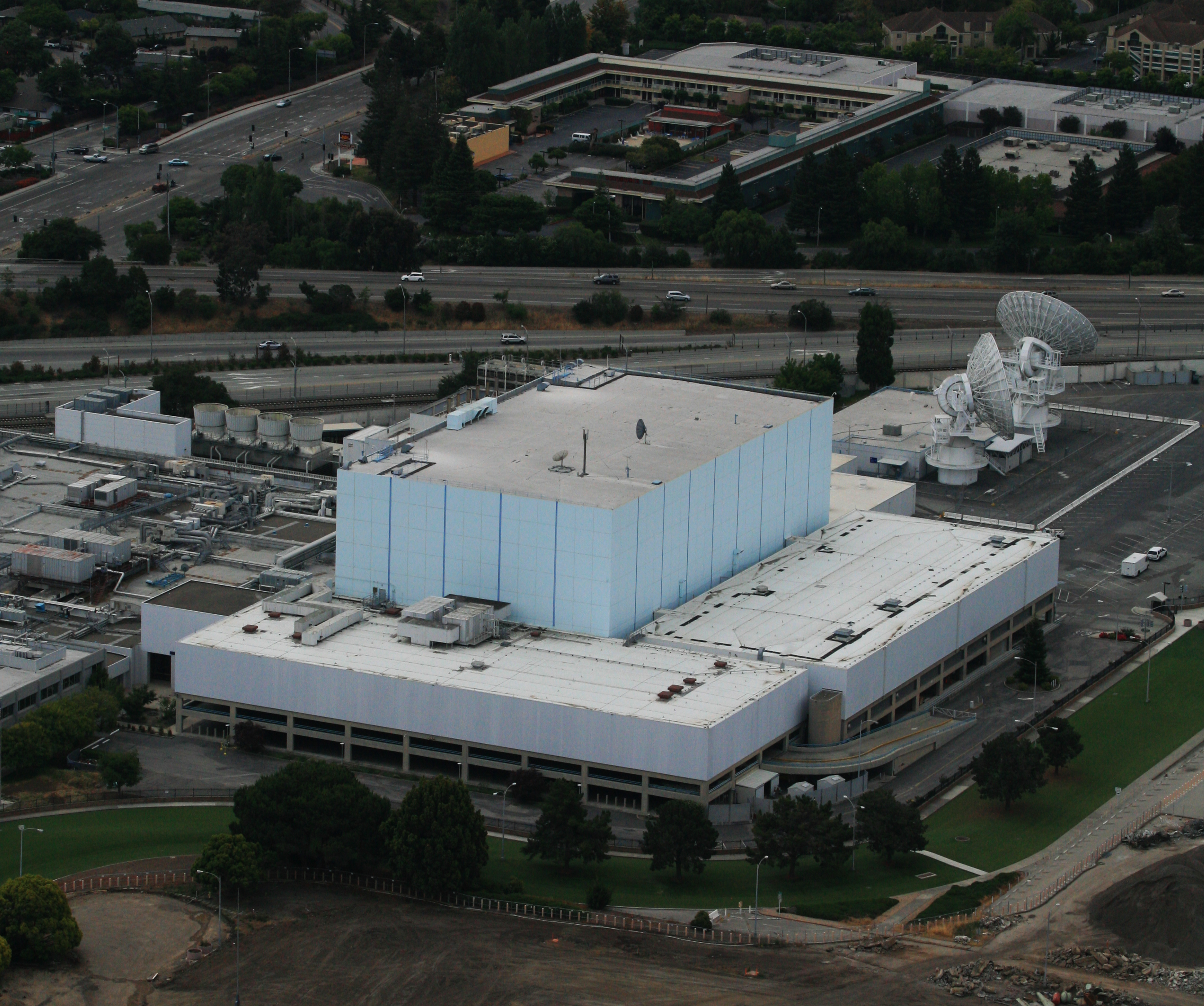
Onizuka Air Force Station
For decades, drivers on State Route 237 in Sunnyvale passed a windowless blue building and wondered what happened inside. The Blue Cube, as locals called Building 1003, was the most visible structure at Onizuka Air Force Station, a U.S. Air Force installation that operated military satellite programs from 1960 to 2010. The station controlled reconnaissance and communications satellites during the Cold War and beyond, its operations classified at levels that made curiosity about the blue building a local pastime. The station was renamed in 1986 to honor Ellison Onizuka, the first Asian American astronaut, who died in the Space Shuttle Challenger disaster.
Satellites and Secrets
The station began operations in 1960 as the Air Force Satellite Test Center, part of America's rapidly expanding space surveillance capability. Located at the intersection of State Route 237 and North Mathilda Avenue, it was an incongruous presence in suburban Sunnyvale -- a classified military installation surrounded by strip malls and tech offices. Building 1003, the Blue Cube, housed satellite command and control operations. Its windowless design was functional, not aesthetic: the building needed to be secure, climate-controlled, and electromagnetically shielded. For fifty years, it was among the most important and least discussed military facilities in California.
Honoring Ellison Onizuka
Ellison Shoji Onizuka was born in Kealakekua, Hawaii, in 1946. He became an Air Force test pilot and was selected for the astronaut program in 1978. His first spaceflight, aboard Discovery in January 1985, made him the first Asian American in space. Less than a year later, on January 28, 1986, Onizuka died when Challenger broke apart 73 seconds after launch. The Sunnyvale station, where Onizuka had served as a test engineer, was renamed in his honor. The renaming transformed the station from an anonymous facility into a memorial, though its operations remained classified.
From Blue Cube to Open Land
Onizuka Air Force Station closed in 2010 as part of the Base Realignment and Closure process. The Blue Cube was demolished, and the land became available for redevelopment. The closure removed one of the last visible reminders that Silicon Valley's technology economy grew from Cold War military spending. Before there were iPhones, there were spy satellites. Before there was Google, there was the Blue Cube. Onizuka AFS stood at the intersection where military technology and civilian innovation met, a nexus that defined the Valley's early decades even if most residents preferred to focus on the civilian side of the equation.
From the Air
The former Onizuka Air Force Station site is at 37.41°N, 122.03°W in Sunnyvale at the intersection of SR-237 and North Mathilda Avenue. The Blue Cube has been demolished. Nearby airports: Moffett Federal Airfield (KNUQ), San Jose (KSJC). Best viewed at 2,000-3,000 ft AGL.