Operation Catechism
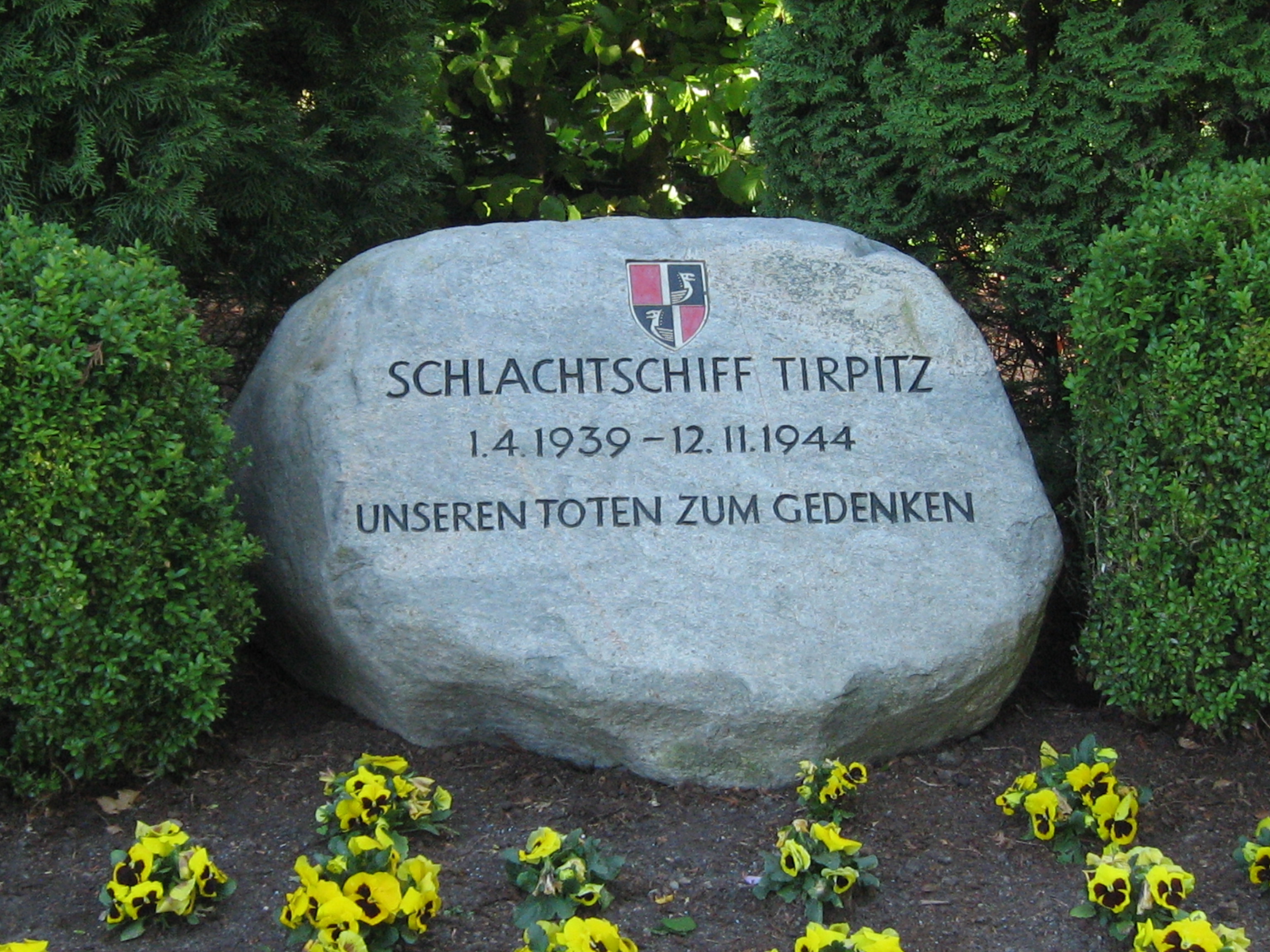
Wing Commander Willie Tait spotted the Tirpitz from 20 miles away. She was, he later wrote, "lying squat and black among her torpedo nets like a spider in her web, silhouetted against the glittering blue and green waters of the fjord." It was the morning of 12 November 1944, and 32 Lancaster bombers from the RAF's elite Nos. 9 and 617 Squadrons were bearing down on the most hunted warship in the world. They carried Tallboy bombs -- 12,000-pound, armor-piercing weapons designed to do what years of carrier strikes, midget submarine attacks, and conventional bombing had failed to accomplish. Within fourteen minutes of the first bomb falling, Tirpitz had capsized.
The Third Attempt
Operation Catechism was the third RAF heavy-bomber attack on Tirpitz in two months, and the culmination of a campaign that had consumed Allied resources since 1942. Operation Paravane on 15 September had scored a single Tallboy hit that flooded the battleship's bow and rendered her unseaworthy, but did not sink her. The Germans moved the crippled ship to an anchorage off Hakoya Island near Tromso, intending to use her as a stationary gun battery. Operation Obviate on 29 October sent 32 Lancasters back, but clouds rolled in just as the bombers reached their release point and they achieved no hits. Catechism was planned to use the same routes and tactics as Obviate, but this time the weather cooperated. The Lancasters flew from bases in northern Scotland -- Kinloss, Lossiemouth, and Milltown -- stripped of their forward and mid-upper gun turrets and fitted with extra fuel tanks to reach Tromso, a distance that pushed the aircraft to the edge of their range.
A Failure of Warning
The German defenders at Tromso received multiple warnings of approaching bombers between 7:39 and 8:50 a.m. but failed to act on any of them decisively. Observation posts spotted the Lancasters heading east and initially assumed they might be en route to the Soviet Union. Tirpitz was not notified until 8:15 a.m., and the air raid siren did not sound until 8:51. Captain Robert Weber, who had assumed command just eight days earlier, informed the crew that an attack was possible at 8:58 -- less than an hour before the bombs fell. At Bardufoss airfield, 38 fighters from Jagdgeschwader 5 sat on the ground. Major Heinrich Ehrler, the unit's temporary commander, had been running an emergency training program for pilots who were inexperienced and poorly briefed on Tirpitz's presence. When the scramble order finally came at 9:18 a.m., a Junkers Ju 52 transport landing on the runway delayed the fighters further. Ehrler got airborne first but could not find the bombers before they attacked. The rest of the fighters never reached Tromso in time.
Fourteen Minutes
Tirpitz opened fire at 9:38 a.m. with her 38-centimeter main guns at a range of 13.5 miles, lobbing fragmentation shells into the sky in a desperate attempt to break up the bomber formation. It did not work. At 9:41, Tait's aircraft dropped the first Tallboy, which struck the port side amidships and exploded over the port boiler room. No. 617 Squadron completed its attack by 9:44; No. 9 Squadron began dropping at 9:45. Two Tallboys penetrated the armored deck. The amidships hit caused catastrophic flooding and fires, and the ship began listing to port immediately. Several near misses detonated in the water alongside, punching holes in the hull below the waterline and blowing away the sandbank that had been constructed to prevent capsizing. At 9:45, with the list reaching 30 to 40 degrees, Weber ordered the lower decks evacuated. At 9:50, the magazine for turret Caesar exploded with devastating force, throwing the turret roof and part of its rotating structure into the air and onto sailors swimming toward shore. By 9:52, Tirpitz had rolled over completely, burying her superstructure in the sea floor.
The Reckoning
Between 950 and 1,204 men died, including Captain Weber and all his senior officers. Within two hours, 596 survivors had been pulled from the water or had swum ashore. Others were trapped in air pockets inside the overturned hull. Rescue parties painted marks on the exposed bottom where they heard tapping, but only one acetylene torch could be found -- Norwegian civilians who owned torches hid them from the Germans. Over the next 24 hours, 87 men were cut free. After two more days of cutting, rescuers concluded that no breathable air could remain inside, and the effort stopped. Ehrler was court-martialed and sentenced to three years' imprisonment, though he was released after a month, demoted, and reassigned to a jet fighter squadron. He was killed in combat on 4 April 1945. Subsequent investigations concluded that the real failure lay in chaotic communications between the Kriegsmarine and the Luftwaffe -- the aircrews at Bardufoss had not even been told that Tirpitz had been moved to Hakoya two weeks before the attack.
Celebration and Doubt
News of Tirpitz's destruction reached London the same day. King George VI, Winston Churchill, Franklin Roosevelt, and Joseph Stalin all sent congratulations. British newspapers ran celebratory headlines, and the aircrews received 48 hours' leave. Tait was recommended for the Victoria Cross; he received a third bar to his Distinguished Service Order instead. In Tromso, many Norwegian civilians were privately pleased -- the billeting order that had forced them to house Tirpitz's crew was finally over -- though some who showed their satisfaction in public were arrested by the Gestapo. Tait himself was sceptical of the operation's strategic value, noting privately that it "had not contributed much to the Allied victory" since the battleship was already crippled. Historians have debated this ever since. What is not debated is the immediate practical result: more than half the British Home Fleet was released for redeployment, much of it to the Pacific to fight Japan. The Lonely Queen's last service to Germany was ending.
From the Air
The attack site is off Hakoya Island near Tromso at approximately 69.65N, 18.81E. Tromso Airport Langnes (ENTC) is about 5 km away. The Lancasters flew from northern Scotland (Kinloss, Lossiemouth, Milltown), crossed the Norwegian Sea, entered Norwegian airspace between Mosjoen and Namsos, and rendezvoused over Tornetrask lake in northern Sweden before approaching Tromso from the southeast. At 1,000-3,000 ft, the fjord topography that shaped both the German defenses and the bombing approach is clearly visible. Bardufoss Air Station (ENDU) is approximately 60 km to the southeast.