Operation Claymore
The memo that launched Operation Claymore was almost casual. On 14 January 1941, Hugh Dalton, Britain's Minister of Economic Warfare, wrote to Winston Churchill suggesting "a surprise attack" on Norway's Lofoten Islands -- land small parties, destroy fish oil plants, sink enemy ships in the harbor, and "kidnap Quislings, who are hated by the local population." Churchill liked the idea immediately. What followed, on 4 March 1941, was the first large-scale British commando raid of the Second World War, an operation that would prove far more significant than anyone involved initially realized.
Churchill's Hunter Class
The commandos who landed at Lofoten were products of desperation. After the British Expeditionary Force was evacuated from Dunkirk in 1940, Churchill demanded an offensive capability -- troops he called "the hunter class" who could develop "a reign of terror down the enemy coast." Lieutenant-Colonel Dudley Clarke had already proposed just such a force, and by autumn 1940, more than 2,000 volunteers had formed twelve commando units under the Special Service Brigade. For Claymore, 250 men from No. 3 Commando under Major John Durnford-Slater and 250 from No. 4 Commando under Lieutenant Colonel D. S. Lister would make the crossing, supported by Royal Engineers demolition specialists and 52 Norwegian soldiers of the Norwegian Independent Company 1, led by Captain Martin Linge.
Nine Hundred Miles to the Arctic
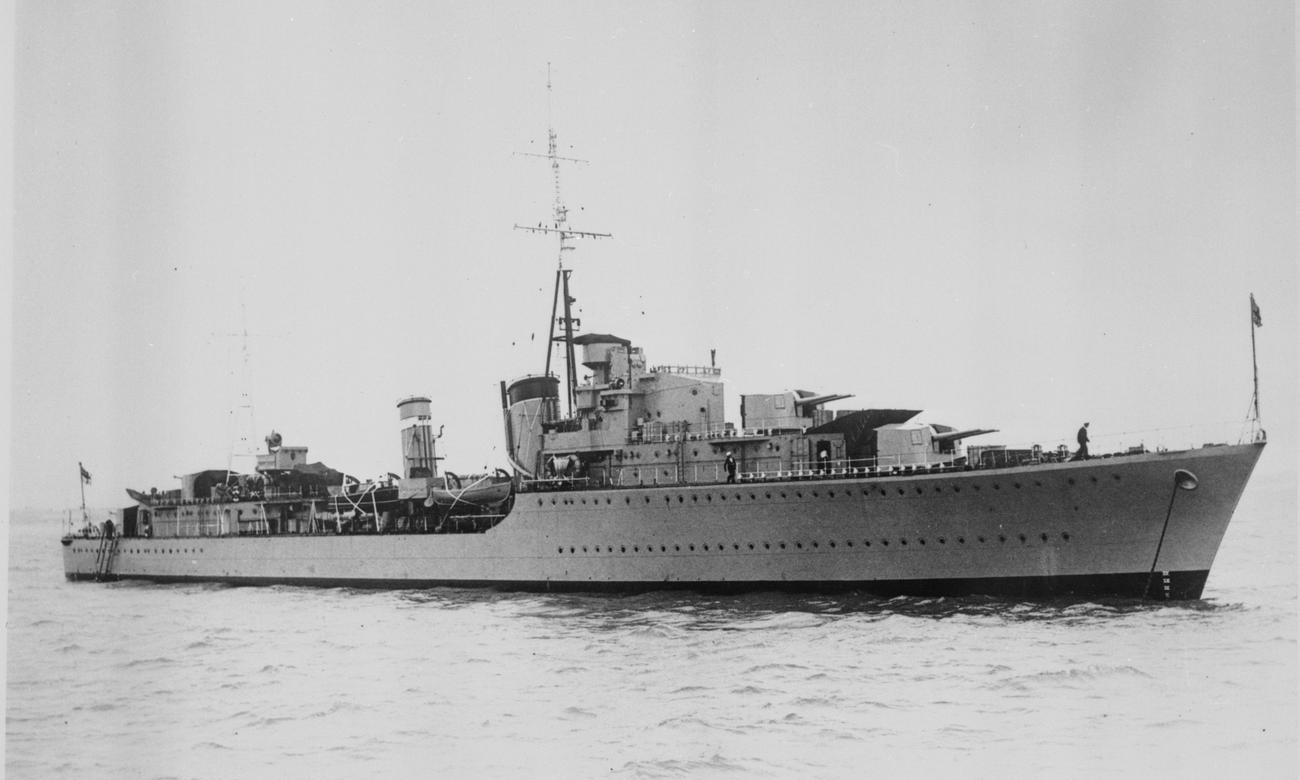
The raiders sailed nearly 900 miles from Britain, escorted by destroyers of the 6th Flotilla and carried aboard two converted infantry landing ships, HMS Princess Beatrix and HMS Queen Emma. Their targets were four small fishing ports on the Lofoten Islands -- Stamsund, Henningsvaer, Svolvaer, and Brettesnes -- where factories processed cod liver oil shipped directly to Germany. The glycerine extracted from that oil was a vital ingredient in manufacturing high explosives. The commandos landed almost without opposition on the morning of 4 March. At Stamsund they destroyed the Lofotens Cod Boiling Plant; at Henningsvaer, two more factories fell; at Svolvaer, thirteen. In total, roughly 800,000 imperial gallons of fish oil and paraffin were set ablaze, and 18,000 tons of shipping were sunk through naval gunfire and demolition charges.
The Prize No One Discussed
The raid's official objectives -- destroying oil production, capturing prisoners, boosting morale -- were real enough. But the most consequential act of the entire operation occurred almost incidentally. When HMS Somali engaged the German armed trawler Krebs, which managed to fire four rounds before being sunk, boarding parties recovered a set of rotor wheels for an Enigma cipher machine along with its code books. This material was sent to Bletchley Park, where it allowed British codebreakers to decipher German naval communications. The intelligence that followed enabled Allied convoys to reroute around U-boat wolfpacks in the Atlantic, saving countless ships and lives. Ongoing analysis of wartime documents suggests the commando raids were, in part, deliberate cover for these so-called "pinch raids" -- operations designed to capture cryptographic equipment without alerting the Germans to their true purpose.
Two Views of Success
The British declared Claymore an unqualified success. The raiders returned with 228 German prisoners, 314 Norwegian volunteers eager to join the Allied cause, and several Quisling collaborators. Not a single commando was killed. Churchill and the Special Operations Executive pointed to the raid as proof that occupied Europe was not beyond reach. But Martin Linge and the other Norwegians involved were less enthusiastic. They worried that such raids provoked German reprisals against the Norwegian civilian population without achieving lasting strategic gains. They were not told about the Enigma capture -- the intelligence was too sensitive to share broadly -- and so they judged the operation on its visible results alone. The German response was substantial: by 1944, the occupation garrison in Norway had swelled to 370,000 troops, a massive commitment of men and materiel that could not be deployed elsewhere.
Echoes Across the War
Claymore was the beginning, not the end, of commando operations against Norway. Operations Anklet and Archery followed later in 1941, targeting different parts of the coast. The men of No. 3 and No. 4 Commando went on to join the 1st Special Service Brigade and land on the beaches of Normandy in June 1944. The Norwegian Independent Company 1, renamed the Linge Company after Martin Linge was killed during Operation Archery, became one of the most effective resistance forces in occupied Europe. But the raid's deepest legacy was invisible -- encrypted signals deciphered in a manor house in England, convoys that arrived safely because of intelligence plucked from a sinking trawler in the Arctic, a war shortened by secrets that took decades to come to light.
From the Air
Centered at 68.15N, 14.20E over the Lofoten Islands, Nordland county, northern Norway. The raid targeted the ports of Svolvaer, Stamsund, Henningsvaer, and Brettesnes along the southern coast of the archipelago. The islands are visible as a jagged mountain chain rising from the Norwegian Sea, inside the Arctic Circle. Nearest airports include Svolvaer/Helle (ENSH) and Leknes (ENLK). The Raftsundet strait separates Lofoten from the mainland. Best viewed at 3,000-5,000 ft to appreciate the harbors and coastline.