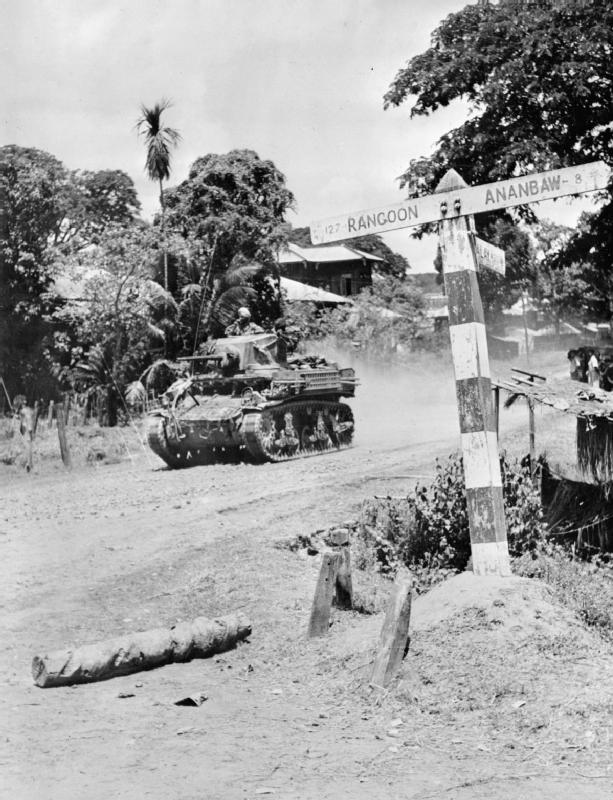
Operation Dracula
The name was melodramatic, but the stakes were real. Operation Dracula -- the Allied plan to retake Rangoon by sea and air -- had been shelved once for lack of landing craft, resurrected under desperate time pressure, and launched into the teeth of an arriving monsoon. When Gurkha paratroopers finally dropped onto Elephant Point at the mouth of the Rangoon River on May 1, 1945, they were racing a deadline measured not in days but in hours. If the monsoon arrived before the port was secured, every Allied supply line in Burma would collapse.
A Plan Twice Born
Allied planners first conceived Operation Dracula in mid-1944, when South East Asia Command began preparing to reoccupy Burma. Rangoon was the prize -- the country's capital and only deep-water port, through which all supplies for the Burma Campaign had to flow. But the operation required landing craft, naval escorts, and troop transports that were committed to the European theater. The plan was shelved. By March 1945, the calculus had changed. The British Fourteenth Army, under General William Slim, was driving south through Burma at remarkable speed, but its supply lines stretched thin across hundreds of miles of jungle and river. If the monsoon broke before Rangoon was captured, those lines would become impassable. Slim would have an army deep in enemy territory with no way to feed or resupply it. Operation Dracula was resurrected, this time as an act of logistical survival rather than strategic ambition.
The Monsoon Clock
During April 1945, the Fourteenth Army pushed to within 40 miles of Rangoon. Then a hastily assembled Japanese force dug in at Pegu and stopped the advance cold. The overland route was blocked just as the monsoon -- expected in the second week of May -- began sending advance squalls across the Bay of Bengal. Operation Dracula launched on May 1. A composite Gurkha parachute battalion dropped onto Elephant Point, the narrow headland guarding the mouth of the Rangoon River, and secured the coastal gun batteries. Minesweepers moved upriver behind them, clearing a path through Japanese-laid mines. On May 2, the Indian 26th Division began landing on both banks of the river -- and the monsoon broke on the same day, earlier than anyone had predicted. Sheets of rain lashed the landing beaches, turning operations into a muddy scramble.
An Empty City
The British assault force fought the weather but not the enemy. The Imperial Japanese Army had abandoned Rangoon several days before the landings, retreating east toward Thailand as their position in Burma became untenable. When advance units of the Indian 26th Division entered the city on May 2, they found its vital docks intact and undefended. A famous message scrawled on the roof of Rangoon Jail by Allied prisoners of war read: "JAPS GONE. EXDIGITATE" -- RAF slang meaning roughly "get your finger out and get here." The discovery that the enemy had already left did not diminish the operation's significance. Had the Japanese chosen to defend Rangoon, the amphibious assault would have been a desperate fight conducted in monsoon conditions. Four days after the landing, advance units from the 26th Division linked up with the Fourteenth Army pushing down from the north, closing the pincers on central Burma.
The Forgotten Theater's Final Act
Operation Dracula unfolded in what soldiers bitterly called the "Forgotten War" -- the Burma Campaign, overshadowed by Europe and the Pacific. The men who fought it were drawn from across the British Empire: Gurkhas from Nepal, Sikhs and Marathas from India, West Africans, and British regulars. The Indian 26th Division, which made the amphibious landing, was a formation of the British Indian Army that had already fought through some of the harshest terrain of the war. The recapture of Rangoon effectively ended major operations in Burma, though scattered Japanese resistance continued until August. For the city itself, liberation meant a transition from one form of occupation to another -- the British colonial order would return briefly before Burma gained independence in 1948. The docks that Dracula was launched to secure would become the arteries of a newly sovereign nation.
From the Air
Located at 16.78°N, 96.17°E, centered on Rangoon (Yangon) and the Rangoon River. Elephant Point, where the Gurkha paratroopers landed, lies approximately 30 km south at the mouth of the river. The Rangoon River is clearly visible from altitude, curving through the city before widening into the Andaman Sea. Nearest airport is Yangon International (VYYY). At 5,000-10,000 ft AGL, the full scope of the river approach is visible -- from the Bay of Bengal through the river mouth to the city docks, tracing the route the invasion fleet followed.